Bonsai Defoliation: The Complete Beginner’s Guide (When, Why, and How to Do It Safely)
May 27, 2026 | by Ian
Disclosure: BonsaiLessons.com is reader-supported. Some links in this article are affiliate links, if you purchase through them, we may earn a small commission at no extra cost to you.
Bonsai Defoliation: The Complete Beginner’s Guide (When, Why, and How to Do It Safely)
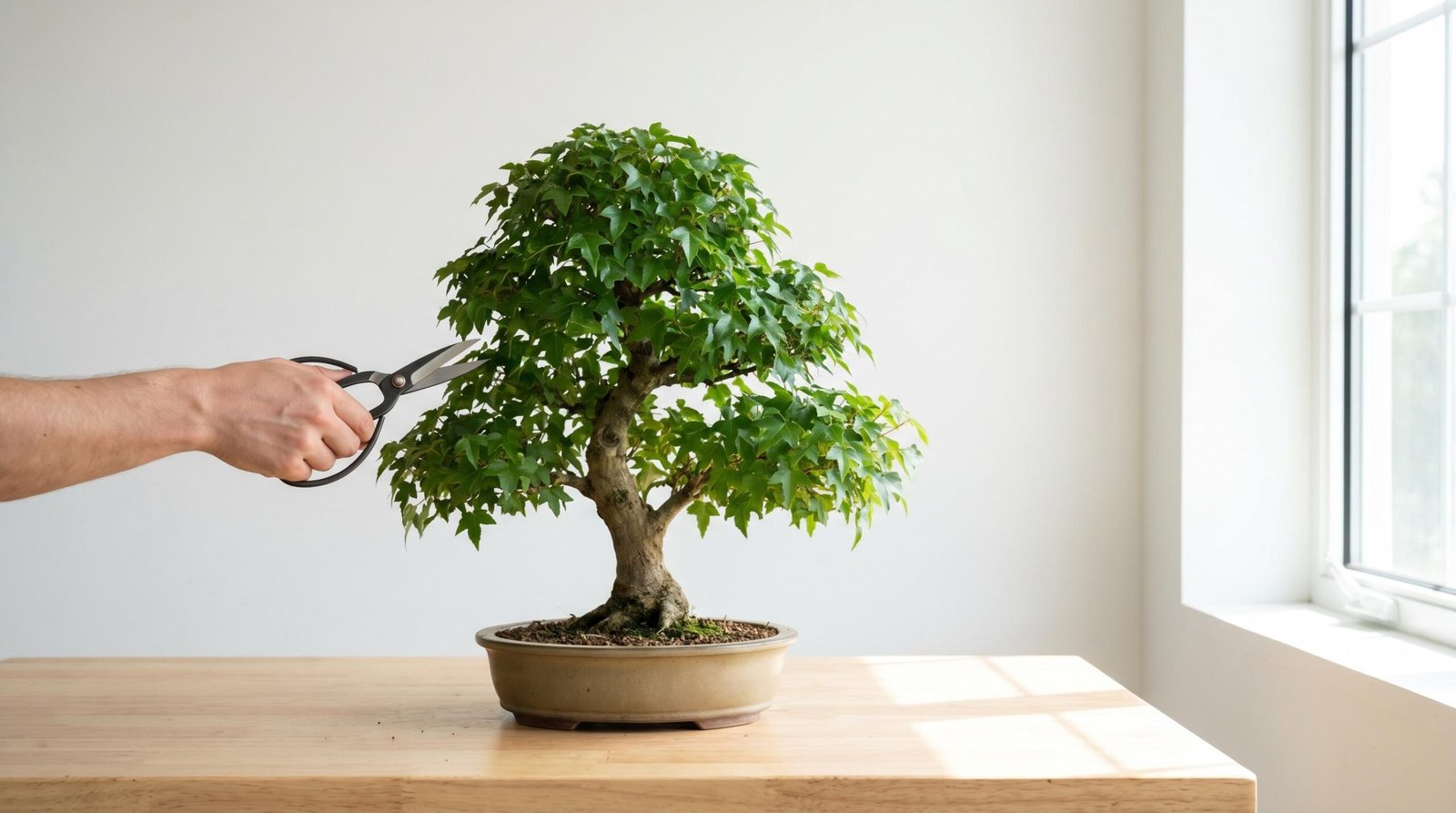
You just discovered that some bonsai artists strip every leaf off their tree on purpose. Your first reaction was probably horror, then curiosity. Why would anyone do that to a perfectly healthy tree? And more importantly, can you do it to yours?
Bonsai defoliation is one of the most misunderstood techniques in the hobby. Done correctly on the right species at the right time, it produces dramatically finer ramification and smaller leaves. Done wrong, it can stress a tree to the point of permanent damage. This guide walks you through every step, from deciding if your tree qualifies to nursing it back to full health afterward.
What Is Bonsai Defoliation?
Bonsai defoliation is the deliberate removal of all (or most) leaves from a deciduous bonsai during the growing season to trigger a second, finer flush of foliage. You cut each leaf at the petiole, leaving the bud intact, which forces the tree to push smaller, more numerous leaves and shortens internodes for better ramification.
The technique sounds drastic because it is. A bonsai with no leaves looks like winter arrived in July. But healthy deciduous trees carry energy reserves in their trunk and roots that allow them to refoliate within two to three weeks. What returns is finer, denser, and more refined than what you removed.
The three main goals of defoliation are leaf size reduction, increased ramification (the development of more, finer branching), and vigor equalization across the tree’s structure. Each of these benefits compounds over the years, which is why advanced bonsai artists treat defoliation as a foundational training technique rather than a cosmetic trick.
Why Defoliation Works: The Science Behind It
When you remove a healthy leaf canopy, the tree does not just sit there in shock. It activates dormant buds along the branches and pushes a new flush. Why? Because the tree still needs to feed itself. Recent research published in Frontiers in Plant Science on partial defoliation found that leaf removal triggers a compensatory photosynthesis response in the leaves that grow back, meaning the new foliage works harder per square centimeter than the original canopy did.
This compensatory mechanism is the engine behind the technique. The tree spends stored carbohydrates to build new leaves, then those leaves produce more energy per unit area than the originals to refill the reserves. The leaves come back smaller because the second flush of the season is genetically programmed to be more efficient, and because the petioles and internodes shorten when the tree is forced to redeploy rather than develop.
Vigor equalization works through a related principle. Stronger branches consume more resources and pull more hormones, leaving weaker branches behind. By defoliating the strong sections more aggressively (or only) and leaving weaker sections alone, you redirect the tree’s energy toward areas that need development. The University of Maine Cooperative Extension notes that pruning timing affects how carbohydrates and hormones translocate through deciduous plants, and defoliation operates on the same physiological principle.
Why Conifers Can Never Be Defoliated
This is the question every beginner asks after learning the technique: if it works on maples, why not on pines or junipers? The answer is biological, not arbitrary.
Deciduous trees evolved to drop their leaves every year. Their leaf production system runs on annual cycles, with dormant buds positioned along every branch ready to break under the right hormonal signal. Removing leaves mid-season activates those dormant buds and triggers a new flush. The tree has the genetic machinery and the energy reserves built specifically for this purpose.
Conifers operate on a completely different system. Their needles are designed to live for two, three, even seven years depending on the species. There is no annual leaf-drop programmed into a healthy juniper or pine. Each needle is a long-term investment that the tree expects to keep working for years. Strip those needles off and the tree has no dormant leaf-replacement buds waiting to fire. It just loses the photosynthetic surface and starts to decline.
Worse, conifers do not have a true dormant phase for their foliage in the way deciduous trees do. Even in winter, evergreens continue limited photosynthesis whenever temperatures allow. Removing their needles is not seasonal pruning, it is amputation. The tree can lose entire branches when you strip the needles, because conifers rarely back-bud from old, bare wood. Once that section is bare, it usually stays bare forever.
Pines do have their own refinement technique called decandling (for Japanese black pines specifically), where you remove the new spring candles to force a second, shorter flush of needles. That is not defoliation, though. You are removing the new growth before it expands, not the established needles. Different technique, different physiology, different rules.
Which Bonsai Trees Can Be Defoliated?
Species selection is the single most important decision in this entire process. Defoliate the wrong tree and you will not get smaller leaves, you will get a dead bonsai. Use the table below as your starting reference.
| Species | Deciduous? | Defoliation Status | Notes |
|---|---|---|---|
| Trident Maple (Acer buergerianum) | Yes | YES, best candidate | The textbook species. Tolerates full and partial defoliation beautifully. Leaves reduce dramatically. |
| Japanese Maple (Acer palmatum) | Yes | YES, with care | Defoliate only mature, vigorous specimens. Partial defoliation preferred for first attempts. |
| Hornbeam (Carpinus) | Yes | YES, excellent results | Responds very well. Produces dense, fine ramification after defoliation cycles. |
| Chinese Elm (Ulmus parvifolia) | Yes (semi-deciduous in mild climates) | YES, deciduous form only | Indoor or evergreen specimens behave differently. Full defoliation works only on truly deciduous forms. |
| Zelkova (Zelkova serrata) | Yes | YES | Defoliates cleanly. Often used in broom-style training where fine ramification is critical. |
| English Oak / Chinese Oak (Quercus) | Yes | YES, partially | Full defoliation is risky. Stick to partial defoliation of the strongest sections. |
| Ficus (tropical species) | Evergreen tropical | YES, year-round if kept warm | Different rules apply. Ficus can be defoliated whenever it is in active growth and warm. |
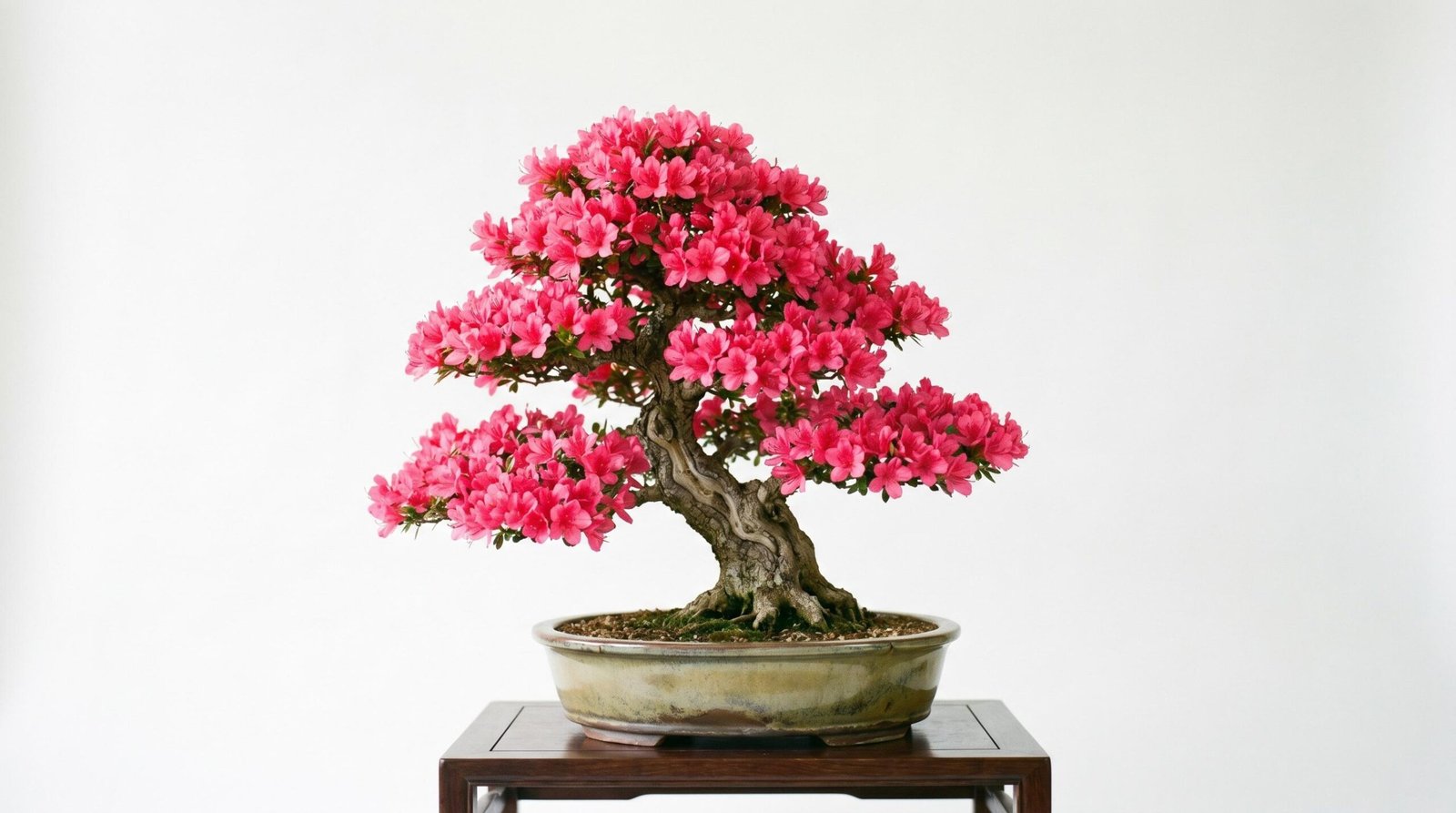
| Azalea | Evergreen | NO, ever | Does not respond well. Stick to selective pruning and pinching for refinement. |
| Japanese Black Pine | Conifer (evergreen) | NO, use decandling instead | A separate technique called decandling produces similar refinement on JBP. |
| All other conifers (juniper, spruce, cedar) | Conifer (evergreen) | NO | Removing needles will not produce a new flush. Branches die back permanently. |
If your species is not on this table and you are not sure, the safe default is: do not defoliate until you have confirmed the technique works on it. There are far more species in the “no” column than the “yes” column, and the rare exceptions tend to be tropical deciduous oddities that fall outside the normal bonsai canon.
Is Your Bonsai Ready? A Prerequisites Checklist
This checklist is non-negotiable. We suggest reviewing every item before you reach for your scissors. A tree that fails even one of these criteria should be left alone this year and prepared for next season instead.
- Health and vigor. The tree shows no signs of stress, no pest damage, no fungal spots, no leggy weak growth. Foliage is uniformly green and firm. If you have noticed leaves turning yellow, fix that problem first and skip defoliation this year.
- Active growth. The tree is mid-season and pushing, not just waking up from dormancy. If buds have only just opened, you are too early.
- At least 2 full growing seasons of training. Young pre-bonsai material or freshly collected trees do not have the reserves to recover. Wait until the tree has been thriving in its bonsai pot for at least two years.
- Repotted LAST year, not this year. Repotting stress plus defoliation stress in the same season is the most common way beginners kill their first defoliated tree. If you repotted this spring, wait until next year.
- Fertilized well through spring. The tree should have built strong reserves. We suggest weekly liquid feed plus monthly solid fertilizer from early spring until two weeks before you plan to defoliate. See our bonsai fertilizer guide for a complete spring schedule.
- No distress signals. No premature leaf drop, no yellowing, no wilting, no pest infestation, no dead branches appearing this season.
- Climate timing. Late spring through early summer, after the first flush has hardened off, before midsummer heat sets in.
If you can tick every box, your tree is a candidate. If any item fails, postpone. There is no rush. A defoliation done one year late is a defoliation done correctly. A defoliation done one year too early is often a tree lost.
When to Defoliate a Bonsai Tree
Timing makes or breaks this technique. The optimal window opens when the spring flush of leaves has hardened off and closes before the worst summer heat arrives. For most temperate climates in the northern hemisphere, this means roughly mid-May through late June, though local conditions vary.
“Hardened off” is the key phrase, and it has a visual signal. When leaves first emerge, they are soft, light green, and a bit limp. Over four to six weeks, they thicken, darken, and develop a leathery feel. The petioles stiffen. The leaf surface picks up a slight sheen. That fully matured texture is what you are waiting for. Defoliating before hardening off is wasted effort because the tree has not yet built the reserves the new flush will need.
Southern hemisphere bonsai growers should shift the calendar by six months: late November through January is the equivalent window in Australia, New Zealand, southern Africa, and South America. The principle is the same regardless of geography. First flush hardens off, then defoliate, then give the tree six to eight weeks of warm growing weather to push the second flush before autumn cools things down.
If you miss the window, wait. Defoliating in late summer or fall is a common rookie mistake that does not give the tree enough warm season to refoliate before dormancy. The new flush emerges weak and gets caught by the first frost. Better to let the tree finish the year strong and revisit defoliation next spring.
How to Defoliate a Bonsai Tree, Step by Step
Once your tree qualifies and the timing is right, the actual procedure is straightforward. Take your time and work methodically. A medium-sized bonsai might take 30 to 60 minutes to defoliate properly.
Step 1: Gather Your Tools
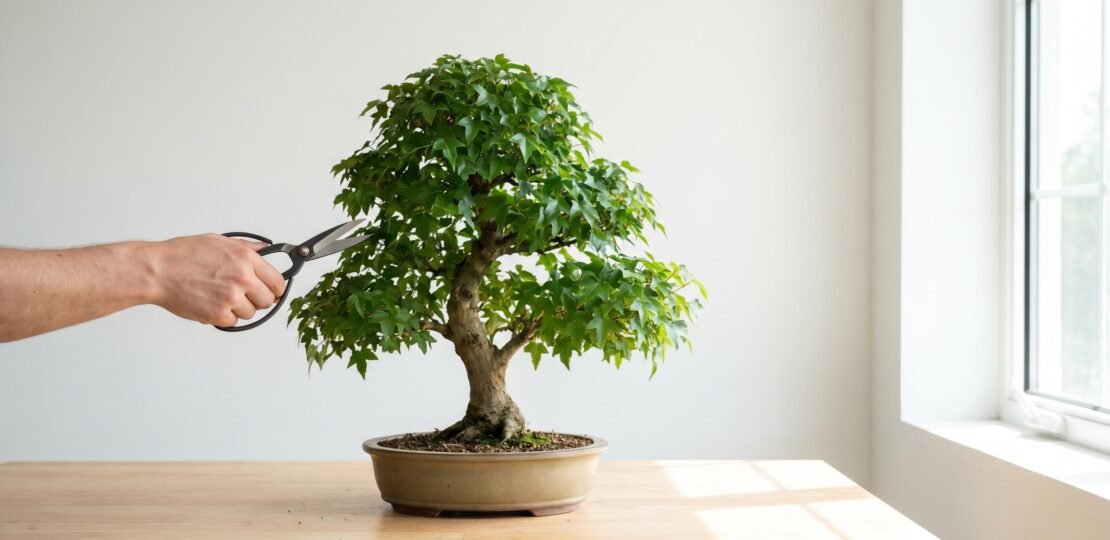
You need a sharp pair of bonsai leaf cutters or fine-tip scissors, optionally a small jar of wound sealant for any larger cuts you make along the way, and clean hands or gloves. Disinfect your blades with isopropyl alcohol before you start. A clean cut at the petiole heals in days. A crushed or ragged cut invites infection. See our bonsai tools for beginners guide for our picks on starter equipment.
Step 2: Assess Vigor Across the Tree
Before you cut anything, look at the tree holistically. Which branches are pushing the most growth this season? Which sections look weaker, with shorter shoots and smaller leaves than the rest? Mark these mentally. The strong areas will tolerate full defoliation. The weak areas should keep most or all of their leaves so they can continue building strength.
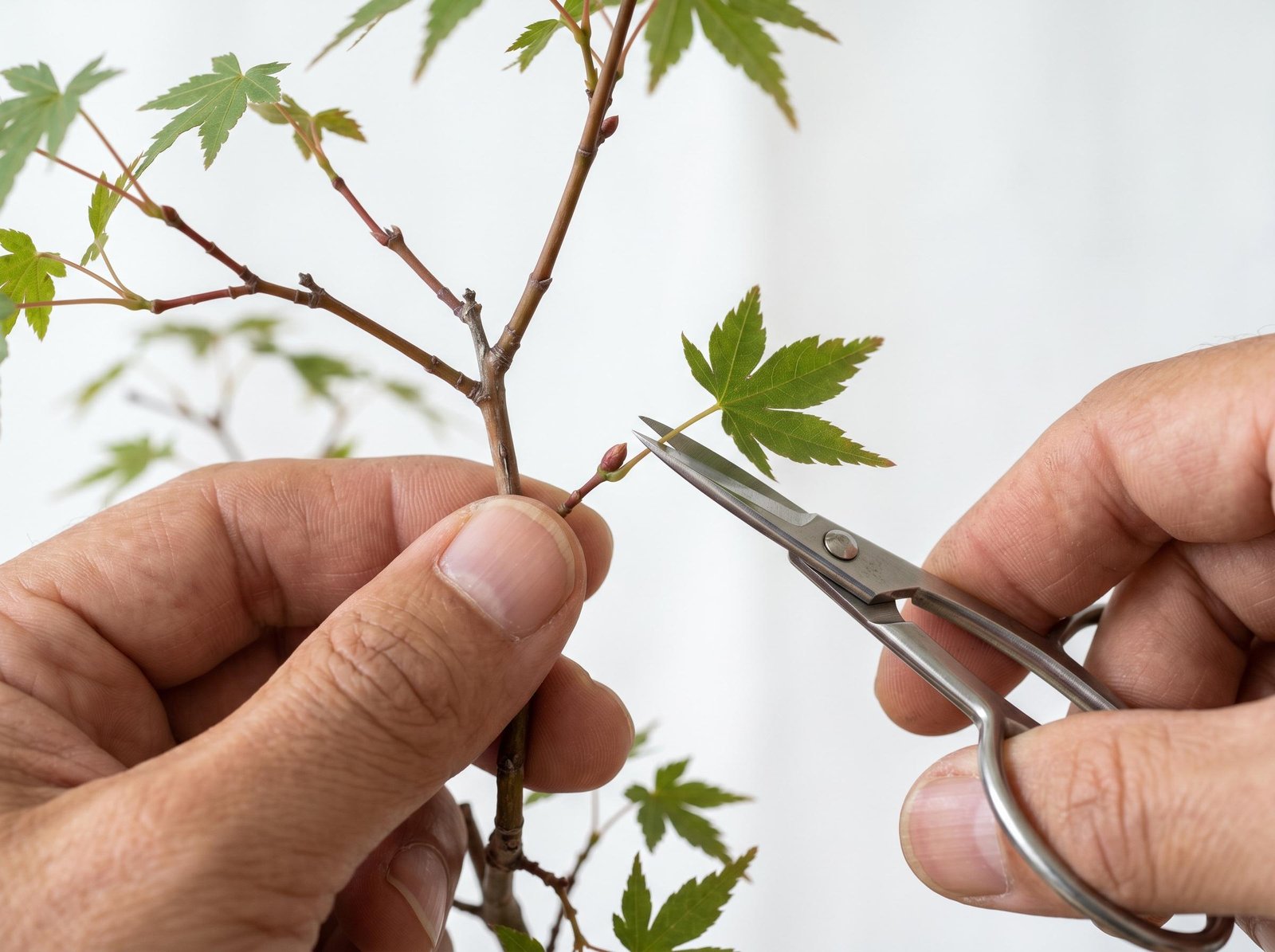
Step 3: Cut Each Leaf at the Petiole
This is the single most important technical detail in the entire process. You are cutting the leaf stem, not the bud. Hold the leaf gently between thumb and forefinger, follow the petiole back to where it meets the branch, and snip about two to three millimeters out from the branch itself. Leave a tiny stub of petiole behind. That stub protects the dormant bud sitting at the base of the leaf, which is the bud that will produce the new flush.
If you cut too close and damage the bud, that node will not refoliate. If you cut too far out and leave a long petiole stub, it will dry up and fall off on its own in a few days, but you wasted time. Two to three millimeters is the sweet spot.
Step 4: Work Branch by Branch, Top to Bottom
Start at the apex and work down. This is partly for visual tracking (you can see what you have done) and partly because the apex tends to be the most vigorous section, which the tree will refoliate fastest. By the time you finish the lower branches, you have given yourself a mental map of the tree’s structure that is normally hidden by leaves. Many bonsai artists do their best structural wiring work in the few days following defoliation for exactly this reason.
Step 5: Immediate Aftercare
The newly defoliated tree is suddenly far more exposed than it was an hour ago. Move it to a location with bright, indirect light for the first week. Direct afternoon sun on bare branches can scorch the cambium underneath the bark. Check soil moisture daily but do not overwater, because a leafless tree transpires far less than a leafy one. Slightly damp is right. Soggy is wrong.
Full Defoliation vs. Partial Defoliation
Beginners often assume defoliation means removing every single leaf. It can, but it does not have to. Partial defoliation is the safer, more strategic option for most situations, and it is what we suggest for first-time attempts.
| Approach | When to Use | Risk Level | Best For |
|---|---|---|---|
| Full Defoliation | Vigorous mature trees needing dramatic ramification | Higher | Advanced practitioners, well-trained specimens |
| Partial Defoliation (apex only) | Trees with strong apex and weak lower branches | Low | Vigor equalization, beginners |
| Partial Defoliation (selective) | Equalizing growth across uneven branches | Low to moderate | Refining shape on developing bonsai |
| Half-Leaf Defoliation | Reducing photosynthesis without full leaf removal | Lowest | Sensitive species, hot climates, first-time attempts |
Apex-only partial defoliation deserves special mention because it solves one of the most common bonsai problems: the top of the tree grows faster than the bottom, year after year, until the lower branches become weak or die. By defoliating only the apex, you slow the strongest area, force its energy down into the rest of the tree, and let the weaker lower branches catch up. Repeat this for a few seasons and your tree’s vigor distribution starts to balance out.
If you are defoliating for the first time, do half of the leaves and leave the other half alone. Pick the strong branches for defoliation and leave the weak ones intact. You get most of the refinement benefit with a fraction of the risk.
Post-Defoliation Care, Week by Week
The recovery timeline is fairly predictable for healthy deciduous bonsai. Knowing what to expect helps you spot problems early.
Days 1 to 7: Dormant Bud Swelling
For the first few days, the tree looks alarmingly bare. Around day three or four, you should see dormant buds at the leaf nodes begin to swell visibly. This is the signal that the tree has received the message and is preparing to push. Water needs are lower than normal during this week because there are no leaves transpiring. Check soil moisture once a day and water only when the surface dries.
Weeks 2 to 3: First New Leaves Emerge
Tiny new leaves break from the buds, usually a striking lime-green color. They will be noticeably smaller than the leaves you removed. This is the moment that justifies the technique. By the end of week three, most of the tree should be showing fresh foliage. Any branches that have not pushed by now are weak and should be marked for additional support next season.
Weeks 4 to 6: Full Second Flush
New leaves expand to their full (smaller) size. Photosynthesis ramps back up. The tree resumes normal water consumption, sometimes higher than before because the new canopy is dense even if each leaf is small. Resume your normal bonsai watering schedule as soon as soil moisture demand returns to baseline.
Months 2 to 3: Evaluation and Next Steps
By eight to twelve weeks post-defoliation, you can evaluate the results honestly. Did ramification improve? Are leaves smaller? Are there branches that did not respond well? This is also the right time to plan any selective pruning a bonsai tree for the late summer, while you can still see the new structure clearly.
Fertilization Before, During, and After Defoliation
Your fertilization protocol around the defoliation event is as important as the cuts themselves. Get this wrong and even a perfect technique will produce mediocre results.
Four to Six Weeks Before Defoliation
Push high-nitrogen fertilizer to build reserves. The tree needs banked energy to fuel the second flush. We suggest weekly liquid feed at full strength plus monthly solid fertilizer cakes if you use them. This is the most important fertilization window of the year for trees you plan to defoliate.
One Week Before Through Defoliation Day
Stop fertilizing. A pulse of nutrients right before the cut is wasted on a tree that is about to lose its leaf surface. Let the tree consume what it has stored.
Weeks 1 to 2 Post-Defoliation
No fertilizer or quarter-strength liquid only. The tree cannot use much without leaves to drive photosynthesis. Fertilizing heavily during this window can build up salts in the soil and burn the developing root tips. Patience pays off here.
Weeks 3 and Beyond
Once new leaves have emerged and started to harden off, resume your normal fertilization routine. Some bonsai artists slightly favor higher nitrogen during the second flush to support rapid leaf development, but this is optional and depends on species. See our complete bonsai fertilizer guide for species-specific recommendations.
Pest and Disease Risks During Recovery
A defoliated tree is more vulnerable than usual, and pests know it. The combination of stress hormones in the sap, exposed soft new growth, and reduced overall canopy density makes the recovery window a peak risk period for several common bonsai problems.
Aphids love soft new growth. Watch the tips of every new flush carefully for the first three weeks. A small population can explode quickly when there is nothing but tender young leaves to feed on. Treat with a strong spray of water or insecticidal soap at the first sign.
Spider mites thrive on stressed trees, especially in dry conditions. Stippling on the upper surface of new leaves, fine webbing on the underside, and a general dusty appearance are the warning signs. Increase humidity and treat with miticide if you see active infestation.
Fungal issues, particularly powdery mildew on Japanese maples and various leaf-spot diseases on elms and hornbeams, can take hold on the soft new flush if the tree is in poor air circulation or wet foliage conditions. Keep your defoliated tree in good airflow, water the soil rather than the leaves, and avoid crowding it against other plants during recovery.
The link between weak trees and post-defoliation pest problems is direct. A vigorous tree with full reserves will produce a strong second flush that resists pests naturally. A marginal tree that should not have been defoliated in the first place produces weak, thin growth that pests destroy. This is another argument for the prerequisites checklist above. Only defoliate trees that are genuinely strong enough to handle it.
Tools You’ll Need for Bonsai Defoliation
You can defoliate a bonsai with almost any sharp scissors, but the right tools make a substantial difference in speed and clean cuts. The two essentials are good leaf cutters and (optionally) a wound sealant for any larger cuts you make during the defoliation session.
Bonsai Leaf Cutters vs. Regular Scissors: Bonsai leaf cutters have long, narrow blades that reach into dense canopy without disturbing surrounding foliage. The blades close to a fine point, which lets you cut individual petioles without nicking nearby leaves or buds. Regular kitchen scissors are too thick at the tips and too short in the blade to reach interior branches cleanly. [AFFILIATE: bonsai leaf cutter scissors on Amazon]
Wound Sealant Paste: Defoliation itself does not require sealant because the petiole cuts are tiny and heal quickly. However, many bonsai artists use the leafless period to do structural pruning at the same time, and any cut larger than a pencil’s width benefits from sealant to prevent dieback and infection. Keep a small tub on hand. [AFFILIATE: bonsai wound sealant on Amazon]
That is genuinely all you need. Some practitioners also use a small bottle of isopropyl alcohol to wipe blades between trees, especially if any of their bonsai have shown disease symptoms in the past. A pair of fine-point tweezers can help remove stubborn petiole stubs if you want a perfectly clean look.
Common Mistakes to Avoid
Most defoliation failures come from a small set of repeated errors. Here are the ones we see most often.
Defoliating in fall or late summer. The tree does not have enough warm growing weather left to push a strong second flush and harden off the new growth before dormancy. Result: weak twigs that die back over winter.
Defoliating a weak, stressed, or recently repotted tree. Compounding stress on a tree without reserves is the number one way to kill a bonsai you were trying to refine. When in doubt, wait a year.
Cutting buds instead of petioles. If you damage the dormant bud at the leaf base, that node will not refoliate. Slow down and make precise cuts two to three millimeters out from the branch.
Defoliating the same tree every year. Defoliation is a stress event. Even healthy trees need recovery time between cycles. Most species can be defoliated every two to three years, not every year. Tropical ficus is an exception, but for temperate deciduous species, alternating years is safer.
Neglecting aftercare. The cut is the easy part. The next six weeks of careful watering, light management, and pest monitoring is where most of the work happens. Trees that fail post-defoliation usually fail because the owner walked away after finishing the cuts.
Defoliating just because you can. If your tree does not need ramification improvement or leaf size reduction this year, do not defoliate it. The technique is a tool, not a habit. Use it when there is a clear training goal and skip it when there is not.
The University of Minnesota Extension notes that deciduous trees respond to cuts by initiating new growth through dormant buds, which is the same mechanism that powers bonsai defoliation. Respecting that mechanism means giving the tree what it needs to follow through on the response.
Frequently Asked Questions About Bonsai Defoliation
How often can you defoliate the same bonsai?
Most deciduous species tolerate full defoliation every two to three years. Annual defoliation is too stressful for most trees and can lead to gradual decline over time. Partial defoliation can be done more frequently, even annually, because it leaves enough leaf surface intact to keep the tree’s energy reserves stable. Tropical ficus is the exception and can be defoliated multiple times per year when kept warm and well-fed.
Can you defoliate an indoor bonsai?
Only if it is a tropical species like ficus or jade. Temperate deciduous trees grown as indoor bonsai (Chinese elm is the most common) usually do not get strong enough light indoors to support a vigorous second flush. If your indoor tree is a tropical species kept in warm, bright conditions, defoliation works on the same principles as outdoor trees, but you should still confirm it is actively growing and well-fed before attempting the technique.
What if the leaves don’t grow back?
If three weeks have passed and no new buds are swelling, the tree is in trouble. This usually means the tree was too weak to begin with, or the technique was performed at the wrong time of year. Move the tree to gentle morning sun with afternoon shade, keep soil lightly moist but not wet, stop all fertilization, and watch for any sign of bud activity. Some trees recover slowly over four to six weeks. Others do not recover. The lesson, if the worst happens, is to be much stricter with the prerequisites checklist next time.
Can you defoliate a sick or weak tree?
No. Defoliating a stressed tree compounds the stress and often kills it outright. If your tree is showing yellowing leaves, premature leaf drop, pest damage, or general weakness, address those problems first and let the tree recover for at least a full growing season before considering defoliation. A defoliation done on a healthy tree is refinement. A defoliation done on a sick tree is amputation.
Does defoliation weaken the tree permanently?
No, when done correctly on a healthy tree, defoliation is a temporary stress event followed by full recovery. The tree spends some stored reserves to push the new flush, then refills those reserves over the rest of the season. Repeated defoliation done too frequently can cause cumulative weakening, which is why we suggest alternating years for most deciduous species. A single well-timed defoliation on a vigorous tree leaves no lasting damage.
How long until you see smaller leaves after defoliation?
The new flush appears within two to three weeks and is noticeably smaller than the original leaves from day one. Over the following two to three weeks, the new leaves expand to their full (smaller) size. The dramatic ramification improvements take longer, typically two to three defoliation cycles spread over four to six years, but leaf size reduction is visible the same season you perform the technique.
RELATED POSTS
View all