

This page contains affiliate links. If you purchase through them, we may earn a small commission at no extra cost to you. We only recommend products we trust.
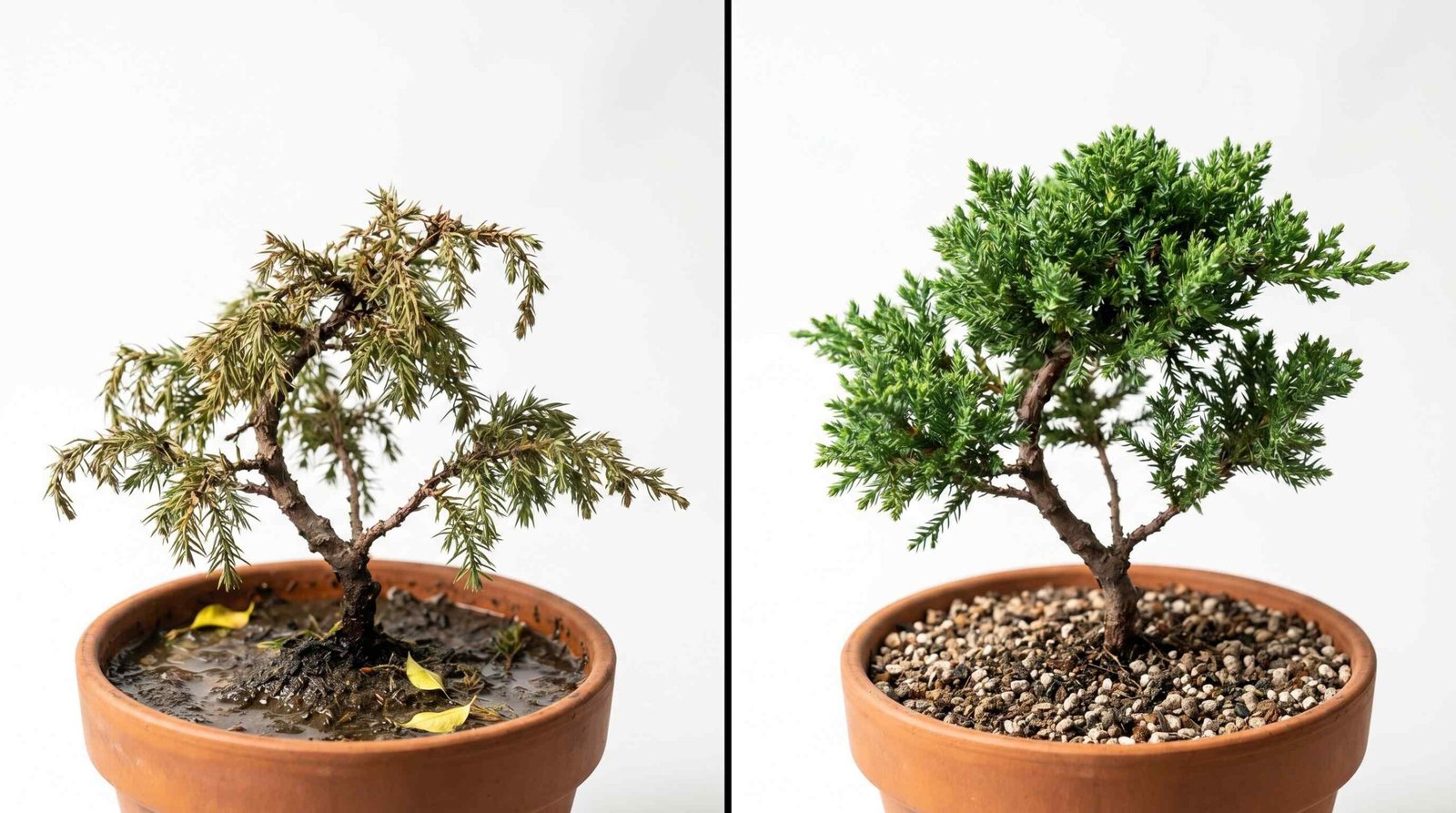
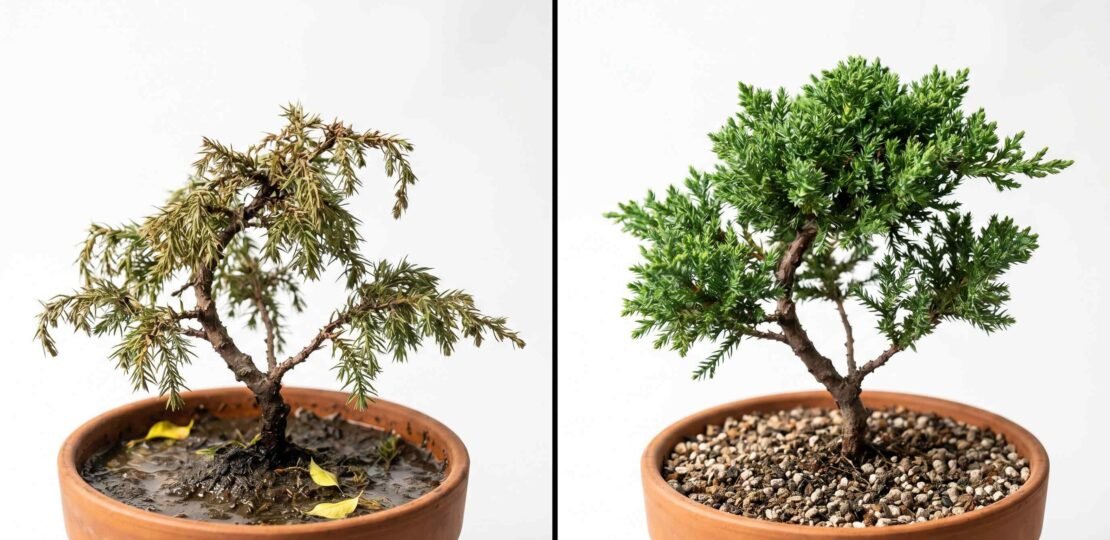
Your bonsai looks rough. The leaves are dropping, the soil smells off, and you are wondering if the little tree you have been caring for is past the point of saving. Take a breath. A dying bonsai tree is rarely a lost cause, and most beginners catch the warning signs early enough to reverse the damage. The trick is knowing what to look for, what to ignore, and what to do in the next 48 hours.
This guide walks you through the exact diagnosis process professional growers use, the seven causes behind nearly every bonsai death, and a step-by-step revival protocol you can start today. We will also help you tell the difference between a tree that is actually dying and one that is simply dormant, which is the single biggest misdiagnosis we see from new owners.
Quick Answer: How to Save a Dying Bonsai Tree
To save a dying bonsai tree, first confirm it is alive using the scratch test (scrape a thin layer of bark; green tissue underneath means it is still viable), then immediately address the root cause. The three most common culprits are overwatering and root rot (fix with emergency repotting in well-draining bonsai soil), wrong placement (outdoor species like junipers kept indoors will decline within weeks), and incorrect watering technique (soak thoroughly only when the topsoil is slightly dry, never on a schedule).
Is Your Bonsai Dying, Dormant, or Already Dead?
Before you panic and start treatments, you need to know what you are actually looking at. A tree shedding leaves in October is not dying. A juniper that has turned grey-brown is not dormant. Misreading these signals leads to wrong treatments, and wrong treatments finish off trees that could have been saved.
Three states matter here. Dormant means the tree is alive but resting, usually as a seasonal response to cold or shortened daylight. Dying means active deterioration is happening but the tree still has living tissue you can work with. Dead means the cambium layer (the thin green strip just under the bark) has dried out and there is no coming back.
The Scratch Test
The scratch test is the single most reliable way to check if your bonsai is alive. Using your fingernail or a small knife, gently scrape away a very thin layer of bark from a small branch or the trunk. You are not cutting deep, just removing the outer bark layer.
If the tissue underneath is green or greenish-white and slightly moist, that branch is alive. If it is brown, dry, and brittle, that branch is dead. Test several branches and the trunk itself. A tree can lose entire branches yet still be saveable if the trunk shows green tissue. Start with smaller branches and work down toward the trunk. The closer to the trunk you find live tissue, the better the prognosis.
For trees with thin bark like ficus or Chinese elm, you barely need to scratch at all. For pines and older junipers, you may need slightly more pressure to reach the cambium.
Signs of Dormancy vs. Death
Dormancy is a healthy seasonal pattern. Deciduous bonsai (maples, elms, hornbeams) drop all their leaves in autumn, sit bare through winter, and push new growth in spring. This is normal and expected. The branches stay flexible. The bark looks the same as it did in summer. The buds, if you look closely, are present and intact along the branches.
Death looks different. Branches snap rather than bend. Bark may shrivel or peel away unexpectedly. The wiggle test helps here: gently rock the trunk at the base. A healthy tree feels firmly anchored. A tree with severe root rot or one that has been dead for weeks will wiggle loosely in the soil because its roots have rotted away or dried up entirely.
| Symptom | Dormant (Normal) | Dying (Act Now) | Dead |
|---|---|---|---|
| Leaves | Dropped naturally in autumn (deciduous); evergreens stay green | Yellowing, browning, dropping out of season; wilting | All brittle, dry, or completely gone with no buds |
| Branches | Flexible, bend slightly when pressed | Some flexible, some snap; tips may be dry | Snap easily; dry through and through |
| Scratch test | Green cambium underneath | Green in places, brown in others | Brown and dry throughout, including trunk base |
| Buds | Visible, plump, dormant buds along branches | Shriveled or absent on some branches | Completely absent, dried out, or fallen off |
| Trunk wiggle | Firm, anchored | May feel slightly loose if roots are compromised | Wiggles freely; roots have decayed or dried |
| Soil and roots | Normal earthy smell | Sour or sulfur smell from soil; mushy roots | Roots are brown, dry strings or absent entirely |
| Timing | Late autumn through early spring | Any time of year | Confirmed by no new growth after a full spring |
7 Reasons Your Bonsai Tree Is Dying (And How to Fix Each)
Almost every dying bonsai we see traces back to one of seven causes. Sometimes two or three stack together, but the fix usually starts with addressing the most acute issue first. Work through these in order, because the early ones (overwatering, placement) cause the majority of bonsai deaths.
1. Overwatering and Root Rot
Overwatering is the number one killer of beginner bonsai. The irony is that owners who overwater are usually the most attentive ones, doing what feels like the right thing every single day. Bonsai roots need oxygen as much as they need water, and waterlogged soil suffocates them.
Look for these symptoms: yellowing leaves that drop without crisping, soil that stays wet for days, a sour or sulfur-like smell from the pot, and a soft, mushy feel when you press the soil. If you gently lift the tree from its pot, healthy roots are firm and tan or white. Rotted roots are dark brown or black, mushy, and may slough off when you touch them. According to University of Maryland Extension research, root rots in container plants are most often caused by fungal organisms like Pythium or Phytophthora, which thrive in saturated, oxygen-poor soil.
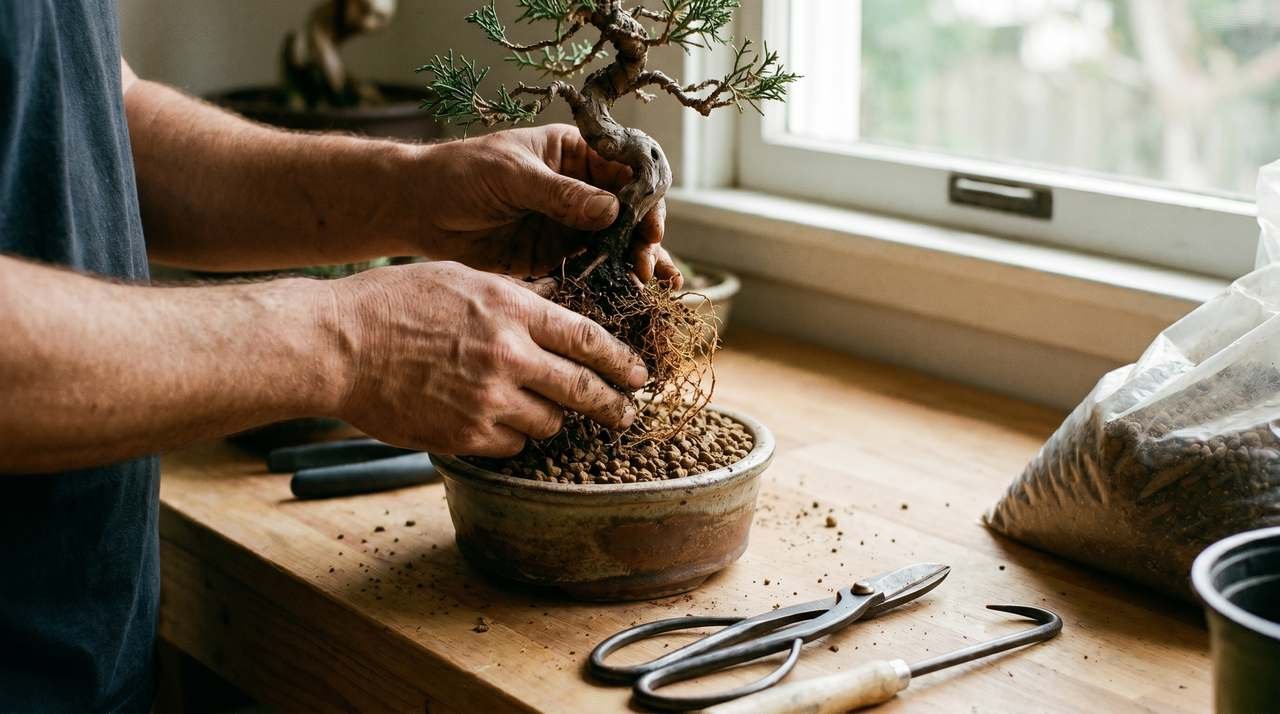
How to fix bonsai root rot: This is an emergency, and waiting will kill the tree. Remove the bonsai from its pot, gently work the old soil away from the roots, and inspect carefully. Using sharp, sterilized scissors (a dedicated pair of [AFFILIATE LINK: bonsai root pruning scissors] makes this far cleaner and safer for the tree), trim away all the brown, mushy, dead roots. Keep only the firm, healthy ones. Then repot into fresh, well-draining bonsai soil and water sparingly until you see new growth.
This is also a good time to upgrade your soil. A proper [AFFILIATE LINK: gritty bonsai soil mix with akadama, pumice, and lava rock] drains in seconds and prevents the conditions that caused rot in the first place. Our complete guides on emergency repotting and aftercare steps and choosing the right bonsai soil mix walk through this process in detail.
2. Underwatering
Underwatering is less common than overwatering but easier to identify. The symptoms include crispy, brown leaf edges, leaves that curl inward, soil that has pulled away from the sides of the pot, and a noticeably lightweight pot when you lift it. Some trees, especially tropicals like ficus, may drop leaves all at once after a dry spell.
The fix sounds obvious (water it), but the technique matters. Dry bonsai soil often becomes hydrophobic, meaning water runs straight through without actually wetting the soil particles. To rehydrate properly, submerge the entire pot in a basin of water up to the rim and let it soak for 10 to 15 minutes until bubbles stop rising. Then drain it and resume normal watering.
For ongoing care, use a watering can with a fine, narrow spout that delivers gentle, even water without disturbing the soil surface. A quality [AFFILIATE LINK: long-spouted bonsai watering can] gives you the precision needed to water thoroughly without splashing soil out of the pot. Read our full guide to proper bonsai watering technique to build a sustainable routine, and reference the New York Botanical Garden’s guidance on checking soil moisture before watering as a sanity check on your timing.
3. Wrong Placement (Indoor vs. Outdoor Species)
This is the heartbreaker, and it is almost always how gifted bonsai meet their end. Someone receives a juniper or pine in a decorative pot, assumes it is a houseplant because it came indoors, and places it on a shelf or desk. Within four to six weeks, the tree starts declining. By month three, it is unrecoverable.
Most bonsai species are outdoor trees that need full sun, fresh air, temperature variation, and a winter dormancy period to survive. Indoor environments lack all four. The handful of species that actually tolerate indoor life are tropicals: ficus (especially Ficus retusa and Ficus ginseng), Chinese elm in some cases, jade (Portulacaria afra and Crassula ovata), Hawaiian umbrella tree (Schefflera arboricola), and Fukien tea.
How to identify your species: Juniper bonsai have needle-like or scale-like foliage and a gnarled, often twisted trunk. Pines have long needles in bundles. These belong outside year-round in most climates. Ficus has glossy, oval leaves and often visible aerial roots. Jade has thick, fleshy, succulent leaves. These can live indoors with strong light.
If you have an outdoor species sitting on your coffee table, move it outside as soon as weather allows, ideally in a spot with morning sun and afternoon shade for the transition period. Acclimate gradually over a week to avoid shock. The National Bonsai Foundation’s care standards are an excellent reference for species-specific placement requirements.
4. Insufficient or Excessive Light
Light is the engine of every healthy bonsai, and getting it wrong shows up fast. Too little light causes etiolation, where new growth stretches out long and pale with widely spaced leaves as the tree reaches for any available light source. The internodes (the spaces between leaves) become abnormally long, the foliage thins out, and the tree weakens overall.
Too much direct sun, especially harsh afternoon sun in summer or sudden exposure after months indoors, causes leaf scorch. You will see brown, crispy patches in the middle of leaves or along the edges, with the damage concentrated on the side facing the sun.
Species-specific notes matter here. Junipers, pines, and most outdoor deciduous trees want six or more hours of direct sun daily. Ficus does well in bright indirect light or a few hours of direct morning sun. Jade can take full sun but needs a slow acclimation. Chinese elm tolerates a wide range but performs best with several hours of direct light.
If your tree is indoors and not thriving, a south-facing window is your best option. If that is not available, supplement with a quality LED grow light positioned six to twelve inches above the canopy, running 10 to 14 hours a day.
5. Wrong Soil (Water-Retaining Potting Mix)
If your bonsai is sitting in standard houseplant potting mix from a garden center, you have a ticking time bomb. Potting soil is designed to retain moisture for plants with large, vigorous root systems in deep pots. Bonsai live in shallow pots with restricted root volume, and they absolutely need a soil that drains fast and allows oxygen to reach the roots between waterings.
The symptoms of wrong soil overlap heavily with overwatering: soil that stays soggy, slow growth, yellowing leaves, and eventual root rot. The soil itself often looks dense, dark, and clumpy rather than gritty and loose.
Proper bonsai soil is a gritty mix, typically combining akadama (a fired Japanese clay), pumice (a porous volcanic rock), and lava rock in roughly equal parts. The exact ratio varies by species (conifers prefer more pumice and lava, deciduous trees do well with more akadama), but the principle stays the same: large particles, fast drainage, plenty of air pockets.
You can mix your own, but a pre-blended [AFFILIATE LINK: ready-to-use bonsai soil mix] saves time and ensures the proportions are right. Our deep dive on choosing the right bonsai soil mix covers everything you need to know, including species-specific variations.
6. Pest Infestation or Fungal Disease
Pests can take down a bonsai quickly, especially when the tree is already stressed from another issue. The four most common culprits for beginners are spider mites, scale insects, aphids, and fungal pathogens like root rot or powdery mildew.
Spider mites are tiny, almost invisible to the naked eye. The telltale signs are fine webbing on the underside of leaves, stippled or speckled foliage that loses its rich color, and a generally dusty appearance. They love hot, dry conditions and often appear on bonsai kept indoors with low humidity. Hold a white sheet of paper under a branch and tap it; if specks fall and start moving, you have mites.
Scale insects look like small brown or tan bumps stuck to stems and the undersides of leaves. They do not move once they have settled. You may also see sticky honeydew on leaves below them, which can develop into black sooty mold.
Aphids are small soft-bodied insects that cluster on new growth, sucking sap and deforming young leaves. They are usually green but can also be black, brown, or pink.
Fungal issues include root rot (covered above) and surface fungi like powdery mildew, which appears as white, powdery patches on leaves. Yellowing leaves can also signal disease, and our guide on why bonsai tree leaves turn yellow walks through how to distinguish nutrient deficiencies from pathogen-driven yellowing.
How to treat: For most pest issues, organic neem oil is the first line of defense. Spray the entire tree, including the undersides of leaves and stem joints, in the evening to avoid leaf burn, and repeat every 7 to 10 days for three cycles to break the life cycle. A bottle of [AFFILIATE LINK: organic cold-pressed neem oil for bonsai] goes a long way and handles mites, scale, aphids, and many fungal issues simultaneously. For heavy scale infestations, you may need to remove individual scales with a cotton swab dipped in isopropyl alcohol first.
7. Repotting Shock or Seasonal Dormancy
Sometimes the tree is not dying at all. It is just going through something that looks alarming if you are unfamiliar with it.
Repotting shock is normal after any significant root work. For two to four weeks following a repot, the tree may look stressed, drop a few leaves, slow its growth, and generally appear sad. This is the tree allocating energy to root recovery rather than visible growth. Keep it in dappled or partial shade, water gently when the topsoil dries, and do not fertilize until you see new growth. Resist the urge to do anything dramatic.
Seasonal dormancy is a normal annual cycle for outdoor deciduous bonsai. Maples, elms, hornbeams, and similar species drop every leaf in autumn and stand bare through winter. New owners often assume the tree has died and toss it. It has not. Apply the scratch test, look for healthy buds along the branches, and place the tree in a protected outdoor spot for winter. Come spring, you will see fresh buds and new leaves emerge.
Even some evergreens go through visible dormancy. Junipers often take on a slightly purple or bronze cast in cold weather, which returns to green in spring. This is normal cold-weather coloration, not death.
How to Revive a Dying Bonsai Tree: Step-by-Step
Once you have diagnosed the problem, the revival process follows a fairly standard sequence. Work through these steps in order. Skipping ahead, especially with fertilizer, can finish off a tree that would otherwise have recovered.
Step 1: Inspect the Roots
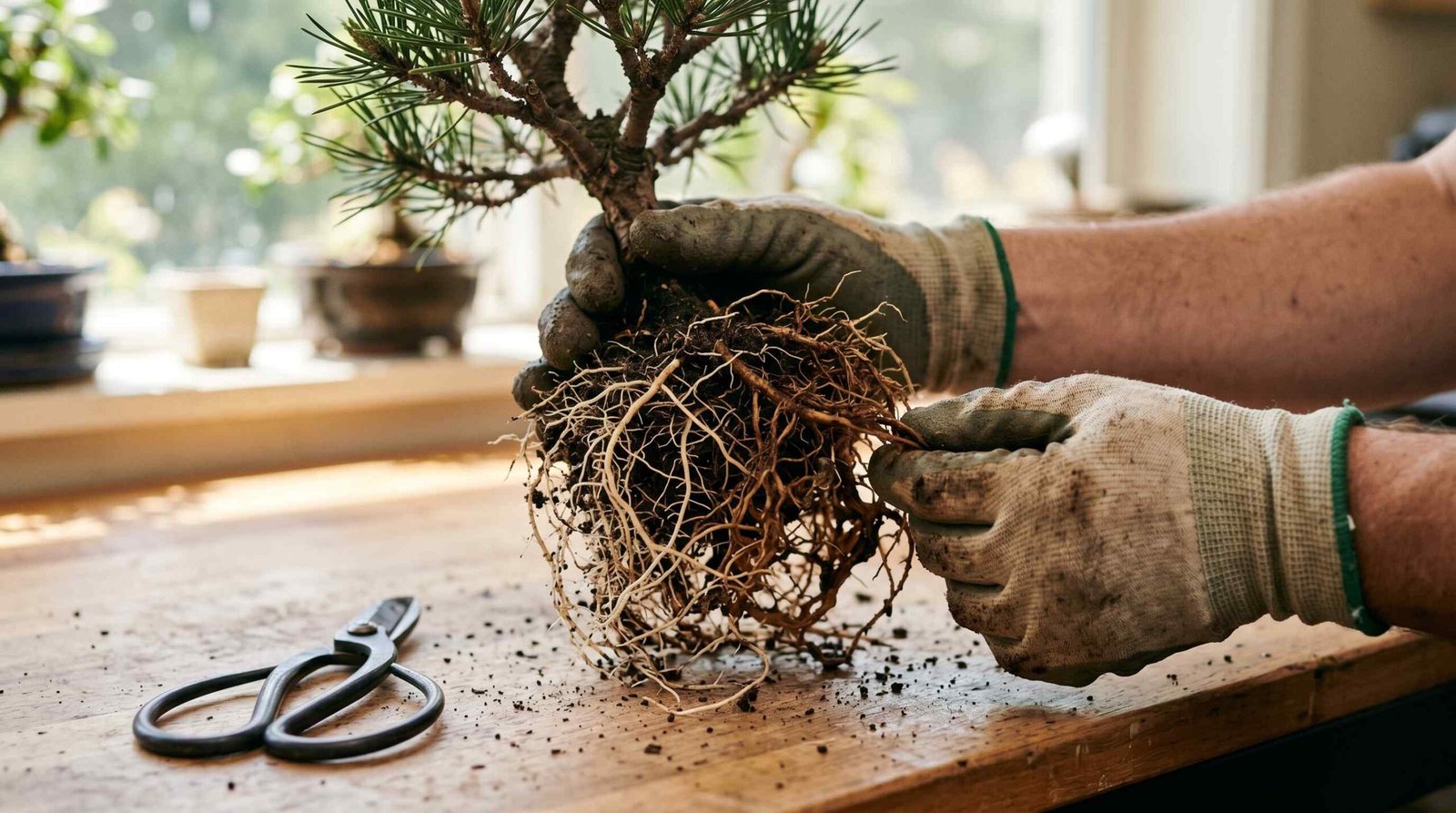
For any seriously declining bonsai, start at the roots. Gently slide the tree out of its pot. If it is stuck, run a thin knife or chopstick around the inside edge of the pot to loosen it. Hold the tree by the trunk base and lift slowly.
Look at the root mass. Healthy roots are firm, tan or white, and lightly fibrous. Diseased roots are dark brown or black, soft, smelly, or appear to be slimy. A healthy root ball holds its shape when you lift it. A rotted one falls apart or smells sour.
Take a photo at this stage. You will want a reference point as the tree recovers.
Step 2: Emergency Repot If Root Rot Is Present
If you find rotted roots, this is when you act. Using sterilized scissors, trim away every brown, mushy root. Cut back to firm, healthy tissue. Do not be precious about it. A tree with 30 percent healthy roots and no rot will recover; a tree with 80 percent rotted roots will not.
Rinse the remaining healthy roots gently with clean water to remove old soil and any fungal residue. Then repot into fresh, well-draining bonsai soil in a clean pot. The new pot should be roughly the same size as the old one, with adequate drainage holes covered by mesh.
If no root rot is present and the issue was something else (placement, light, soil), you may not need to repot. Disturbing healthy roots unnecessarily can itself cause stress.
Step 3: Correct the Environment Immediately
This is the step most beginners skip, and it is often the most important. If your tree is in the wrong place, move it. An outdoor juniper kept indoors will keep declining no matter how perfect your watering becomes. A jade plant in a dark corner will keep etiolating until you give it light.
After a serious repot, place the tree in a sheltered spot with bright but indirect light for two to three weeks, then gradually return it to its normal location. Avoid wind, harsh sun, and temperature extremes during recovery.
Step 4: Adjust Watering Technique
The single biggest watering mistake is using a fixed schedule. Bonsai do not care what day of the week it is. They care whether the soil is dry enough to need water and wet enough not to need it yet.
Check moisture by inserting a wooden chopstick or your finger about half an inch into the soil. If it comes out with moist soil clinging to it, wait. If it comes out clean and dry, water thoroughly. When you do water, water deeply: pour slowly until water flows freely from the drainage holes, pause, then water again. This ensures the entire root zone is hydrated, not just the top layer.
Frequency varies wildly by species, pot size, soil type, season, and indoor or outdoor placement. Some trees need water twice a day in summer; others go a week between waterings in winter. The chopstick test removes the guesswork.
Step 5: Hold Off on Fertilizer
This one is counterintuitive. Your tree looks weak, so you want to feed it. Do not. Fertilizing a stressed or recovering bonsai is like force-feeding a hospital patient. It puts demands on a system that cannot handle them and can chemically burn already-damaged roots.
Wait until you see clear signs of recovery: new leaves, new shoots, or a general perking up. Then resume feeding gradually at half strength. Our guide on when and how to fertilize bonsai covers timing, strength, and product selection in detail.
Step 6: Be Patient, Recovery Takes Time
Bonsai operate on tree time, not human time. Even after you have fixed every problem, expect weeks of waiting before you see new growth. Resist the urge to check the roots again, fertilize, or move the tree around. Place it, water it correctly, and let it work.
Set a calendar reminder to assess progress in four weeks. If you see new buds, new leaves, or noticeable color improvement, you are winning. If there is no change at all after six weeks, repeat the scratch test on multiple branches and reassess.
How Long Does It Take to Revive a Dying Bonsai Tree?
Recovery time depends on what went wrong and how far the damage progressed. Here are honest timelines based on common scenarios:
- Overwatering and mild root rot: Four to eight weeks after emergency repot for visible new growth. Full recovery (return to robust health) takes three to six months.
- Wrong placement corrected: Two to four weeks for the tree to stabilize after moving to the correct environment. Outdoor species moved outdoors after months indoors may take a full growing season to fully bounce back.
- Underwatering rescue: If caught early, recovery is fast. Visible improvement within one to two weeks. If leaves have already dropped, expect four to eight weeks for new foliage.
- Pest infestation cleared: Two to four weeks for visible improvement after eliminating the pest. New healthy growth may take six to eight weeks.
- Repotting shock: Two to six weeks of recovery is normal. New growth signals the tree has adapted.
- Severe root loss (over 70 percent): Recovery is possible but takes a full year or more, and success is not guaranteed.
We should be honest. Some trees cannot be saved. If the trunk shows no green tissue anywhere, if the branches all snap dry, if the roots are entirely rotted or absent, the tree is gone. Knowing when to let go is part of bonsai ownership, and most experienced growers have lost trees they wished they had not. The lesson, painful as it is, makes the next tree healthier.
Dying Bonsai Symptom Cheat Sheet
| Symptom | Most Likely Cause | Immediate Fix |
|---|---|---|
| Yellowing leaves that drop easily, soggy soil | Overwatering, root rot | Stop watering, inspect roots, emergency repot in gritty soil |
| Crispy brown leaf edges, dry lightweight pot | Underwatering | Submerge pot in water for 10 to 15 minutes, then adjust watering routine |
| Indoor juniper or pine slowly declining | Wrong placement (outdoor species kept inside) | Move outdoors gradually with shade transition |
| Pale, stretched new growth with long internodes | Insufficient light (etiolation) | Move to brighter location or add LED grow light |
| Brown scorched patches on leaves facing sun | Excessive direct sun, especially after relocation | Move to dappled afternoon shade, acclimate slowly |
| Fine webbing on leaves, dusty stippled foliage | Spider mite infestation | Treat with neem oil every 7 to 10 days for three cycles |
| Bare branches in late autumn or winter, buds intact | Normal seasonal dormancy (deciduous trees) | No action needed; protect from extreme cold and wait for spring |
| Loose trunk that wiggles in pot, sour soil smell | Advanced root rot | Emergency repot; trim all rotted roots back to healthy tissue |
Frequently Asked Questions
Q: Can a completely dead bonsai be revived?
A: No. If the scratch test reveals brown, dry cambium throughout the trunk and major branches, and the wiggle test shows the tree has no root anchor, the tree cannot be revived. The cambium layer carries water and nutrients, and once it dries out completely, there is no biological pathway for recovery. However, many bonsai that look dead at first glance still have green tissue somewhere, so always run the scratch test on multiple branches and the trunk base before giving up.
Q: My bonsai lost all its leaves, is it dead?
A: Not necessarily. If your tree is a deciduous species (maple, elm, hornbeam, larch) and it is autumn or winter, complete leaf drop is normal seasonal dormancy. Apply the scratch test to confirm green tissue is present and look for plump buds along the branches. If your tree is an evergreen like a juniper or pine and it has lost all its needles, that is a much more serious sign and usually indicates the tree is dead or very close to it.
Q: How do I know if my bonsai has root rot?
A: The classic signs are yellowing leaves that drop without crisping, soil that stays wet for days even in warm weather, a sour or sulfur-like smell from the pot, and a softer feel to the soil. If you gently lift the tree from its pot, rotted roots appear dark brown or black, feel mushy, and may slough off. Healthy roots are firm, tan or white, and have a mild earthy smell. When in doubt, slide the tree from the pot and look directly.
Q: Should I water a dying bonsai tree?
A: It depends entirely on why it is dying. If the problem is underwatering, yes, water it thoroughly using the soak method. If the problem is overwatering or root rot, watering more will accelerate the decline. The general rule: check soil moisture before every watering using the chopstick test, and only water when the soil is approaching dry. Never water a bonsai on a fixed schedule, especially during a recovery period.
Q: Can I save a bonsai that hasn’t been watered in weeks?
A: Possibly, depending on the species and how long the soil has been bone dry. Tropicals like ficus and jade can survive surprisingly long dry periods. Junipers and pines are more forgiving than people assume but still suffer. To attempt revival, submerge the entire pot in room-temperature water for 15 to 20 minutes until bubbles stop rising, then drain and place the tree in a sheltered, bright spot. Apply the scratch test after a week. If green tissue remains in the trunk, recovery is possible.
Q: What is the fastest way to revive a bonsai tree?
A: There is no shortcut, but the fastest path is correct diagnosis followed by immediate environmental correction. The single biggest accelerator is moving an outdoor species back outside if it has been kept indoors, because no amount of water, fertilizer, or care can substitute for the right conditions. After environment is corrected, address watering technique and soil quality. Avoid fertilizer until the tree shows new growth. Most recoveries take four to eight weeks to show real progress, and rushing the process by adding fertilizer or repotting twice causes more deaths than it prevents.
RELATED POSTS
View all

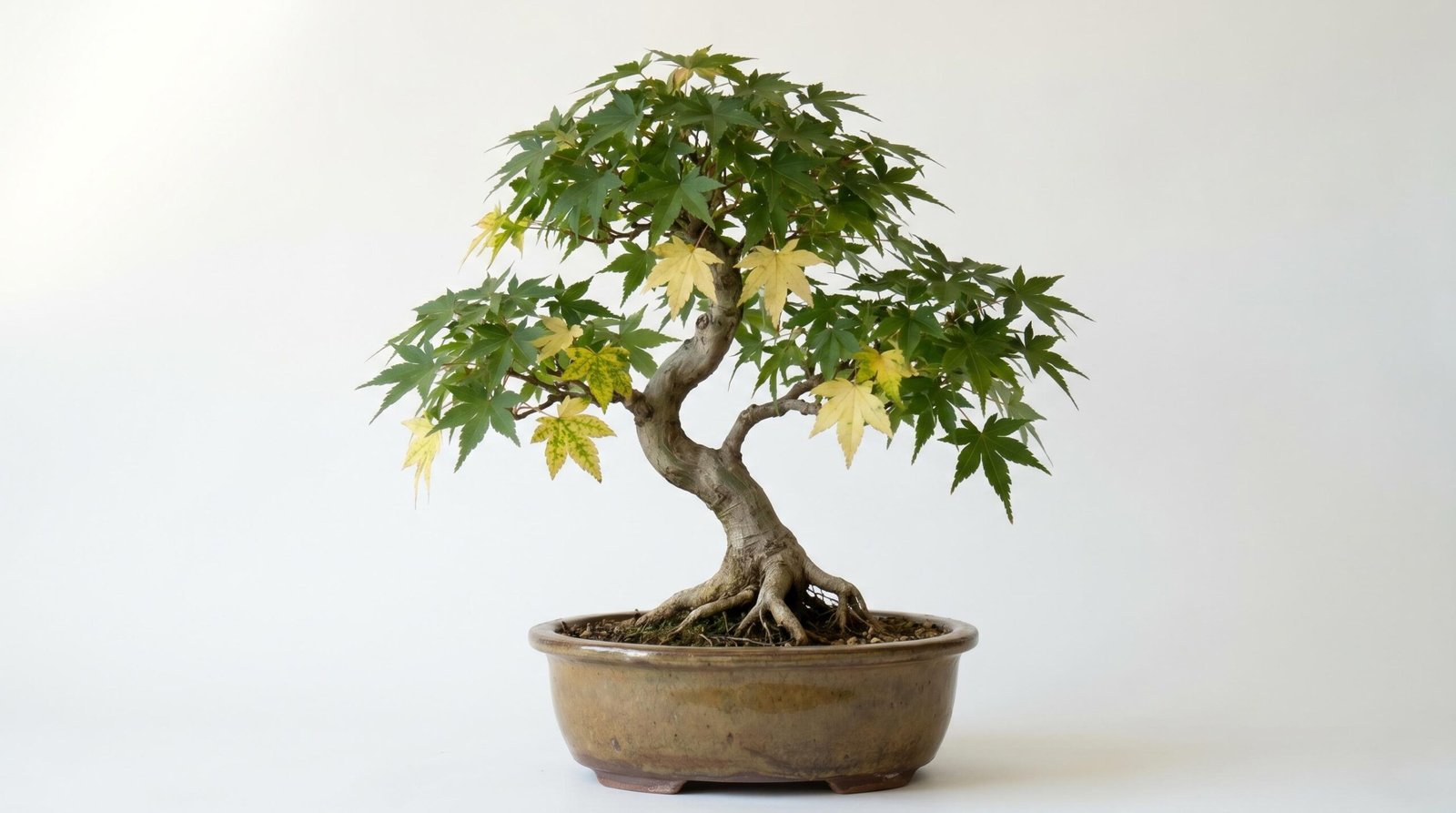
Why Are My Bonsai Tree Leaves Turning Yellow? (7 Causes and Fixes)
May 25, 2026 | by Ian
How to Repot a Bonsai Tree: Step-by-Step Guide for Beginners (2026)
May 12, 2026 | by Ian