This post contains affiliate links. If you purchase through these links, we may earn a commission at no extra cost to you.
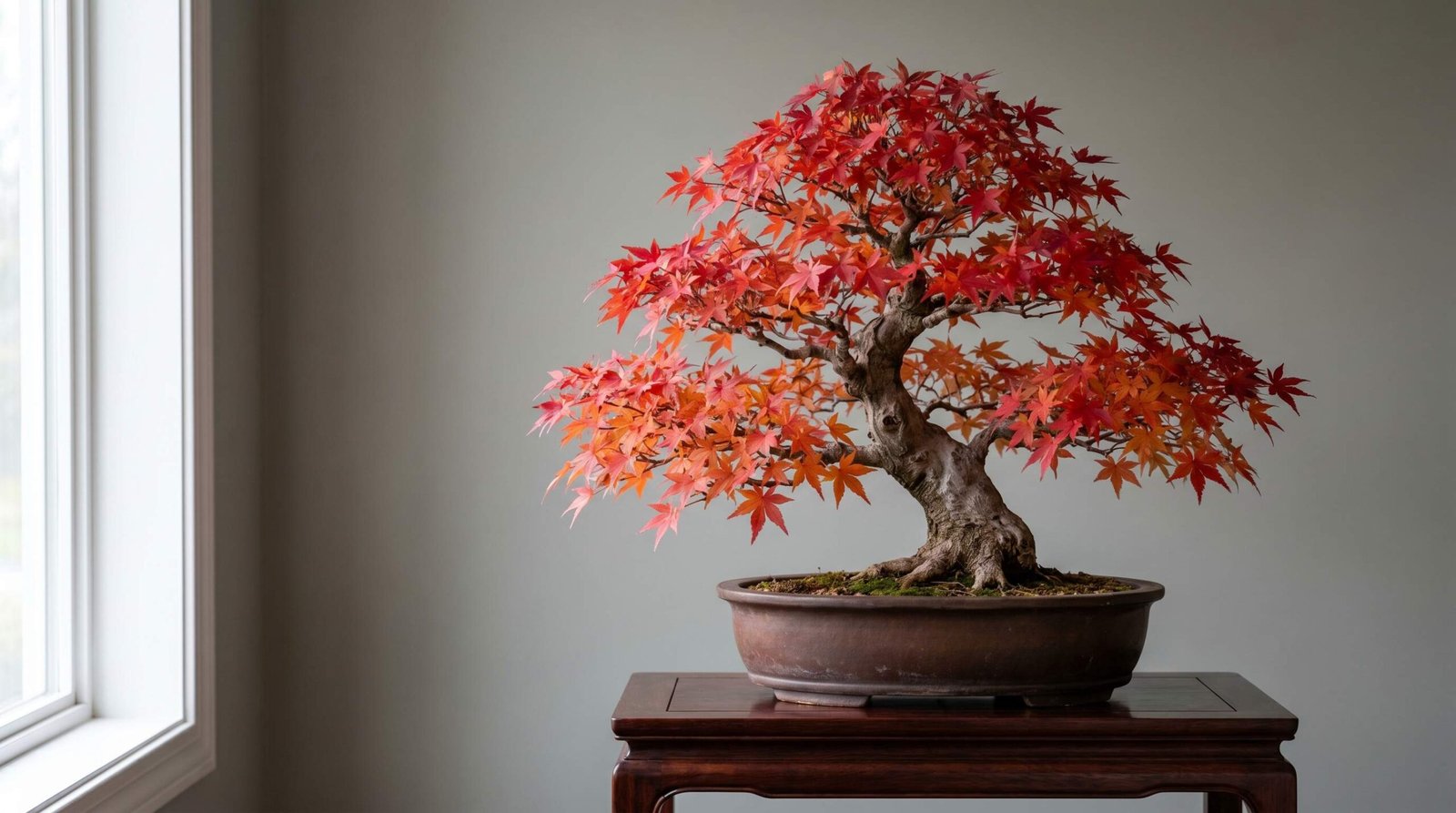
Japanese Maple Bonsai Care: Complete Guide (Leaf Drop, Seasons, and Pruning Explained)
If your Japanese maple bonsai just dropped every one of its leaves and you’re convinced you’ve killed it, stop. Your tree is fine. Japanese maples are deciduous, which means they shed their leaves every fall and look like a bare stick all winter. That’s not death, that’s dormancy, and it’s exactly what should happen. This guide walks you through what’s happening inside the tree every season of the year, and what you should be doing in response. Once you understand the rhythm, Japanese maple care stops feeling like a guessing game.
How Do You Care for a Japanese Maple Bonsai?
Japanese maple bonsai care follows the tree’s seasonal rhythm. Water daily in growing season, give the tree morning sun with afternoon shade in summer above 85°F, fertilize from spring through early fall, repot in late winter before buds open, and prune for structure in spring and fall. Expect leaves to drop in late autumn. This is normal dormancy, not death.
Quick Care Summary
| Care Factor | What to Do |
|---|---|
| Water | Daily in growing season, less in winter dormancy. Check soil moisture daily. |
| Light | Full sun in spring and fall, partial shade in summer above 85°F. |
| Fertilizer | Balanced organic fertilizer every 2 weeks from spring through early fall. |
| Repotting | Every 1 to 2 years in late winter (February to early March). |
| Pruning | Structural pruning in fall, ramification pruning in early summer. |
| Wiring | Late spring to summer, on young flexible branches. Remove within 6 months. |
The Seasonal Care Calendar (The Heart of Japanese Maple Care)
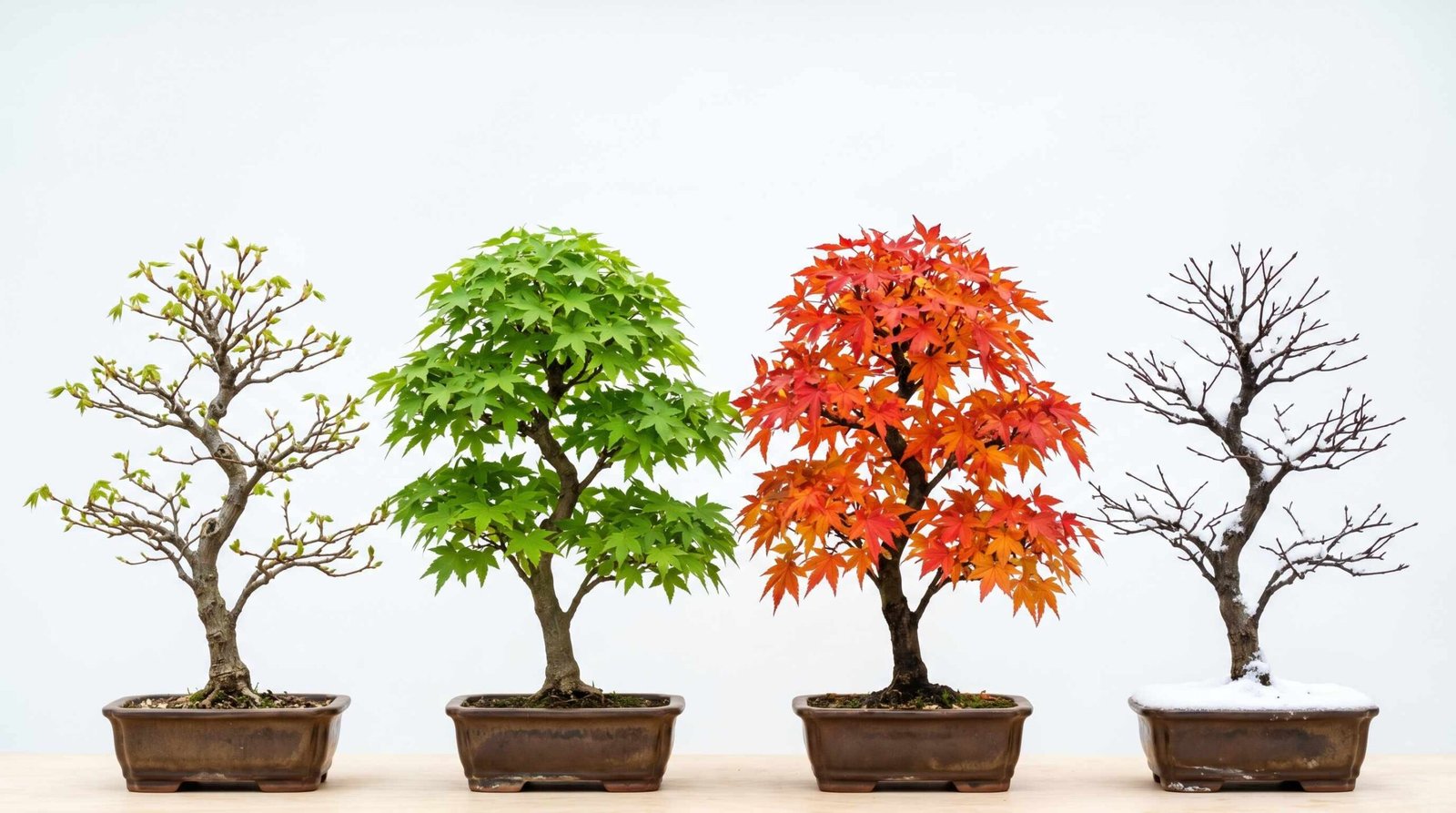
Japanese maples organize their entire year around the cycle of leaf out, summer growth, fall color, and winter dormancy. Your job is to support each phase. Here’s the year-round map.
| Season | What the Tree Does | What You Should Do | Watch For |
|---|---|---|---|
| Spring (March to May) | Buds swell, leaves emerge in vivid red or green, vigorous shoot extension | Begin watering daily, start fertilizer 2 weeks after leaves harden, structural pruning, leaf prune in early May for ramification | Late frost damage on tender new leaves, aphids on fresh growth |
| Summer (June to August) | Full canopy, slowed growth, leaves harden off | Water once or twice daily, move to afternoon shade when temps exceed 85°F, no major pruning, light fertilizer | Leaf scorch on edges, wilting from dry soil, sunburn on south-facing branches |
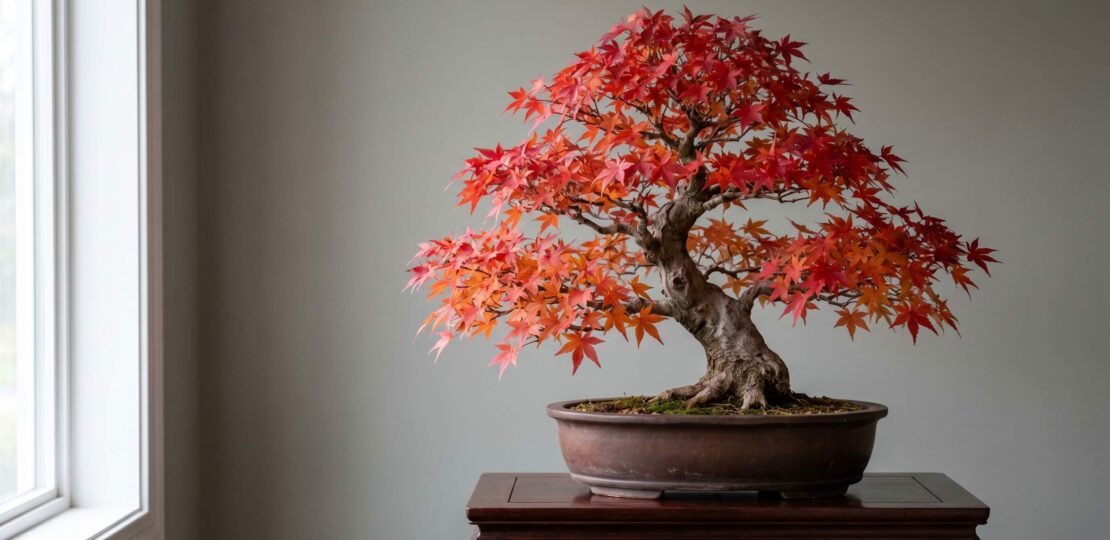
| Fall (September to November) | Chlorophyll breaks down, leaves turn red, orange, or gold, growth stops | Reduce fertilizer to zero by mid-October, structural pruning after leaf drop, enjoy the color show | Premature leaf drop from dry stress, fungal spots on aging leaves |
| Winter (December to February) | Full dormancy, all leaves drop, sap retreats to roots | Water sparingly when soil is dry, protect roots from freezes below 15°F, repot in late February to early March before buds break | Hard freeze damage to the pot or roots, mice or voles burrowing into mulch |
Print this table and tape it near your workspace. It saves more beginner maples than any other piece of advice.
Watering Your Japanese Maple Bonsai
Japanese maples are more sensitive to watering mistakes than most beginner trees. The thin leaves transpire heavily in warm weather, and a single missed watering in July can leave you with crispy brown leaf edges that won’t recover that season. The other side is just as risky. A maple sitting in soggy soil develops root rot quickly because the species hates wet feet.
The Daily Check
Stick a chopstick or wooden skewer into the soil about an inch deep. Pull it out and look at the tip.
- Dry and clean: Water now.
- Slightly damp and clinging: Wait a few hours and check again.
- Wet with soil stuck to it: Skip watering, check again tomorrow.
This habit saves more maples than any timer or app. The right schedule depends on your pot size, soil mix, sun exposure, and the weather that week. Your finger and a chopstick beat any guess.
Water Until It Runs Through
When you water, soak the soil until water drains freely from the bottom holes of the pot. A light sprinkle on the surface leaves the lower roots dry. We suggest watering with a fine rose sprinkler or a watering can with a soft head, since a strong jet can wash soil out of the pot.
Winter Watering
A dormant maple still needs occasional water in winter, especially during dry windy spells. Check the soil weekly. The pot can dry out even in cold weather, and a dehydrated maple won’t push leaves properly in spring.
For a broader walkthrough of bonsai watering principles, see our complete guide to watering a bonsai tree.
Light Requirements: The Specific Nuance
Japanese maples love sun, but they can’t handle the intense afternoon heat of midsummer in zones 7 and warmer. The sweet spot is bright morning sun with afternoon shade once temperatures climb past 85°F. NC State Extension’s botanical profile of Acer palmatum notes the species performs best in part shade in hot climates, consistent with the afternoon-shade principle every experienced grower follows in practice.
Spring and Fall
Full sun all day produces the best leaf color, both the fresh red emergence in spring and the brilliant fall display. The cool temperatures protect the leaves from scorch.
Summer
Once daytime highs cross 85°F, move your maple to a spot that gets sun until about noon and shade for the rest of the day. East-facing porches and shade cloth (40 to 50 percent) work well. A maple baked in full afternoon sun in July will develop brown crispy leaf margins called leaf scorch, and once the damage shows, you can’t undo it that season.
Winter
A bare dormant tree doesn’t need much light, but it does need cold to complete dormancy. Don’t bring a Japanese maple indoors for winter. They require a cold period to reset for spring. A protected outdoor location, ideally with the pot insulated from extreme freezes, is the right setup.
Fertilizing Schedule
Japanese maples respond best to a steady, gentle feeding program. Heavy nitrogen produces huge floppy leaves that lose their fine ramification, which is the dense branching that makes a mature maple bonsai look so good. The goal is moderate, balanced growth.
Spring (After Leaves Harden)
Wait until the spring leaves have firmed up, usually 2 to 3 weeks after they emerge. Apply a balanced organic fertilizer, something around 6-6-6 N-P-K (nitrogen-phosphorus-potassium), every 2 weeks. Biogold organic pellets are a favorite in the bonsai world because they release slowly and feed the soil biology.
Summer
Reduce strength by half during the hottest months. Hot weather slows growth, and a tree that isn’t growing can’t use the nutrients you’re piling on the soil.
Early Fall
Switch to a low-nitrogen, higher-potassium fertilizer, something like 0-10-10. This supports root development and prepares the tree for winter dormancy without pushing soft new growth that won’t have time to harden before frost.
Mid-Fall Through Winter
Stop fertilizing entirely by mid-October. A dormant tree absorbs nothing, and fertilizer left in the pot can burn roots when the soil chemistry shifts.
Repotting Your Japanese Maple Bonsai
Japanese maples are vigorous root growers and benefit from regular repotting. Young trees often need it every year, mature trees every 2 to 3 years. Skip a repot too long and the roots circle the pot, water stops penetrating, and the tree weakens fast.
When to Repot
The best window is late winter, usually February to early March in most climates, just as the buds begin to swell but before they break open. The tree is still dormant enough to tolerate root work but warming enough to begin healing immediately.
How Often
- Young trees (under 5 years in training): Every year.
- Established trees (5 to 15 years): Every 2 years.
- Mature specimens: Every 2 to 3 years.
Soil Mix
Japanese maples need a fast-draining mix with good water retention. The classic recipe is:
- 50 percent akadama (Japanese clay aggregate)
- 25 percent pumice
- 25 percent lava rock
If you can’t source akadama, a quality pre-mixed bonsai soil from a dedicated bonsai retailer is a fair substitute. Avoid generic potting soil at all costs because it compacts, holds too much water, and suffocates the roots.
For step-by-step repotting technique, our how to repot a bonsai guide covers the process in detail.
Pruning Your Japanese Maple Bonsai
Pruning is where Japanese maples reward your patience. Done at the right times, you build a tree with delicate ramification and a graceful silhouette. Done wrong, you stunt growth or invite dieback.
Structural Pruning
Remove larger branches in late fall, after leaves drop, or in very early spring before buds swell. The tree is dormant, sap loss is minimal, and you can see the branch structure clearly without leaves in the way. Use sharp bonsai scissors or a concave cutter for clean wounds that heal flat.
Leaf Pruning for Ramification
In early to mid-summer, once spring growth has hardened, you can defoliate part of the tree. This means removing leaves (not branches) to force a second flush of smaller leaves and finer twigging. It’s an advanced technique. We suggest waiting until your tree is healthy and vigorous, usually after 2 years in your care, before trying it.
What NOT to Prune
- Don’t prune in late winter or early spring when sap is rising. Maples bleed heavily during this window and can weaken from sap loss.
- Don’t remove more than 30 percent of foliage in a single session. A maple needs leaf surface to feed itself through the growing season.
- Don’t cut a thick branch flush. Leave a small collar (about 1 to 2mm) to seal cleanly. A concave cutter is the right tool for this.
For general pruning principles across species, see our guide on how to prune a bonsai tree.
Common Problems and How to Fix Them
Leaf Scorch (Brown, Crispy Leaf Edges)
Cause: Too much direct afternoon sun in summer, or chronically dry soil, or both.
Prevention: Move the tree to afternoon shade once daytime highs cross 85°F. Increase watering frequency. Mist the foliage lightly in the morning to raise humidity around the leaves.
Treatment: Once leaves are scorched, they won’t recover that season. Cut your losses, keep the tree alive, and the next spring’s leaves will come in fresh.
“My Maple Looks Dead in Winter”
This is the number one panic message from beginners. Japanese maples are deciduous and shed every leaf in fall. By December, your tree is a bare collection of twigs and looks lifeless. It is not lifeless. It’s dormant. Scratch a tiny patch of bark with your fingernail on a small twig. If you see green underneath, the tree is alive and well. Sometime between late March and early May, depending on your climate, the buds will swell and burst open with new leaves. Trust the cycle.
Leaf Drop in Summer
Cause: Heat stress, drought stress, or both. The tree drops leaves to reduce water loss when it can’t pull enough from the soil.
Prevention: Move to afternoon shade in heat waves, water more frequently, and consider grouping pots together to raise humidity.
Treatment: If the tree drops a portion of its leaves in midsummer, don’t panic. As long as the buds are intact and the branches are alive (the scratch test), the tree will recover. A second flush of leaves may emerge in late summer once the stress passes.
Reverse Color or Burnt Edges Early in Season
This is often late frost damage. Japanese maples push leaves early, and a cold snap in late April or early May can blacken the tender new growth. The tree will produce a second flush from secondary buds within 2 to 4 weeks. Cover the tree on frost nights with a sheet or move it into a sheltered spot.
Symptom Quick-Reference: Diagnose Your Japanese Maple at a Glance
Use this table to match what you’re seeing with the most likely cause and next step.
| Symptom | Most Likely Cause | Season | What to Do |
|---|---|---|---|
| All leaves drop, bare branches | Normal deciduous dormancy | Sept to Feb | Nothing. This is healthy and expected. |
| Leaves drop early in summer | Heat or drought stress | June to Aug | Move to shade, water twice daily, scratch-test branches for life |
| Brown crispy edges on leaves | Leaf scorch (afternoon sun + heat) | Midsummer | Afternoon shade, increase watering frequency |
| New leaves blacken in spring | Late frost damage | April to May | Cover on frost nights; secondary buds flush in 2 to 4 weeks |
| Leaves curl, distort, tiny insects on growth tips | Aphid infestation | Spring | Spray with dilute neem oil or insecticidal soap twice, 5 days apart |
| Pale yellow leaves despite watering | Nitrogen deficiency or root-bound soil | Growing season | Fertilize with balanced organic; check if repotting is due |
| No spring buds after winter | Possible root freeze or deep dormancy delay | March to April | Scratch-test bark; if green inside, wait another 4 weeks before acting |
| Water sits on soil surface, slow drainage | Soil compaction or root-bound pot | Year-round | Repot in late winter with fresh bonsai mix |
Best Japanese Maple Varieties for Bonsai
Hundreds of Japanese maple cultivars exist, but only a handful are well suited to bonsai. Here are the standouts. According to the Missouri Botanical Garden’s Acer palmatum profile, the species and its cultivars are native to Korea and Japan and have given rise to more than 1,000 named varieties, ranging from compact dwarfs to full-sized ornamental trees.
Acer palmatum (Standard Japanese Maple)
The species form. Green palmate leaves in spring and summer, brilliant red or orange in fall. Vigorous, forgiving, and the right starting point for nearly every beginner. Buy an Acer palmatum starter tree here.
Acer palmatum ‘Deshojo’
A red-leafed cultivar where spring leaves emerge in vivid crimson. The leaves green up in summer and turn red again in fall. Slower growing than the species but stunning when in spring color. Deshojo cultivar bonsai available here.
Acer palmatum ‘Kiyohime’
A dwarf cultivar with naturally small leaves and short internodes (the space between leaves on a branch). Excellent for small bonsai because the proportions stay right at miniature scale. Kiyohime bonsai for sale here.
Acer palmatum dissectum (Laceleaf Japanese Maple)
Deeply cut, almost fern-like leaves. Naturally cascading or weeping form, which suits cascade and semi-cascade bonsai styles. More demanding than the standard species, so we suggest waiting until you’ve kept a regular Japanese maple alive for 2 years before adding a dissectum. Laceleaf dissectum bonsai available here.
For broader species comparisons, our juniper bonsai care guide and pine bonsai care guide cover two evergreen alternatives that pair well with a Japanese maple in a small collection.
Frequently Asked Questions
Are Japanese maple bonsai trees hard to care for?
Japanese maples are moderate in difficulty. They are more demanding than a juniper because they need careful watering, summer shade, and protection from late frosts, but they are far less finicky than tropical species kept indoors. A first-year grower can succeed with a Japanese maple if they water consistently, give it summer afternoon shade, and let the tree experience cold winter dormancy outdoors.
Do Japanese maple bonsai trees lose their leaves?
Yes, every year. Japanese maples are deciduous, which means they drop all of their leaves every fall as a normal part of their seasonal cycle. The tree enters dormancy through winter and looks like a bare collection of twigs until spring. New leaves emerge in March, April, or May depending on your climate. A leafless winter maple is not dead, it is dormant.
How often should you water a Japanese maple bonsai?
Water when the top inch of soil is approaching dry, which is usually daily in summer and every 2 to 4 days in cooler weather. Check the soil with a chopstick or your finger before watering rather than following a fixed schedule. In hot summer weather above 85°F, the pot may need water twice a day. In dormant winter, weekly checks are usually enough.
When should you repot a Japanese maple bonsai?
Repot in late winter, usually February to early March, just as the buds begin to swell but before they break open. Young trees benefit from yearly repotting, established trees every 2 years, and mature specimens every 2 to 3 years. Avoid summer or fall repotting because the tree cannot heal root damage when temperatures are high or when entering dormancy.
Can Japanese maple bonsai live indoors?
No. Japanese maples need outdoor conditions year-round, including a cold winter dormancy period. Keeping one indoors will weaken and eventually kill it because the tree cannot complete its required dormancy cycle. A protected outdoor location, such as a sheltered patio or a cold frame in winter, is the right home. Indoor warmth in winter is the most common reason growers lose Japanese maples.
Why are my Japanese maple bonsai leaves turning brown?
Brown leaves on a Japanese maple usually mean one of three things: leaf scorch from too much summer sun and heat, drought stress from missed watering, or normal fall color change in September through November. Check the soil moisture, your sun exposure, and the time of year. If leaves are crispy at the edges in midsummer, move the tree to afternoon shade and increase watering immediately.
What is the best soil mix for Japanese maple bonsai?
The most commonly used mix is 50 percent akadama, 25 percent pumice, and 25 percent lava rock. This combination drains freely to prevent waterlogging, retains enough moisture between waterings, and keeps the roots aerated. Generic garden soil or peat-based potting mix compact over time and suffocate the root system. If you can’t source akadama, a pre-mixed bonsai soil from a specialist retailer is a reasonable substitute.
When is the best time to prune a Japanese maple bonsai?
Structural pruning (removing larger branches) is best done in late fall after leaves drop or in very early spring before the buds swell. Both windows give you clear sight lines into the branch structure and keep sap loss to a minimum. Avoid pruning in late winter to mid-spring when sap rises heavily; maples bleed from cuts during this period and can weaken. Fine ramification pruning and leaf pruning are done in early summer once spring growth has hardened.