This article contains affiliate links. If you purchase through our links, we may earn a small commission at no extra cost to you.
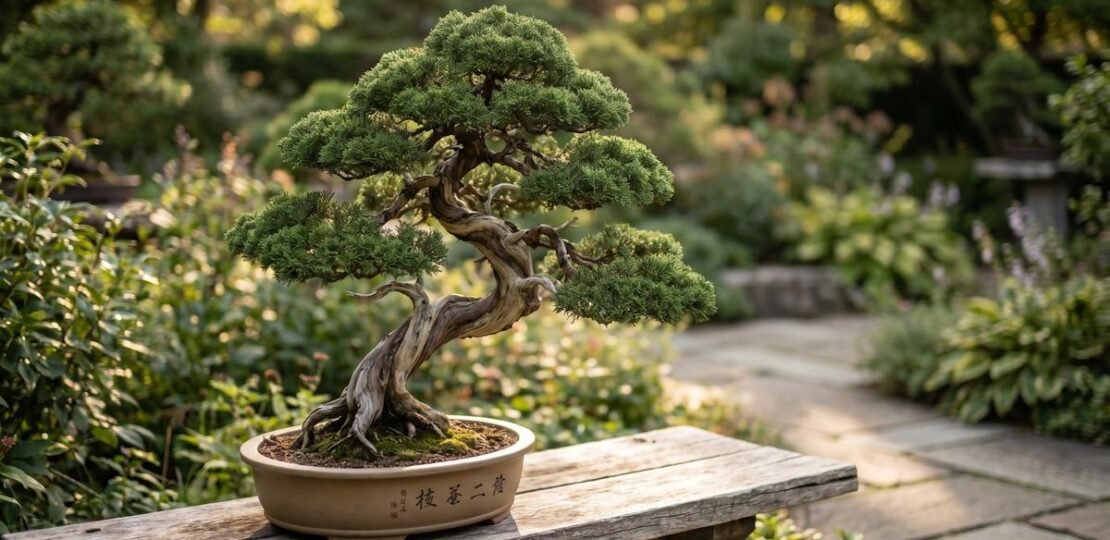
Juniper bonsai care in brief: Keep your juniper outdoors in full sun year-round. Water when the top of the soil starts to dry, never on a fixed schedule. Fertilize monthly during the growing season. Trim new shoots throughout spring and summer to shape foliage pads. Protect roots from temperatures below 14 degrees F (-10 degrees C) in winter, but never bring the tree indoors long-term.
Juniper bonsai are one of the most popular trees for beginners, and also one of the most commonly killed. The problem is almost never neglect. It is usually well-meaning beginners placing a beautiful outdoor tree on a windowsill or coffee table, watching it thrive for six to eight weeks, and then watching it die.
This guide covers everything you need to know to keep your juniper alive and thriving: placement, watering, pruning, fertilizing, repotting, wiring, pests, and the products we suggest for each stage. We also cover the most common beginner mistakes so you can avoid them from day one.
Juniper Bonsai Species: Which One Do You Have?
Identifying your species helps you understand its exact needs. Most junipers share the same core care requirements, but small differences in cold hardiness and foliage type matter. The juniper genus (Juniperus) contains roughly 50 to 70 species across the cypress family, according to the American Bonsai Society.
| Species | Common Name | Foliage Type | Where You’ll Find It | Notes for Beginners |
|---|---|---|---|---|
| Juniperus procumbens nana | Green Mound Juniper | Scale-like, soft | Big-box stores, Walmart, Home Depot | Most common starter tree; very forgiving |
| Juniperus chinensis | Chinese Juniper | Scale-like and juvenile needle mix | Bonsai nurseries | Classic styling candidate; widely available |
| Juniperus chinensis var. Itoigawa | Itoigawa Shimpaku | Fine scale foliage | Specialty bonsai shops | Most prized for refined styling; slightly more demanding |
| Juniperus rigida | Needle Juniper (Tosho) | Sharp needle-like | Specialty imports | Striking appearance; handle foliage with gloves |
| Juniperus communis | Common Juniper | Needle-like | Native North America and Europe | Cold-hardy; good for yamadori collecting |
| Juniperus scopulorum | Rocky Mountain Juniper | Scale-like | Western US nurseries | Drought-tolerant once established |
If you bought your tree from a big-box store, it is almost certainly a Juniperus procumbens nana (Green Mound Juniper). The care in this guide applies directly to it.
Placement: The Single Most Important Rule
Juniper bonsai must live outdoors. This is the one rule you cannot bend.
Junipers photosynthesize through their foliage and store that energy in their needles and branches. When you move a juniper indoors, it stops producing new energy but continues spending the energy it has stored. For six to eight weeks the tree looks perfectly healthy. Then the tips start browning, the foliage crisps from the outside in, and by the time you see the problem, it is usually too late to reverse it.
As the Bonsai Clubs International resource on bonsai techniques notes, most bonsai species marketed as indoor plants are actually outdoor trees that need seasonal temperature variation and direct sunlight to remain healthy long-term.
Here is what good juniper placement looks like:
- Full sun: At least 6 hours of direct outdoor sunlight per day. The more sun the tree gets, the tighter and more compact the foliage pads grow. Shaded junipers develop open, loose foliage that looks scraggly.
- Year-round outdoors: Keep it outside in every season, including winter. The cold period triggers healthy dormancy.
- Afternoon shade option: In very hot, dry climates (above 95 degrees F / 35 degrees C consistently), light afternoon shade protects the foliage from scorching.
- Avoid indoor display: You can bring a juniper inside for a few hours to show guests, but return it outside the same day. Do not keep it indoors overnight regularly.
Watering a Juniper Bonsai
Junipers dislike both extremes: bone-dry roots and soggy, waterlogged soil. The goal is soil that is moist but never saturated, and allowed to approach dryness (but not fully dry out) between waterings.
How to Tell When to Water
Push a finger or a chopstick about half an inch into the soil. If it comes out with damp soil or moisture residue, wait. If it comes out dry or barely damp, water now. In summer you may check twice a day. In winter, checking once every few days is usually enough.
How to Water Correctly
- Use a soft-spray watering wand or a watering can with a fine rose head to avoid displacing soil.
- Water thoroughly until water flows freely from the drainage holes.
- Empty the tray under the pot after 30 minutes to prevent standing water.
- Mist the foliage occasionally, especially after repotting, to support air humidity around the needles.
Overwatering is more common than underwatering and more dangerous. Signs of overwatering include yellowing foliage, soft mushy soil that never seems to dry, and a sour smell from the pot. If you suspect root rot, check our guide on how to repot a bonsai for steps on inspecting and treating the root system.
Soil Type Affects Watering Frequency
This is important: inorganic bonsai soils (akadama, pumice, lava rock) drain much faster than organic soils. A tree in a well-draining inorganic mix will need watering more often than one in a peat-based mix. If you are watering daily and still seeing healthy growth, your drainage is working correctly.
Fertilizing Your Juniper Bonsai
Junipers in bonsai pots have limited soil volume and need regular fertilizing during the growing season to support healthy foliage and root development.
When to Fertilize
- Growing season (spring through early fall): Fertilize every two to four weeks with a liquid fertilizer, or apply a slow-release organic fertilizer pellet monthly.
- Spring boost: A higher-nitrogen fertilizer in early spring supports the first flush of new growth.
- Late summer through fall: Switch to a lower-nitrogen, higher-phosphorus and potassium formula to harden growth before winter.
- Winter: Stop fertilizing while the tree is dormant.
Fertilizer Options We Suggest
| Product Type | Best For | Application | Where to Buy |
|---|---|---|---|
| Balanced liquid fertilizer (10-10-10) | All-season general feeding | Every 2 weeks, diluted per label | View on Amazon |
| Organic fertilizer pellets (Biogold) | Slow-release feeding; refined trees | Place on soil surface monthly | View on Amazon |
| High-nitrogen spring fertilizer | Encouraging first spring growth flush | Apply once in early spring | View on Amazon |
Pruning a Juniper Bonsai
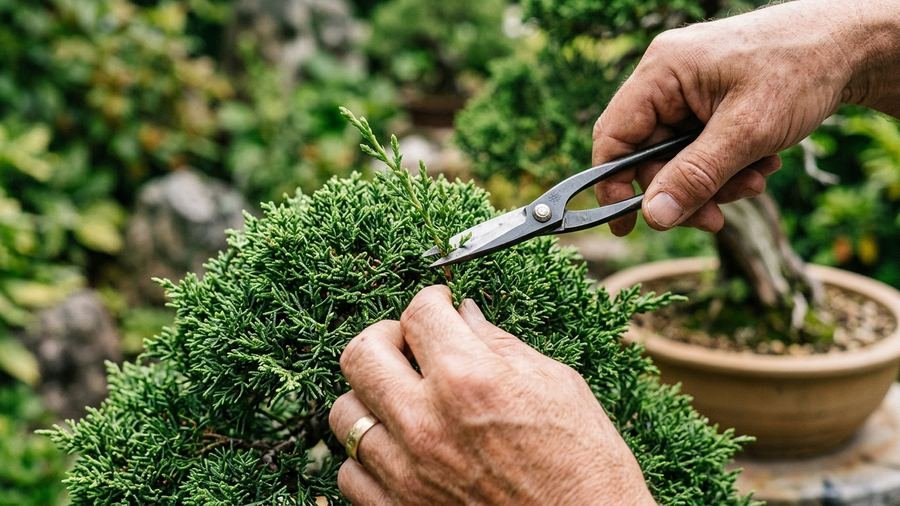
Pruning shapes the tree and maintains the compact foliage pads that make junipers so visually striking. Good pruning also improves air circulation and reduces pest risk. For a full walkthrough of bonsai pruning technique, see our complete pruning guide for beginners.
The Two Types of Pruning
Maintenance pruning keeps the tree’s shape. Throughout the growing season, trim shoots that grow beyond the silhouette of each foliage pad. Use sharp bonsai scissors and cut at the base of the extending shoot, not through the foliage tips. Cutting through the tips turns them brown.
Structural pruning removes whole branches to improve the tree’s design. This is more advanced and should be done carefully in early spring or early fall, not during the peak heat of summer.
Key Pruning Rules for Junipers
- Never remove all the growing tips at once. This weakens the tree and often triggers browning.
- Always leave some foliage on every branch you want to keep. Junipers cannot bud from bare wood.
- Thin dense foliage pads from the inside by removing inner growth. This lets light and air reach the interior branches and reduces pest risk.
- In early spring, let new shoots extend fully before pruning. Cutting too early removes growth hormones that support root development.
- The yellowing interior foliage you see in summer is normal. This seasonal shedding is called toya in Japanese and happens as the tree prioritizes strong outer growth.
Wiring a Juniper Bonsai
Wiring bends branches into position and holds them there while the wood sets. Junipers respond very well to wiring and can be bent quite dramatically, which is why they are associated with the twisted, windswept styles (fukinagashi) seen in bonsai exhibitions.
- Best time: Wiring can be done year-round. Avoid spring if possible, as the tree is actively pushing new growth and disturbing branches then is more stressful. Fall is ideal for heavy bending work.
- Wire type: Aluminum wire for beginners. It is easier to work with and less likely to bite into bark if you accidentally leave it on too long. Copper wire is stronger and used by advanced practitioners.
- Wrapping technique: Wrap at a 45-degree angle, snug but not tight enough to compress the bark. Two branches of similar thickness can often share a single piece of wire.
- Protecting deadwood: If the branch has deadwood (jin or shari), wrap it with raffia tape first before bending. Deadwood is brittle and breaks without protection.
- Remove wire before it bites: Check wired branches every few weeks. Remove and rewire before the wire cuts into the bark, which leaves permanent scars.
We suggest starting with aluminum wire in gauges 1mm to 3mm to cover most beginner branches. A basic wire set gives you the range you need.
View aluminum bonsai wire sets on Amazon
Repotting a Juniper Bonsai
Repotting refreshes the soil, trims circling roots, and prevents the root ball from becoming so dense that water cannot penetrate. Young junipers typically need repotting every two years. Older, more established trees can go three to four years between repottings.
The best time to repot is early spring, just as the foliage begins greening up and before the first flush of new growth. For a detailed step-by-step walkthrough of the full process, see our bonsai repotting guide.
Repotting Tips Specific to Junipers
- Do not remove more than one-third of the root mass at one time. Aggressive root pruning can shock the tree and trigger reversion to juvenile (needle-like) foliage, especially in scale-leafed varieties like Itoigawa Shimpaku.
- Leave a core of original soil around the main roots. This preserves the beneficial mycorrhizal fungi that help junipers absorb water and nutrients.
- Use a well-draining soil mix. A blend of one part akadama, one part pumice, and one part lava rock is a popular and reliable choice.
- After repotting, water gently and mist the foliage daily for two weeks. Move the tree to a slightly shaded spot for a week to reduce stress.
Bonsai Soil Products We Suggest
| Product | Type | Best For | Where to Buy |
|---|---|---|---|
| Akadama (hard type) | Inorganic clay granules | Water retention with good drainage | View on Amazon |
| Pumice | Volcanic mineral | Aeration and drainage | View on Amazon |
| Lava rock (small grain) | Volcanic mineral | Drainage and root anchorage | View on Amazon |
| Pre-mixed bonsai soil | Blended inorganic mix | Convenience for beginners | View on Amazon |
Pests and Diseases
Healthy junipers kept in full sun with good air circulation are generally resistant to pests. Problems arise mainly when foliage pads are too dense, the tree is stressed from insufficient light, or air circulation is poor.
Common Pests
- Spider mites: Tiny red or brown mites that cause bronze discoloration on foliage. Increase humidity and spray with a miticide or neem oil solution.
- Juniper scale: Small, armored insects that attach to branches. Treat with horticultural oil in early spring before crawlers hatch.
- Juniper aphids: Soft-bodied insects on new growth. A strong spray of water or insecticidal soap removes them effectively.
- Juniper webworm: Small caterpillars that web together foliage and feed inside. Remove webs manually and treat with a targeted insecticide.
Cedar-Apple Rust: A Serious Disease to Know
Cedar-apple rust is a fungal disease that affects junipers permanently. It produces orange, gelatinous tendrils on branches in rainy weather and spreads spores to nearby apple, crabapple, hawthorn, and pear trees. Once a juniper is infected, the fungus cannot be eliminated. Infected branches should be removed, and if the tree is severely affected, it is best to dispose of it rather than risk spreading the disease. Junipers with blue-green foliage tend to be more resistant than yellow-green varieties. The Illinois Extension Service provides detailed identification guidance for this disease, and Penn State Extension lists all common juniper diseases with management steps.
Prevention Tips
- Thin dense foliage pads regularly to allow air circulation.
- Avoid wetting foliage late in the day; wet overnight foliage is more prone to fungal issues.
- Inspect trees during winter even when dormant.
- Quarantine any new tree for a few weeks before placing it near your existing collection.
Winter Care
Junipers are cold-hardy trees that need winter dormancy to stay healthy long-term. A winter without cold weakens the tree over successive seasons.
- Keep the tree outdoors through winter. This is the correct default for most temperate climates.
- When temperatures drop below 14 degrees F (-10 degrees C), protect the roots by moving the pot into an unheated garage, garden shed, or cold frame. The foliage can tolerate frost; it is the roots in the shallow bonsai pot that need protection.
- Never bring a juniper into a heated home for winter. The warmth prevents dormancy and gradually weakens the tree.
- Some juniper varieties, including Green Mound Juniper, turn a slight purplish-brown in cold weather. This is normal frost protection coloration and reverses in spring.
- Continue checking soil moisture in winter. While you will water much less frequently, do not allow the soil to dry out completely.
Starter Equipment We Suggest for Juniper Bonsai
Beginners need only a small set of tools to get started well. Here are the core items worth investing in from the beginning.
| Tool | Why You Need It | Where to Buy |
|---|---|---|
| Sharp bonsai scissors (shears) | Clean cuts on foliage and small branches | View on Amazon |
| Concave branch cutters | Cuts flush to the branch, encouraging clean healing | View on Amazon |
| Aluminum wire set (1-3mm) | Branch positioning for styling | View on Amazon |
| Soft-spray watering wand | Gentle watering without soil displacement | View on Amazon |
| Root hook / chopsticks | Loosening roots during repotting | View on Amazon |
If you would prefer to buy everything at once, a bundled bonsai starter kit often includes scissors, wire, and soil tools at better value than buying individually. See our bonsai care overview for more guidance on what to prioritize as a beginner.
Common Mistakes and How to Avoid Them
Most juniper bonsai deaths fall into a small number of predictable patterns. Here is a quick reference for the problems we see most often.
| Mistake | What Happens | Fix |
|---|---|---|
| Keeping indoors permanently | Foliage browns 6-8 weeks after placement; often fatal by the time you notice | Move outside immediately; start in partial outdoor shade to ease transition |
| Watering on a fixed daily schedule | Root rot from overwatering, or drought stress in heat waves | Check soil moisture before every watering decision |
| Cutting all growing tips at once | Needles turn brown; tree weakens | Trim only shoots that exceed the foliage pad silhouette |
| Bringing indoors for winter | Dormancy disrupted; tree gradually weakens over seasons | Leave outdoors; protect roots only if temperature drops below 14 F (-10 C) |
| Using regular potting soil | Poor drainage, root rot risk | Use a bonsai-specific inorganic mix |
| Repotting at the wrong time | Stress to newly emerging roots | Repot in early spring just before new growth begins |
For a broader overview of what all bonsai trees need to stay healthy, our bonsai tree care guide covers the fundamentals that apply across species.
Frequently Asked Questions
Can you keep a juniper bonsai indoors?
No. Juniper bonsai must live outdoors year-round. Indoors, light levels are too low for photosynthesis. The tree will look healthy for weeks while slowly depleting stored energy, then die suddenly. Even a sunny windowsill cannot substitute for direct outdoor sunlight.
How often should you water a juniper bonsai?
Water when the top half-inch of soil begins to dry out, not on a fixed schedule. In summer this may mean once or twice daily. In winter it could be every 3 to 5 days. Always water thoroughly until it drains from the pot’s drainage holes.
Why are my juniper bonsai needles turning brown?
The most common causes are insufficient outdoor light or overwatering leading to root rot. Because junipers store energy in their foliage, browning often appears weeks after the actual problem began. Move the tree outdoors immediately if it has been kept inside.
When should you prune a juniper bonsai?
Pinch or trim new growth throughout the growing season (spring through early fall). In spring, allow new shoots to fully extend first, then cut them back to shape foliage pads. Avoid removing all the growing tips at once, as this weakens the tree and turns needles brown.
Do juniper bonsai need winter protection?
Junipers need cold winters for healthy dormancy, but root protection is needed when temperatures drop below 14 degrees F (-10 degrees C). Place the pot in an unheated garage, cold frame, or sheltered spot. Never bring them into a heated home for winter.
What soil is best for juniper bonsai?
A well-draining, inorganic or mixed bonsai substrate works best. A popular mix is equal parts akadama, pumice, and lava rock. Avoid regular potting soil or peat-heavy mixes, which retain too much moisture and can cause root rot.
RELATED POSTS
View all

Cherry Blossom Bonsai Care: The Bloom Secret Most Guides Skip
December 22, 2023 | by bonsailessons.com