This post contains affiliate links. If you purchase through these links, we may earn a commission at no extra cost to you.
Bonsai Tools for Beginners: The 4 You Actually Need First
You walked into bonsai expecting to prune a tiny tree, and now you’re staring at a webpage selling a 20-piece tool set with items you can’t even pronounce. Take a breath. You don’t need most of that gear, at least not yet. This guide cuts through the noise and tells you exactly which tools to buy first, which can wait a year, and how to spot quality without overspending.
What Bonsai Tools Do Beginners Need?
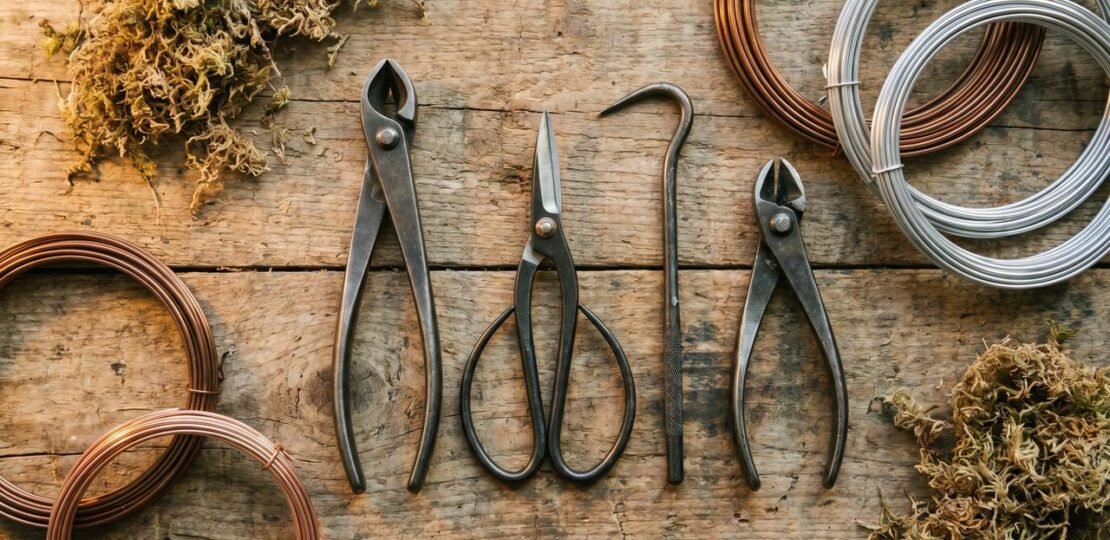
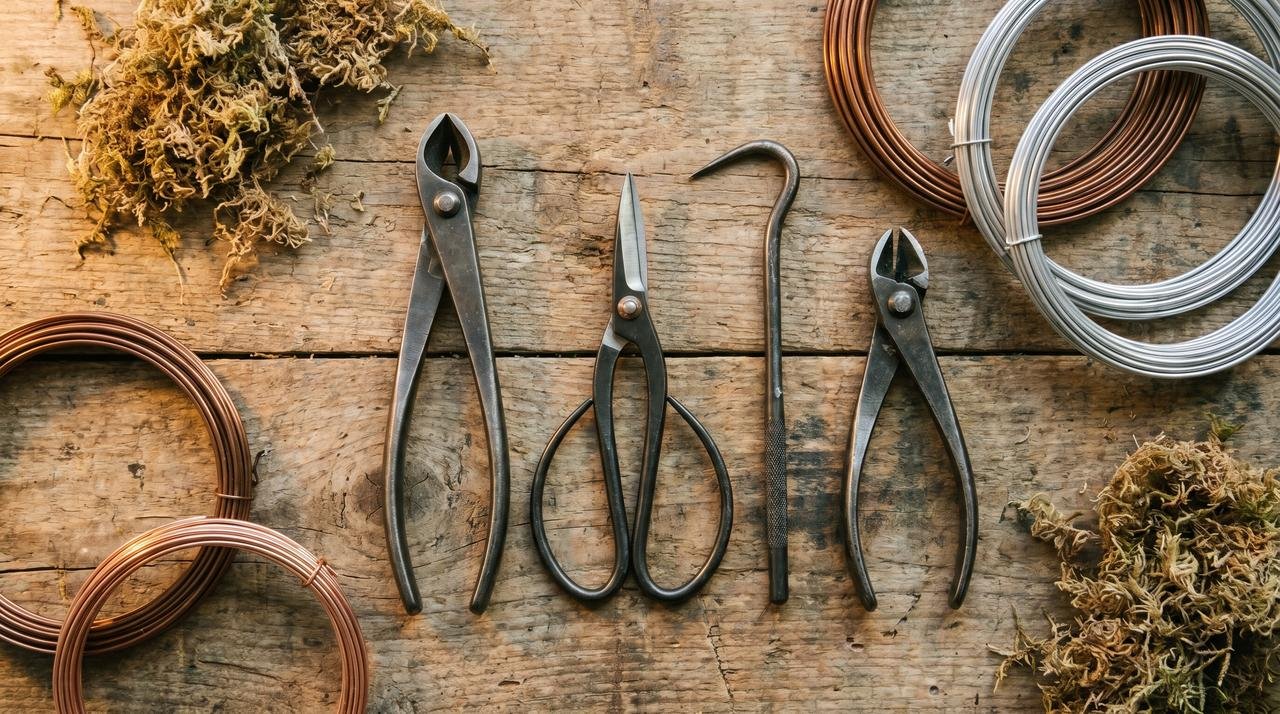
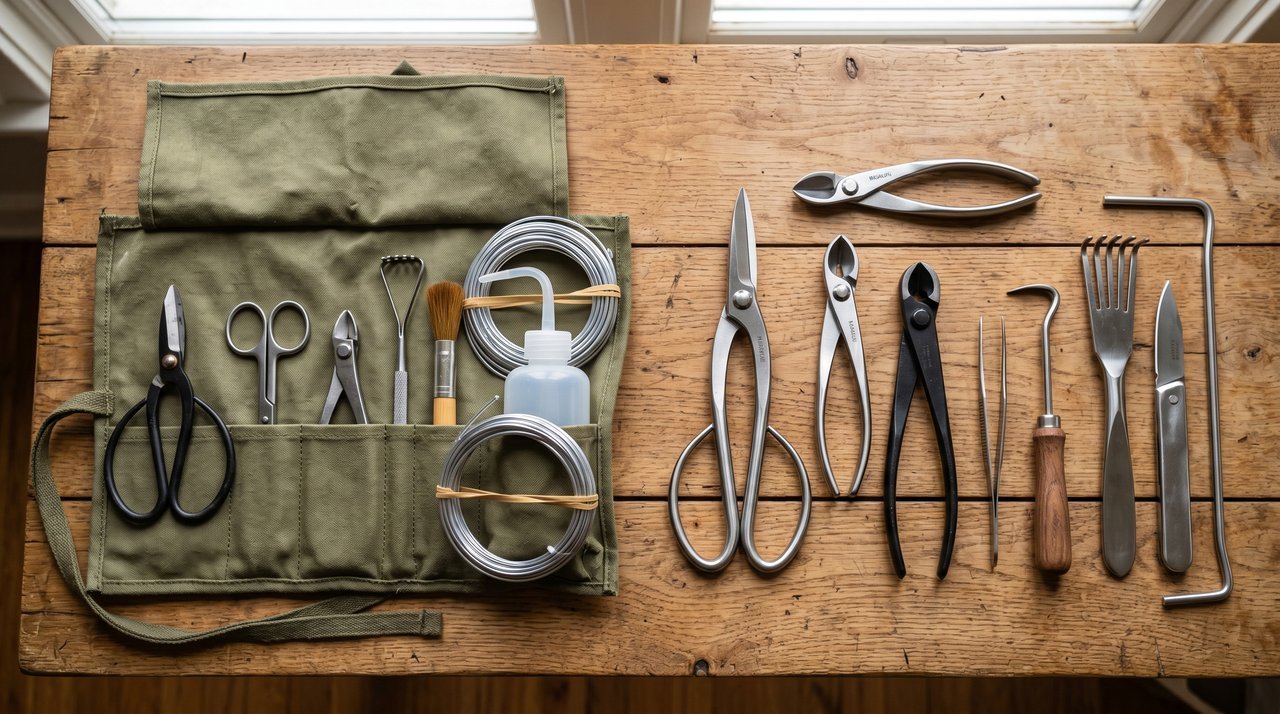
Beginners need four essential bonsai tools to start: a concave cutter for removing branches without scarring, bonsai scissors for trimming foliage and small shoots, a root hook for repotting work, and wire cutters for shaping branches with bonsai wire. These four tools cover roughly 90 percent of beginner tasks, and you can add specialty tools later as your skills grow.
The 4 Essential Tools Every Beginner Needs First
Before you spend a dollar on a 12-piece kit, focus on these four. We’ve watched beginners buy huge sets only to use the same handful of tools for months. Start lean, use these four hard, and add specialty tools only when a project demands them.
1. Concave Cutter (The Most Important Bonsai-Specific Tool)
A concave cutter is a scissor-like tool with a curved cutting head that leaves a slight indent on the trunk when you remove a branch. That hollow heals flush over time, which means your tree looks like a small tree instead of a stick covered in scars. Regular pruners leave a stub that scars permanently.
For your first concave cutter, we suggest a mid-range 7 to 8 inch model with carbon steel blades. The Tinyroots concave cutter is a solid starter at the budget end, and a Kaneshin 205mm concave cutter will last a lifetime if you can stretch the budget.
2. Bonsai Scissors (Also Called Trimming Shears)
Bonsai scissors have long, narrow blades and wide finger holes. The long blades let you reach into dense foliage without snagging surrounding branches, and the wide handles let you maneuver around the tree with control. They are not the same as kitchen shears or garden snips.
We suggest starting with a pair of all-purpose bonsai scissors in the 180 to 200mm length. Joshua Roth bonsai scissors are a popular beginner pick. Okatsune shears cost more but hold an edge for years.
3. Root Hook (For Repotting)
A root hook is a single curved metal prong on a handle. You use it to tease apart the dense root mass when you repot. Without one, you’ll either skip root work entirely (bad for the tree) or attack the roots with a screwdriver (also bad). A proper root hook respects the fine feeder roots while breaking up compacted soil.
A single-pronged hook is enough for trees under 12 inches. A single-prong steel root hook runs around $12 to $20 and lasts decades.
4. Wire Cutters
Bonsai wire cutters have a rounded tip that lets you snip aluminum or copper wire flush against the bark without nicking the branch. Regular pliers will damage your tree. Anodized wire is what you wrap around branches to bend them into shape, and you’ll need to cut that wire off in 4 to 12 months before it starts cutting into the bark.
A 7-inch pair handles wire up to 4mm thick, which covers nearly all beginner work. We suggest a 7-inch bonsai wire cutter as a starting point.
Should You Buy a Kit or Individual Tools?
This is the first big decision, and the right answer depends on your budget and how serious you think you’ll get. Here’s an honest comparison.
| Option | Cost | Quality | Pros | Cons | Best For |
|---|---|---|---|---|---|
| Amazon Beginner Kit | $15 to $30 | Low | Cheap, ships fast, everything in one box | Soft metal blades dull within a month, handles loosen, edges can crush rather than cut | A gift, a one-off project, or testing whether bonsai sticks for you |
| Mid-Range Kit (Tinyroots, Bonsaiboy) | $40 to $70 | Medium | Decent carbon steel, holds an edge for a year or two, covers the basics | Tools are jacks of all trades, not master of any | Most beginners buying their first real set |
| Japanese Pro Tools (Kaneshin, Masakuni) | $80 to $150 for 3 to 4 pieces | Excellent | Lifetime tools, hand-forged, hold an edge for years with care | Expensive upfront, fewer items per dollar | Serious beginners who know they’re staying in the hobby |
| Building Piece by Piece | Varies | Excellent (if chosen well) | Buy the best version of each tool, no junk in your kit | Takes research, easy to overspend without a plan | Beginners willing to study and grow into the hobby |
Our honest take: if you’re brand new and unsure how committed you’ll be, a mid-range kit is the right call. If you already love bonsai and want gear that’ll last, skip the kit and build piece by piece with Japanese tools.
Bonsai Scissors: What to Look For
Bonsai scissors are the tool you’ll reach for most often. Get a pair that fits your hand and you’ll use it weekly for the life of every tree you own.
Key Features That Matter
- Blade material: Carbon steel holds a sharper edge than stainless. Stainless is easier to maintain because it doesn’t rust as easily, but it dulls faster.
- Blade length: 180 to 200mm is the sweet spot for beginners. Shorter blades feel cramped on larger trees, longer blades are clumsy on tiny ones.
- Handle design: Look for wide, comfortable finger holes. Cheap scissors have tiny holes that bruise your fingers after 20 minutes of pruning.
- Pivot tightness: A good pair has a snug pivot with no wobble. Wobbly scissors crush rather than cut.
Beginner Picks
- Budget: Tinyroots bonsai scissors ($15 to $20) for occasional use.
- Mid-range: Joshua Roth 8-inch trimming shears ($25 to $40) handle most beginner tasks.
- Upgrade pick: Kaneshin Japanese bonsai scissors ($60 to $90) if you want a tool that’ll outlast you.
For more on how scissors fit into the regular pruning routine, see our guide to pruning a bonsai tree.
Concave Cutters: The Most Important Bonsai-Specific Tool
If you only learn the name of one bonsai tool, make it the concave cutter. Nothing in your garage or kitchen does what this tool does. The curved cutting head leaves a shallow concave wound on the trunk when you remove a branch, and that hollow heals flush as the cambium grows over it. The result, after a season or two, is a trunk surface that looks like the branch was never there.
How to Spot a Quality Concave Cutter
- Forged head, not cast: Forged steel is denser and holds an edge. Cast steel chips and dulls quickly. Most listings will state the manufacturing method.
- Smooth pivot: Open and close the cutter several times. There should be no grinding sound and no side-to-side wobble.
- Sharp cutting edge: Run a fingernail lightly along the blade (not across it). The edge should bite into the nail.
- Even alignment: Close the cutter and look at the cutting edges. They should meet evenly along their full length.
Beginner Picks
- Budget: Tinyroots 7-inch concave cutter ($20 to $30).
- Mid-range: American Bonsai concave branch cutter ($45 to $65).
- Upgrade pick: Kaneshin 205mm concave cutter ($90 to $140), a lifetime tool.
Root Hooks and Rakes: For Repotting
Root work happens once every one to three years per tree, depending on the species. Junipers and most conifers go three years between repots, while a vigorous deciduous tree like a Japanese maple might need yearly attention. When that day comes, a root hook is the difference between a clean repot and a butchered root system.
Single Prong vs. Multi-Prong
A single-prong hook is what we suggest for trees under 12 inches. Multi-prong rakes look impressive but tear fine feeder roots on small trees. Save the multi-prong rake for when you’re working on larger material, usually trees with trunks over 2 inches thick.
Beginner Picks
- Budget: A single-prong root hook ($10 to $15) is all you need for small trees.
- Combo pick: A root rake/hook combo tool ($20 to $30) gives you both options.
For step-by-step repotting work, check our guide on how to repot a bonsai.
Wire Cutters and Bonsai Wire
Wiring is how you bend branches into shape. You wrap anodized wire around a branch, gently bend the branch to a new position, and the wire holds it in place while the wood sets. Months later, before the wire starts cutting into the bark, you snip it off and remove it.
Aluminum vs. Copper Wire
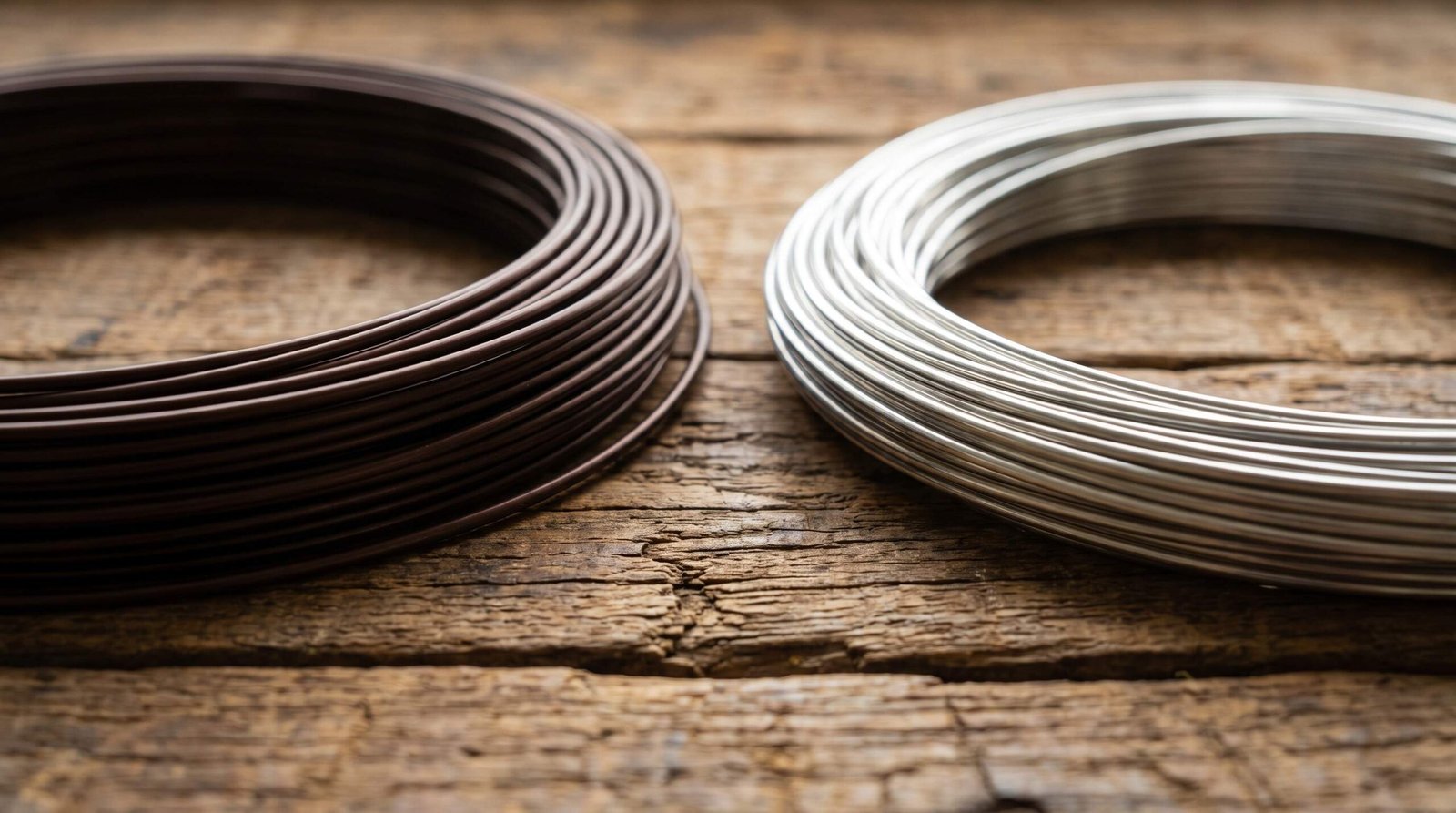
Beginners should start with anodized aluminum wire. It’s softer, more forgiving, and easier to apply and remove. Copper wire is stiffer and holds more strongly, which makes it the choice for conifers and serious benders, but it’s harder to work with and unforgiving of mistakes.
Recommended Gauges for Beginners
- 1mm to 1.5mm: For very thin branches and small twigs.
- 2mm to 2.5mm: The everyday gauge for most beginner work.
- 3mm to 4mm: For thicker branches and trunk movement on small trees.
A starter variety pack of anodized aluminum wire in 1mm to 4mm covers almost everything you’ll need for your first year.
Wire Cutter Beginner Picks
- Budget: A 7-inch carbon steel wire cutter ($15 to $25).
- Upgrade pick: Kaneshin 8-inch wire cutter ($55 to $80).
The Tools You Don’t Need as a Beginner
Half the items in a 20-piece bonsai kit are tools you won’t touch for the first year, sometimes ever. Skip these until you have a specific project that demands them.
- Jin pliers: Used to strip bark and create deadwood features called jin. You won’t need these until you start styling junipers and pines for deadwood aesthetics.
- Root mallet: A small wooden hammer for tapping a tree out of its pot. A blunt-edged trowel handle works just as well at the beginner stage.
- Specialty carving tools: Rotary tools, gouges, and chisels are advanced styling gear. Don’t buy them before you can handle basic pruning and wiring.
- Knob cutters: A specialized cutter for removing thick stubs left over from concave cuts. Useful eventually, but a concave cutter does the same job at the beginner level.
- Tweezers and bud pickers: Most kits include them, and they sit in the drawer unused. Add a pair only when you start working on conifer candles or weed-prone moss surfaces.
Caring for Your Bonsai Tools
A quality tool lasts decades, but only if you maintain it. Five minutes of care after each use saves you replacement costs and produces cleaner cuts on every tree you own.
After Each Use
- Wipe sap off the blades with a rag dampened in rubbing alcohol or vinegar. Sap dries into a sticky film that pulls at the next branch you cut.
- Dry the tool completely. Even stainless steel will pit if you leave moisture on it.
- Apply a light coat of camellia oil or a 3-in-1 type machine oil to the blades. Camellia oil is the traditional Japanese choice because it doesn’t go rancid.
Monthly Care
- Inspect the pivot screw. A loose pivot creates wobble and crushes branches. Tighten until you feel resistance, then back off a quarter turn.
- Hone the edge with a fine ceramic stone if the blade feels dull. We suggest a 1000 to 3000 grit stone, light pressure, and 10 to 15 passes per side.
Storage
Keep tools in a dry location. A simple tool roll or wooden block with slots works well. Avoid leaving tools on the bench overnight in damp climates. A small silica gel packet in the storage drawer wards off humidity.
For a broader look at general care that includes tool use, see our complete bonsai tree care guide. If junipers are on your radar, our juniper bonsai care guide covers species-specific tool tips.
Where to Buy Bonsai Tools
You have three main options, and each fits a different buyer.
- Amazon: Fast shipping, easy returns. Quality is hit-or-miss. Stick to mid-range kits with hundreds of reviews and avoid no-name brands at the lowest price point.
- Dedicated bonsai retailers (Bonsai Empire, Eastern Leaf, Wazakura Japan, Bonsai Boy): Wider selection of professional tools, better technical descriptions, and often direct relationships with Japanese makers like Kaneshin and Masakuni.
- Local bonsai clubs and nurseries: If you have one nearby, this is the best route. You can handle tools before buying, get advice from experienced members, and often pick up gently used pro tools at a fraction of retail. The American Bonsai Society maintains a directory of regional clubs.
For additional reference on tool quality and care, Bonsai Empire has a strong free library of articles and videos.
Frequently Asked Questions
What are the most important bonsai tools for beginners?
The four most important bonsai tools for beginners are a concave cutter, bonsai scissors, a root hook, and wire cutters. These four cover roughly 90 percent of beginner tasks: pruning, branch removal, repotting, and shaping with wire. Add a starter pack of anodized aluminum wire and you have a complete beginner kit without overspending.
How much should I spend on my first bonsai tool kit?
We suggest $40 to $70 for a mid-range kit if you’re testing the hobby, or $100 to $180 if you’re building a piece-by-piece set of quality individual tools. Anything under $25 is usually false economy because the blades dull within weeks. Anything over $250 for a beginner is overkill until you know which tools you actually reach for.
Are bonsai tools from Amazon any good?
Mid-range Amazon kits from established brands like Tinyroots, Joshua Roth, and American Bonsai are decent for beginners. The ultra-cheap $15 to $25 kits from no-name brands are usually disposable because the metal is too soft to hold an edge. Read reviews carefully, look for kits with hundreds of ratings, and avoid the lowest price bracket if you want tools that last beyond a year.
What is a concave cutter and why do bonsai trees need it?
A concave cutter is a specialized bonsai tool with a curved cutting head that creates a slightly indented wound when you remove a branch. That concave wound heals flush against the trunk, leaving little or no visible scar. Regular pruners leave a raised stub that scars permanently and ruins the illusion of a small tree. The concave cutter is the single most important bonsai-specific tool you’ll own.
How do you sharpen bonsai tools?
Use a fine ceramic or whetstone sharpening stone, 1000 to 3000 grit, with light pressure. Hold the blade at a low angle, around 15 to 20 degrees, and make 10 to 15 smooth passes on each side. Wipe the blade clean, apply a light coat of camellia oil, and you’re done. For concave cutters, a small folding diamond file works better than a flat stone because of the curved edge.
Can you use regular scissors for bonsai?
You can, but you shouldn’t. Regular scissors have short blades and tight handles that make it nearly impossible to reach into dense foliage without snagging branches. The cuts they make are also rougher, which can stress the tree. A dedicated pair of bonsai scissors costs as little as $15 and pays for itself in cleaner cuts and faster work within a season.