Jade Bonsai Care: The Complete Guide (Watering, Pruning, Soil & More)
May 13, 2026 | by Ian
Jade Bonsai Care: The Complete Guide (Watering, Pruning, Soil & More)
Jade bonsai (both Crassula ovata and Portulacaria afra) thrive with bright indirect to direct sunlight, infrequent but thorough watering only when soil is fully dry, a fast-draining succulent mix, and structural pruning in spring or early summer. Protect from frost below 32°F (0°C). Forgiving and resilient, jade is one of the best species for beginners learning bonsai care.
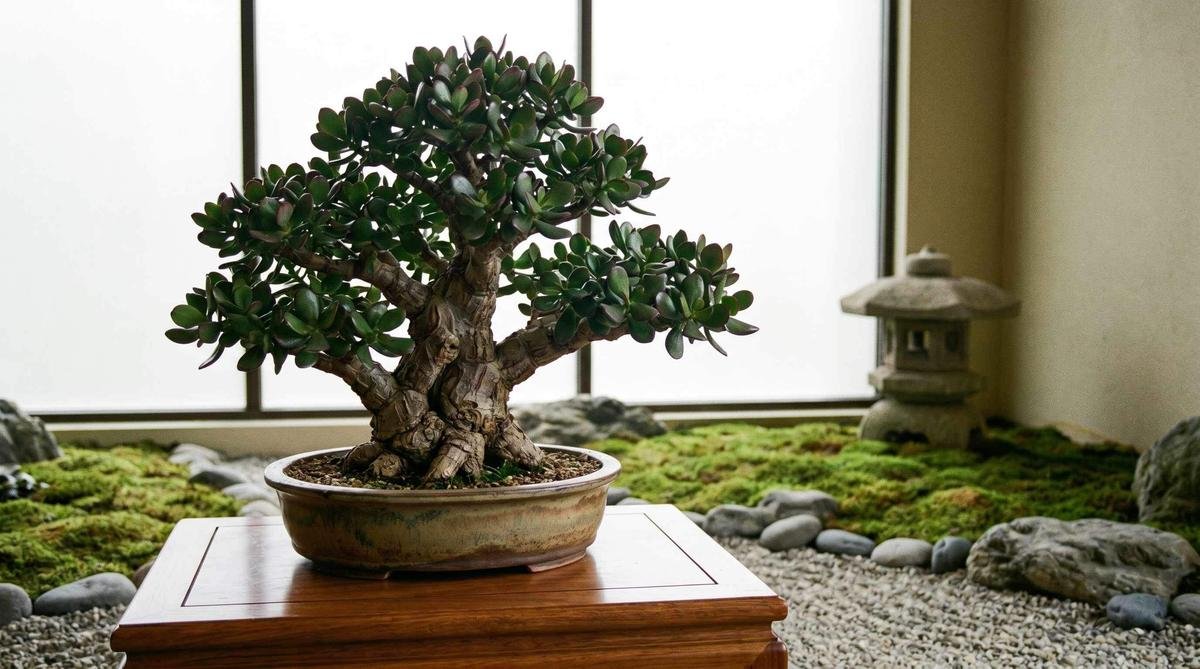
Few bonsai species reward patience and curiosity quite like jade. Whether you have just acquired your first jade plant from a nursery or are deepening a long practice with established trees, understanding the plant’s biology will transform care from a checklist into intuition. This guide covers everything you need to grow a healthy, beautiful jade bonsai, with the science that makes each guideline make sense.
If you are newer to the hobby and want a foundation before diving in, our beginner bonsai guide covers concepts that complement this jade-specific care article.
Why Jade Makes an Excellent Bonsai Species
Jade plants have been cultivated as miniature trees for generations, and for good reason. Their thick, sculptural trunks, glossy leaves, and remarkable resilience make them well suited to bonsai cultivation. But the deeper answer to “why jade” lies in the plant’s physiology, which gives it a forgiving nature most traditional bonsai species cannot match.
Jade as a Succulent: What This Means for Care
Jade is a true succulent. Its thick stems and plump leaves are not just aesthetic features; they are water storage organs. The plant has evolved in dry regions of southern Africa where rainfall is unreliable, so it banks water inside its tissues for the dry periods ahead. This single fact explains roughly eighty percent of jade care decisions.
Because jade holds reserves of water internally, it tolerates drought far better than most bonsai species. If you forget to water for a week (or even two, in some conditions), a healthy jade will draw on its stored reserves and keep going. For beginners who sometimes lose track of watering schedules, this is genuinely forgiving.
The flip side, though, is that overwatering becomes the more common mistake. Roots sitting in waterlogged soil cannot breathe. Oxygen-starved roots quickly begin to rot, and because the plant’s internal reserves mask the damage for a while, you may not notice the problem until the trunk softens or leaves drop. The succulent physiology pushes care in one clear direction: well-draining soil and infrequent, thorough watering follow directly from how the plant stores and uses water.
Jade also uses a photosynthetic pathway called Crassulacean Acid Metabolism (CAM), shared with many other succulents. CAM plants open their stomata at night rather than during the heat of the day, which reduces water loss. The University of California Division of Agriculture and Natural Resources covers succulent physiology in detail if you want to read further. The practical takeaway: jade is a slow, efficient water user, and that is why it cannot keep up with a watering schedule designed for tropical or temperate species.
Why Jade Responds Well to Bonsai Pruning
Jade has another biological gift: it forms calluses very quickly. A callus is a layer of undifferentiated tissue that the plant grows over a wound to seal it from infection and water loss. On most bonsai species, callus formation is slow, and large cuts remain vulnerable for months. Jade, by contrast, can begin sealing a wound within days.
What this means in practice is that jade tolerates aggressive pruning that would set back species like juniper or Japanese maple. Hard trunk chops, large branch removals, and structural cutbacks all heal cleanly on a healthy jade. This makes the plant ideal for practicing the cuts and decisions that intermediate bonsai work requires. Mistakes are rarely fatal.
The same vigor shows up in jade’s ability to root from cuttings. Both Crassula ovata and Portulacaria afra can grow new plants from a single leaf or stem segment placed on dry soil. While this is a curiosity in care terms, it tells you something important: jade’s vegetative reproduction is strong, which is the same trait that lets it back-bud reliably along old wood and recover from heavy pruning.
Crassula ovata vs. Portulacaria afra: Choosing Your Jade
Two species dominate jade bonsai. Both make excellent subjects, and the choice often comes down to aesthetic preference and growing conditions.
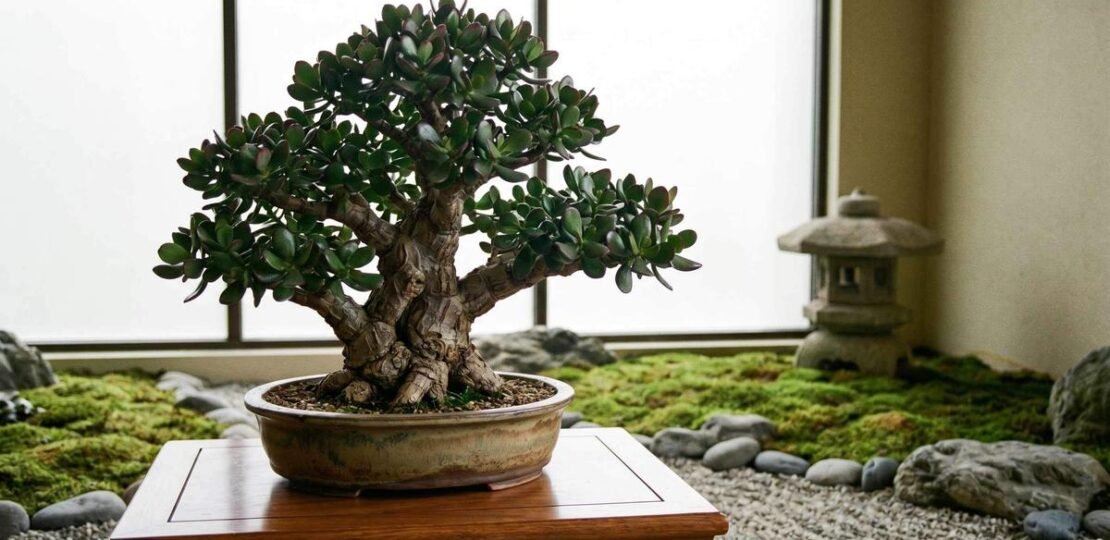
Crassula ovata, the common “money tree” or jade plant, has thick, oval, almost coin-shaped leaves. Under strong light, the leaf edges develop a beautiful red blush. Crassula ovata is the classic image most people have when they think “jade plant.” Its leaves are larger, which can make it harder to produce convincing miniature proportions in a small bonsai, but the trunk thickens dramatically over time and develops a wonderfully gnarled character.
The leaves of Portulacaria afra, sometimes called dwarf jade or elephant bush, are noticeably smaller, more delicate, and more closely spaced along the stem. Portulacaria grows faster than Crassula and produces finer branch ramification, making it the favorite of competitive bonsai shows. Its smaller leaves scale more naturally to a miniature tree, allowing realistic proportions even on modest-sized specimens.
For a beginner, either species is a safe choice. If you want larger, dramatic leaves and a slower, sculptural trunk, choose Crassula. If you want finer detail, faster development, and more traditional bonsai proportions, choose Portulacaria. Many experienced practitioners grow both.
Jade Bonsai Light Requirements
How Much Sun Does Jade Bonsai Need?
Jade needs a minimum of four hours of direct sun, or very bright indirect light, to thrive. This is non-negotiable for long-term health. In its native habitat, jade grows in open, exposed conditions, and the plant’s leaf structure is built to handle strong light.
When jade does not receive enough light, you will see the symptoms quickly. The plant develops etiolated growth, meaning the stems stretch and the spaces between leaves (the internodes) become long and weak. The leaves themselves may grow larger than normal, an adaptive response as the plant tries to capture more energy with bigger surface area. Compact, bonsai-appropriate growth requires bright conditions; there is no shortcut.
Full sun outdoors during the warmer months is ideal. The combination of high light, real airflow, and natural day-night temperature swings produces tight internodes, deeper leaf color, and stronger ramification. When nighttime temperatures begin dropping toward 32°F (0°C), bring your jade indoors. Even brief frost will damage leaf tissue, and a hard freeze can kill the plant outright.
Indoor vs. Outdoor Growing
Jade can grow indoors year-round if it has access to a bright south- or west-facing window. Supplemental LED grow lights work well during darker months. That said, jade kept entirely indoors typically grows more slowly and develops longer internodes than a plant that spends summers outdoors.
The ideal pattern for most climates is outdoor summers and indoor winters. Outdoors, jade gets stronger light intensity, natural temperature fluctuations that encourage stocky growth, and rain-fed watering during the active growing season. In USDA zones 10 and 11 (parts of southern Florida, southern California, and similar climates), jade can live outdoors year-round.
One important caution: transition the plant gradually when moving from indoors to outdoor sun. Indoor-grown leaves have not developed the protective compounds that handle intense ultraviolet exposure, and full direct sun after a winter indoors can produce sunburn marks, brown patches, or even scorched leaf tips. Start with a few hours in dappled or morning sun, then increase exposure over a week or two.
Jade Bonsai Watering: The Most Important Skill
If you learn only one thing from this guide, learn how to water a jade. More jade bonsai die from watering errors than from any other cause, and almost all those errors lean toward too much rather than too little.
When to Water Jade Bonsai
The succulent rule is simple: wait until the soil is mostly or completely dry before watering again. Several reliable methods help you check:
- The finger test: insert a finger one inch into the soil. If it feels dry, water. If you feel any moisture, wait.
- The chopstick test: push a wooden chopstick or skewer into the soil for a minute, then pull it out. If it comes out clean and dry, water. If soil clings or the stick looks darkened with moisture, wait.
- Pot weight: lift the pot. A dry pot feels noticeably lighter than a moist one. With practice, this becomes the fastest check.
- Visual cues: the leaves may look very slightly less plump, and the soil surface can develop fine cracks as it dries.
When in doubt, wait one more day. Jade can easily tolerate an extra day of dryness. It cannot easily tolerate an extra day in saturated soil.
How to Water Jade Bonsai
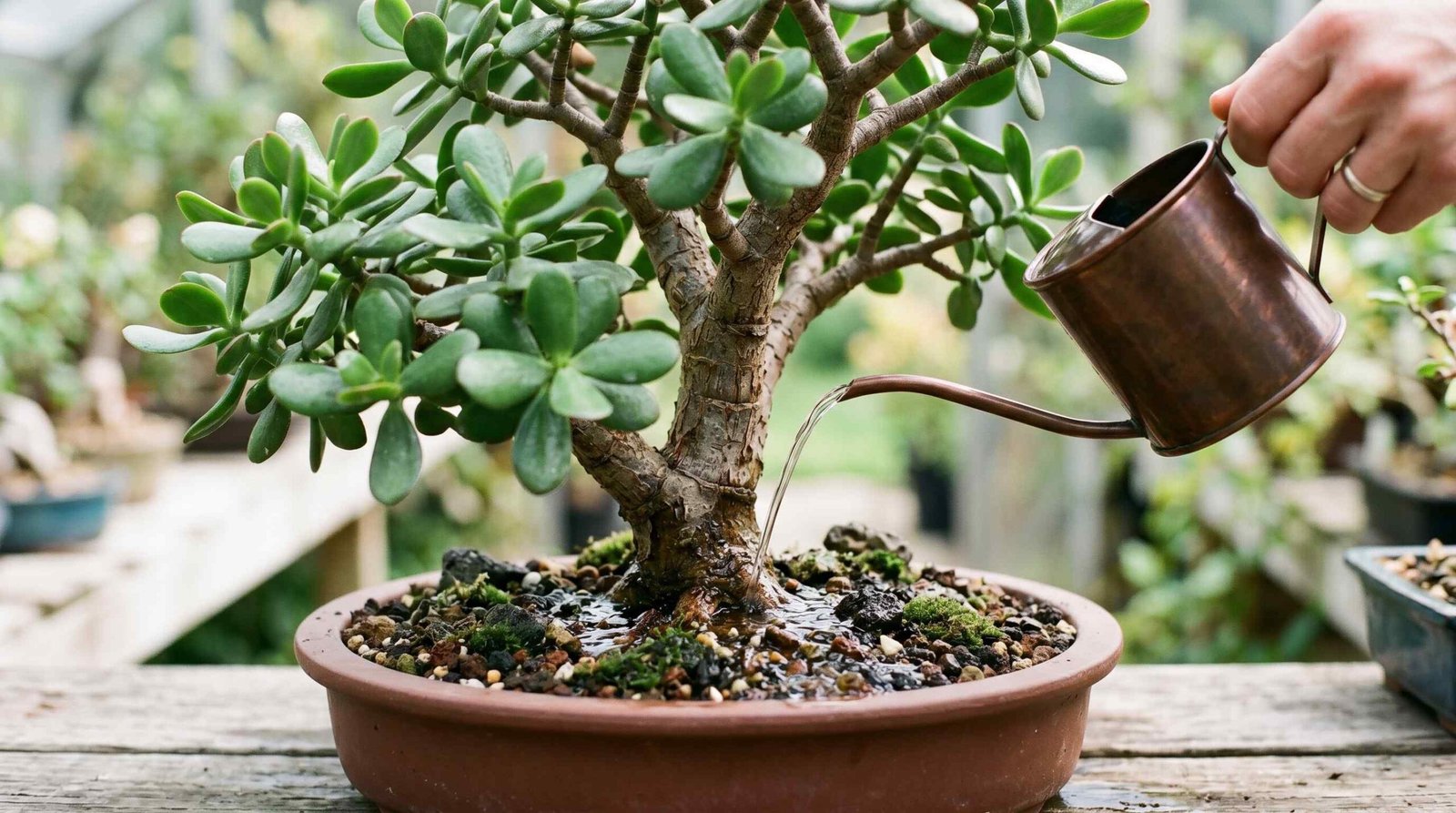
When you do water, water thoroughly. Soak the pot until water runs freely from the drainage holes. This ensures the entire root mass is moistened evenly and flushes any accumulated mineral salts from the substrate. Light, shallow watering encourages roots to grow near the surface and creates an uneven moisture distribution.
Do not mist jade. Unlike tropical bonsai species, jade does not benefit from foliar moisture, and water droplets sitting on leaves in direct sun can magnify light and cause small sunburn spots. Apply water to the soil only.
Overwatering vs. Underwatering: Diagnosing the Problem
Learning to read your jade is essential. The symptoms of overwatering and underwatering are different, and recognizing them early saves trees.
Overwatering signs: yellowing lower leaves that drop easily, soft or mushy stems near the soil line, soil that stays wet for many days without drying, and sometimes a sour smell from the soil. By the time you notice these signs, root rot is usually already in progress.
Underwatering signs: wrinkled, shriveled, or slightly puckered leaves (the plant is using its stored water reserves), a very lightweight pot, and bone-dry soil throughout the root zone. Underwatered jade typically recovers fully after a good soak, while overwatered jade may not recover at all.
If you only remember one diagnostic, remember this: overwatering kills more jade bonsai than any other cause. The plant’s succulent reserves mask the problem until root rot is well advanced, by which point recovery requires major intervention.
Seasonal Watering Adjustments
Watering frequency must change with the seasons. During the active growing season (roughly spring through early fall), warm temperatures, longer days, and active root growth mean soil dries faster. You may water as often as every few days during hot, sunny summer weather, always after confirming the soil is dry.
During winter, jade growth slows significantly or stops entirely, depending on conditions. The plant uses very little water during this dormant period, and you may water only every two to three weeks. Cold temperatures combined with wet soil is the single most common scenario in which jade bonsai die. If your plant overwinters in cooler conditions, err strongly on the side of dry.
Soil, Pot, and Repotting
Best Soil Mix for Jade Bonsai
The single most important characteristic of jade bonsai soil is fast drainage. Water should pass through the substrate quickly and leave the medium moist but not waterlogged. Standard bonsai substrate principles work very well.
A reliable mix for jade is roughly fifty percent inorganic material (such as akadama, pumice, or perlite) combined with fifty percent organic material (a quality bonsai soil blend or small-bark compost). The inorganic component provides drainage and structure; the organic component holds enough moisture and provides a small reservoir of nutrients.
Avoid standard houseplant potting mixes that use peat or coco coir as their primary component. These retain too much water for jade’s needs and quickly become anaerobic when packed into a small bonsai pot. Commercial cactus and succulent mixes are a reasonable starting point, but most benefit from adding an extra one-third volume of perlite or pumice to further improve drainage. For a deeper look at substrate principles applicable across species, our bonsai care fundamentals guide may be useful.
When and How to Repot
Repot young jade trees every two to three years, and established trees every three to five years. The best time is spring, just before the new growth flush begins. The plant has full energy reserves and an entire growing season ahead to recover.
Signs your jade is ready for repotting include roots circling the inside of the pot, water that runs through the soil immediately without being absorbed, and growth that has stalled despite adequate light and fertilizer.
Stop watering several days before you plan to repot. Drier soil makes it much easier to inspect the root system, untangle circling roots, and prune cleanly. Trim away any dead, mushy, or excessively long roots, then place the tree in fresh substrate. After repotting, wait several days to a week before the first watering; this gives any small root wounds a chance to callus over and reduces rot risk. Detailed technique is covered in our repotting guide.
Choosing the Right Pot
Drainage is non-negotiable. Choose a pot with multiple drainage holes. No matter how attractive a pot looks, if it cannot drain freely, it is unsuitable for jade.
Unglazed ceramic pots are particularly well suited to jade because their porous walls allow some moisture evaporation through the sides, helping the soil dry more evenly. Shallow oval or rectangular pots complement jade’s natural spreading growth habit and emphasize the trunk movement that gives mature specimens their character.
Pruning and Shaping Jade Bonsai
When to Prune
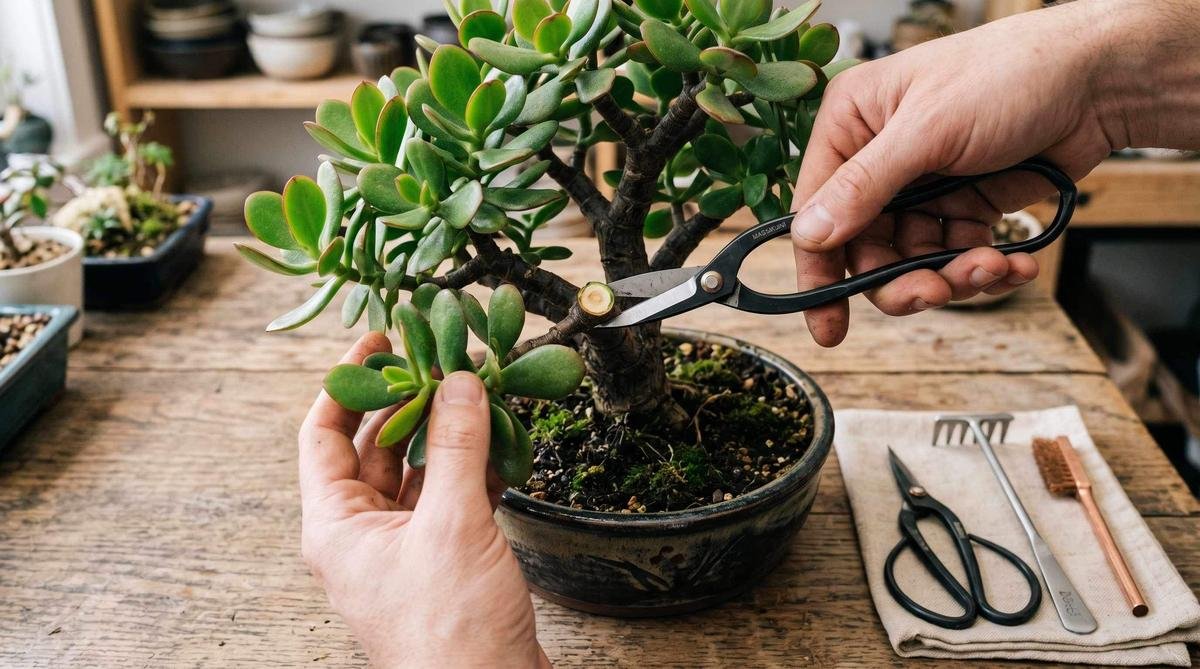
The best time for structural pruning is spring through early summer, ideally after the first flush of new growth has hardened off. By this point the plant has built strong reserves and has months of growing season left to push new growth and seal cuts.
Avoid heavy pruning in winter, when healing is slow and the plant has limited energy to respond. Also avoid heavy work during peak heat stress in very hot summer climates; the plant prioritizes survival over recovery in those conditions. Light pinching and minor adjustments can be done year-round in healthy plants.
How to Create Branch Structure
Jade back-buds reliably at nodes (leaf junctions) and at branch forks. Prune cleanly just above a node, and new growth will typically emerge from that point or from adjacent dormant buds.
For a more compact canopy, pinch out new growth tips when they reach two to three leaf pairs. This forces branching and tightens the silhouette over time. For thickening a trunk or branch, the opposite strategy works: allow a “sacrifice branch” to extend freely for a full season, then cut it back hard. The extra foliage builds woody girth at the base.
For large cuts (anything thicker than a pencil), we suggest sealing the wound with cut paste or a bonsai wound sealant. While jade calluses quickly on its own, a sealant reduces the risk of dieback in the surrounding tissue and produces cleaner scarring. Always use clean, sharp tools; if you do not yet have a dedicated set, our bonsai tools guide covers the essentials.
Wiring Jade: Cautions and Techniques
Jade can be wired, but its succulent stems indent easily because the tissue is soft and water-filled. A wire wrapped too tightly leaves permanent scars. Two approaches reduce this risk.
The first is to use a thicker-gauge wire than you would for a similarly sized woody species, and pad the wire with raffia or paper tape before wrapping. The padding distributes pressure and prevents the wire from biting into soft bark. The second approach is clip-and-grow, which skips wire entirely. You direct growth by pruning to the desired bud direction and letting the new shoot extend in that line, then cutting again at the next decision point. Many of the most respected jade bonsai in shows were shaped this way.
If you do wire, check the wire weekly. Jade can grow into wire in as little as three to four weeks during the active season, especially Portulacaria. Guy wires (a length of wire anchored to a point on the pot and looped around a branch to pull it down) are gentler than wrapping for major repositioning and leave no marks on the bark.
Jade Bonsai Seasonal Care Calendar
| Season | Watering Frequency | Fertilizing | Pruning / Training | Special Notes |
|---|---|---|---|---|
| Spring | Every 7 to 10 days as growth resumes; always confirm soil is dry first | Begin monthly feeding with balanced or low-nitrogen liquid fertilizer at half strength | Best season for repotting and major structural pruning after the first flush | Move outdoors gradually once nighttime temperatures stay above 50°F (10°C) |
| Summer | Every 3 to 7 days in heat; check the pot weight daily | Continue monthly feeding through mid-summer | Pinch new growth tips for ramification; light branch adjustments | Provide afternoon shade in very hot, dry climates above 100°F (38°C) |
| Fall | Reduce as temperatures cool; every 10 to 14 days typical | Last feeding in early fall, then stop | Light cleanup pruning only; avoid major cuts as healing slows | Bring indoors before first frost (below 32°F / 0°C); transition gradually |
| Winter | Every 2 to 3 weeks, sometimes longer; soil must be fully dry | No fertilizer during dormancy | No pruning except removal of clearly dead material | Keep above 40°F (4°C); ensure bright light to prevent etiolation |
Common Jade Bonsai Problems and Solutions
Even with careful attention, problems occasionally arise. Most issues are recoverable when caught early.
Root rot. The most common serious problem. Caused by overwatering or poorly draining soil. Symptoms include yellowing lower leaves, soft trunk base, and a sour smell from the soil. Treatment: unpot the tree, gently wash the roots, prune away all soft or blackened roots with sterilized scissors, let the root system air-dry for a day, then repot in fresh, fast-draining substrate. Withhold water for a week after repotting to allow root wounds to callus.
Mealybugs. These pests appear as small white cotton-like clusters in leaf axils and at nodes. Treatment for small infestations: dip a cotton swab in isopropyl alcohol and dab each cluster directly. For wider infestations, spray with neem oil solution. Inspect new acquisitions before placing them near established plants.
Powdery mildew. A white powdery coating on leaves, typically from high humidity combined with poor airflow. Treatment: improve ventilation, reduce overhead watering, and remove affected leaves. Severe cases benefit from a fungicide labeled for ornamentals. The University of Maryland Extension has good general resources on diagnosing fungal issues in ornamental plants.
Leaf drop from cold drafts. Sudden temperature drops, even without frost, can trigger leaf drop. Move the plant away from drafty windows and doors. New leaves will replace fallen ones once conditions stabilize.
Sunburn from sudden exposure. Brown or bleached patches on leaves after moving from indoors to direct sun. Damaged leaves do not heal, but new growth will emerge with proper light tolerance. Always transition exposure gradually over one to two weeks.
Etiolated growth. Long, weak stems with widely spaced, oversized leaves indicate insufficient light. The fix is straightforward: more light. Move the plant closer to a brighter window, add supplemental grow lights, or move outdoors for the growing season. Over time, prune away the etiolated growth and let new compact growth replace it.
For broader community resources and event listings, the American Bonsai Society hosts a wealth of information for practitioners at every level.
Frequently Asked Questions About Jade Bonsai Care
How often should I water a jade bonsai?
Water only when the soil is fully or mostly dry, not on a fixed schedule. In active summer growth, this is often every three to seven days; in winter dormancy, it may stretch to every two or three weeks. The finger test, chopstick test, or pot-weight check tells you when, far better than any calendar.
Can jade bonsai survive indoors?
Yes, jade can live indoors year-round if it has access to a bright south- or west-facing window or supplemental grow lights. That said, jade typically grows more vigorously and develops better proportions when it spends summers outdoors. Indoor-only jade can be perfectly healthy; it simply grows a bit more slowly.
How long does it take for a jade bonsai to develop?
Jade is a relatively fast-developing bonsai species. A young nursery plant can begin showing real bonsai character in two to three years with consistent pruning, and a refined specimen with thick trunk and well-developed ramification typically takes seven to ten years from a young start. Portulacaria afra develops noticeably faster than Crassula ovata.
Is jade bonsai toxic to pets?
Crassula ovata is toxic to cats and dogs if ingested, potentially causing vomiting, lethargy, and slow heart rate. Portulacaria afra, by contrast, is generally considered non-toxic and is even edible in small amounts (it is a traditional browsing plant for elephants in southern Africa). If you have pets that might chew on plants, Portulacaria is the safer choice.
Can you make any jade plant into a bonsai?
In principle, yes. Any healthy Crassula ovata or Portulacaria afra can be developed as a bonsai through pruning, repotting, and shaping. A larger nursery plant with an interesting trunk gives you a head start, but even small cuttings can become beautiful specimens over time. Look for trunk movement, low branching, and good base flare when selecting a starting plant.
What fertilizer is best for jade bonsai?
A balanced liquid fertilizer (such as a 7-9-5 or similar) applied at half strength monthly during the growing season works well. Some growers prefer low-nitrogen formulas to keep growth compact and avoid soft, leggy stems. Do not fertilize during winter dormancy, and never fertilize a stressed or recently repotted plant; wait at least four to six weeks after repotting before resuming feeding.
RELATED POSTS
View all