Olive Bonsai Care: The Complete Guide (Watering, Pruning, and Winter Protection)
December 22, 2023 | by bonsailessons.com
This post contains affiliate links. If you purchase through our links, we may earn a small commission at no extra cost to you.
Olive bonsai trees (Olea europaea) need full sun for at least six hours daily, moderate watering only when the topsoil starts to dry, and a fast, free-draining bonsai soil mix. Feed monthly from spring through fall with a balanced bonsai fertilizer, prune lightly after flowering, and protect from hard frost if you garden colder than USDA Zone 8.
What Makes Olive Bonsai Special
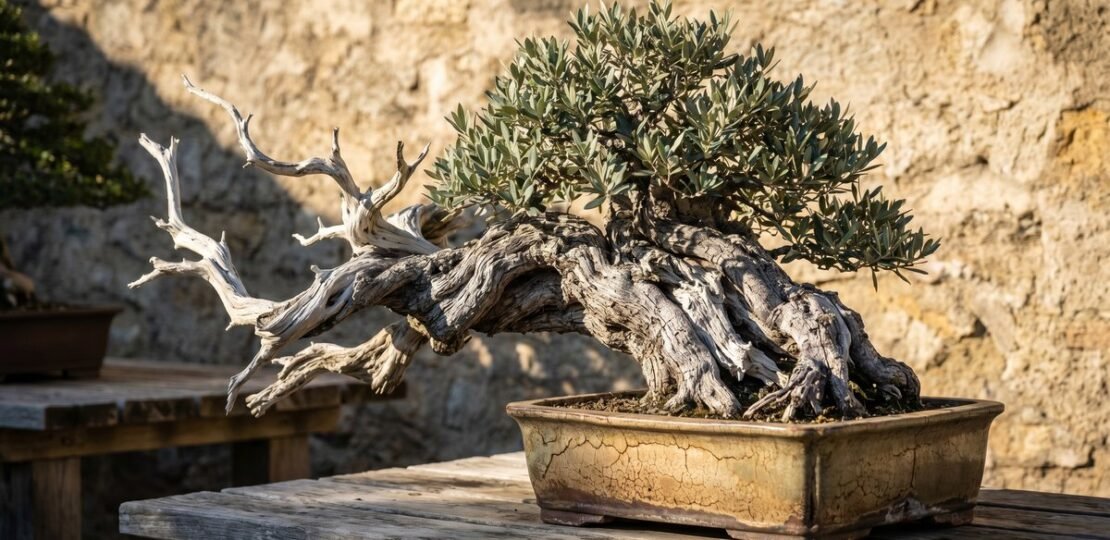
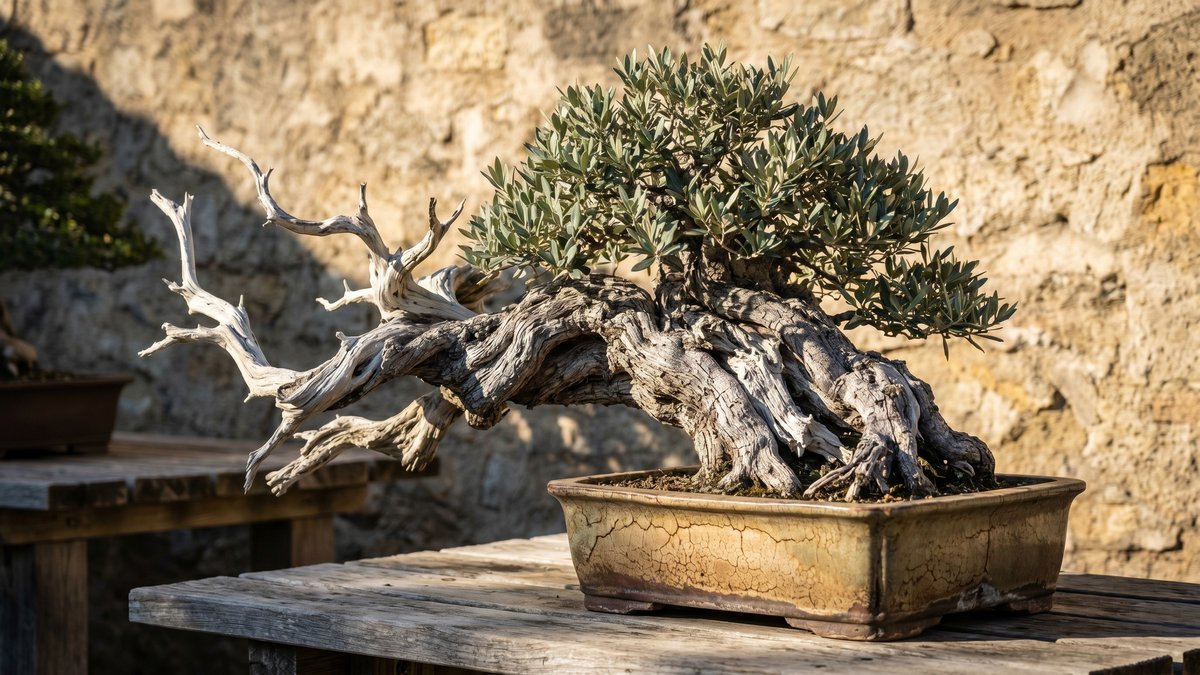
Few species reward patience the way an olive does. The trunk fissures with age, splitting into silver-gray grooves that look like wind-carved stone. Branches that die back, and some always will, turn into bleached jin and shari naturally. No power tools required. That gnarled, weathered look most bonsai practitioners chase for decades shows up on a healthy olive almost by accident.
The foliage helps the illusion. Olive leaves are narrow, opposite, and grayish-green on top with a silver underside that flashes in the wind. Under bonsai training, with steady pruning and good light, the leaves reduce considerably. A field-grown olive leaf might run three inches long, while a well-developed bonsai leaf often shrinks to under an inch.
Then there is the history. Olives have been cultivated around the Mediterranean for roughly six thousand years, with single specimens documented at more than a thousand years old. The NC State Extension Gardener Plant Toolbox entry on Olea europaea captures the species’ full botanical profile, including its documented cold hardiness range and growth habit. That genetic patience translates directly to the bonsai pot: olives accept hard work, recover slowly but reliably, and improve with age in ways that fast-growing species cannot.
One more thing worth knowing up front. Yes, a bonsai olive can flower and even set fruit. The olives will be small, sometimes pea-sized, but they are real. Most growers prune for shape and trade fruiting for tighter branches, though letting a tree fruit occasionally is a fun perk that few other bonsai species offer.
Species Guide: Which Olive for Bonsai?
Before you buy, know what you are buying. The “olive bonsai” label gets used loosely at garden centers, and one of the most common offerings is not even a true olive.
| Species | Common Name | Best For | Size | Cold Hardiness | Notes |
|---|---|---|---|---|---|
| Olea europaea | European Olive | Outdoor bonsai, classic Mediterranean style | Small to large | USDA 8-10, hardy to about 15-20°F | The standard for serious olive bonsai work |
| Olea europaea ‘Arbequina’ / ‘Manzanillo’ | Spanish cultivars | Fruit-bearing bonsai, smaller leaves | Small to medium | USDA 8-10 | ‘Arbequina’ is more compact, often self-fertile |
| Bucida spinosa | Dwarf Black Olive | Tropical bonsai only, indoor in cold zones | Small to medium | USDA 10b-11, dies below 50°F | NOT a true olive, a tropical Combretaceae tree, very different care |
| Olea cuspidata (syn. africana) | African Olive, Wild Olive | Vigorous outdoor bonsai, dense foliage | Small to large | USDA 8-10 | Smaller leaves than europaea, can be invasive in some regions |
That third row is the one to watch. Bucida spinosa is sold under names like “black olive bonsai” or “dwarf black olive” all over the place, and it is a beautiful tree, but treating it like a European olive will kill it within a single winter. Bucida is a tropical Caribbean species that needs warmth year-round and cannot handle the dormancy that an Olea europaea actually requires for long-term health. If a tag just says “olive bonsai” with no Latin name, ask the seller. The leaf shape is a tell as well: Bucida spinosa has small rounded leaves clustered in whorls, while Olea has narrow, lance-shaped leaves in opposite pairs.
For most readers writing in from temperate climates, Olea europaea is the species to buy and the species this guide focuses on. Cultivars like ‘Arbequina’ behave the same way at the care level, just with slight differences in growth habit and fruit potential.
Care at a Glance
| Aspect | Requirement |
|---|---|
| Light | Full sun, 6+ hours daily, outdoor preferred spring through fall |
| Water | Moderate, when topsoil is just dry; reduce in winter |
| Soil | Free-draining mix, 60% inorganic and 40% organic, slightly alkaline |
| Fertilizer | Monthly spring through fall, balanced or seasonally adjusted |
| Repotting | Every 2-3 years (young) to 4-5 years (established), late spring |
| Hardiness | Olea europaea: USDA 8-10, hardy to 15-20°F; Bucida spinosa: 50°F+ minimum |
Light Requirements
Olive is a sun species, full stop. Six hours of direct sun is the floor, and more is better. In their native Mediterranean range, these trees grow on stony hillsides with nothing between them and the sky from sunrise to sunset. That heritage is non-negotiable in cultivation.
From spring through fall, your olive bonsai belongs outside. A south-facing balcony, a sunny garden bench, a roof terrace, any spot that gets unfiltered sun for most of the day. Trees kept under shade or behind low light become leggy, the internodes stretch, and the leaves stay large. None of that is what you want on a bonsai.
Indoor growing during the warm months is doable but compromised. Even the brightest south-facing window typically delivers a fraction of the light intensity an olive prefers, and the tree will tell you within a few months: pale new growth, slow extension, leaf drop in the back interior. If you have no outdoor space at all, supplement with a quality LED grow light running ten to twelve hours daily. The setup matters more than most beginners realize.
Stronger light also drives the leaf reduction that makes a bonsai look proportional. A tree pushed to its light limit produces shorter internodes and smaller leaves, and that ramification compounds over the years. Trees grown in marginal light keep producing the same large, generic foliage they would in a landscape pot.
Watering Your Olive Bonsai
Olives are drought-tolerant in the ground. In a shallow bonsai pot, that resilience changes the rules. The soil volume is tiny, the roots cannot reach down for moisture, and even a tough species can desiccate within a single hot afternoon. So the practical rule is: do not let an olive in a bonsai pot dry out completely, but do not keep it constantly moist either.
Use the finger test. Press your fingertip into the topsoil about half an inch down. If it comes back dry, water thoroughly until the water runs freely from the drainage holes. If your finger comes out cool and damp, wait another day and check again. After a few weeks of paying attention, you will be reading the tree, not the calendar.
Seasonally, the rhythm changes. In summer heat, especially with full sun exposure, a small olive bonsai may need water daily, sometimes twice on a windy hundred-degree afternoon. Spring and fall are usually two to three times per week. Winter, particularly if the tree is dormant in cool storage, drops to once a week or even less. The goal in winter is just to keep the rootball from going bone dry, not to keep it moist.
Overwatering is the more common killer. Olives evolved on calcareous, well-drained slopes, and they have no patience for soggy roots. If you cannot remember whether you watered yesterday and the soil still feels cool, leave it alone. Root rot from chronic wet feet shows up as branch dieback weeks after the damage, which makes it hard to diagnose and harder to reverse.
Water quality is one area where olives are notably forgiving. Most species sulk under hard tap water over time, building up calcium and salt residue. Olives tolerate alkaline water and mineral content much better than acid-loving species. If your tap is on the hard side, you can usually use it straight without rainwater collection or filtration.
Fertilizing
Olives are not heavy feeders, but in a bonsai pot the nutrient supply is whatever you put in. A simple seasonal schedule keeps the tree healthy and supports the kind of fine growth you want for ramification. Use a quality bonsai fertilizer on a regular cadence and skip the big-box generic plant food.
- Spring (March-May): Nitrogen-forward feed to push new growth. A 10-6-6 or balanced liquid like 7-7-7 works well, applied every two to four weeks.
- Summer (June-August): Balanced fertilizer, around 6-6-6. Steady feeding here builds the structural growth you will refine later.
- Fall (September-October): Reduce nitrogen, increase potassium. A 3-6-9 or similar low-N, high-K mix helps the tree harden off for winter.
- Winter (November-February): No feed for dormant trees. If you keep an olive in active growth indoors under lights, a quarter-strength balanced feed monthly is plenty.
For convenience, a balanced liquid concentrate covers most of the year, with seasonal adjustments. We suggest a balanced liquid bonsai fertilizer as a versatile base, supplemented with a low-nitrogen organic pellet like cottonseed meal in fall if you want a more natural slow-release approach.
One note on organics versus liquids. Organic fertilizers in cakes or pellets release slowly and are great for established trees with stable soil. Liquids give you precise control week to week, which matters if you are pushing a young tree to thicken or holding back a refined tree to maintain its shape. Most growers end up using both.
Soil Mix
Get the soil right and most other care decisions become easier. Olives demand drainage above almost any other factor. Wet feet for even a few weeks can rot fine roots, and root rot on an olive often shows up months later as inexplicable dieback.
We suggest a 60/40 mix: 60% inorganic components like akadama, pumice, and lava rock, and 40% organic such as pine bark fines or sifted compost. Akadama for water retention and root grip, pumice for air pockets, lava rock for drainage and structure. The exact ratios are flexible, but the inorganic portion should always dominate.
If you are new to mixing your own and want simplicity, a pre-blended bonsai soil with extra pumice or perlite sifted in works well. Add roughly one part pumice to two parts pre-mix, and your drainage will be where it needs to be.
Olives prefer neutral to slightly alkaline soil, somewhere around pH 6.5 to 8.0. This is one species where a touch of garden lime in the mix can actually help, especially if your water is on the soft, acidic side. Most quality bonsai substrates land in a workable pH range out of the bag, but it is worth checking if your tree starts looking chlorotic for no obvious reason.
Repotting
Young olives in development can be repotted every two to three years. Established trees in refined pots typically go four to five years between repottings, sometimes longer if the soil is still draining well. Watch the surface: when water starts pooling instead of percolating down, the tree is telling you the roots have filled the pot.
Timing matters more on olives than on many species. The sweet spot is late spring, after the new growth has hardened off but before summer heat sets in. Repotting while the tree is in flower stresses both the flowering and the recovery. Cold-zone growers should wait until any late frost risk is firmly past, since freshly repotted olives are noticeably more cold-sensitive for a few weeks.
When you do repot, work the roots conservatively. Remove no more than one third of the rootball at a time. Olives accept root work but recover at their own pace, and aggressive reduction on a weak or stressed tree can set it back a full growing season. A skilled hand can take more, but the conservative approach is hard to argue with.
One species exception: if you are working with a Bucida spinosa labeled as a black olive, its repotting window is also spring, but it needs warm temperatures throughout recovery, ideally above 65°F at night. This is one more reason knowing exactly which “olive” you own matters.
Pruning and Shaping
Olives respond beautifully to pruning. They back-bud reliably on old wood given enough light and vigor, which is rarer than you might think among woody bonsai species. That trait alone is part of why olive deserves a place in any serious collection. For deeper technique, our full bonsai pruning guide covers the foundational cuts.
Maintenance pruning is the routine work: shortening long shoots, removing crossing branches, keeping the canopy open to light. Structural pruning is the bigger move, taking off whole branches or recutting trunk lines to shift the design. Maintenance pruning happens through the growing season as needed. Structural pruning is best done in early spring before the strong push or, in mild climates, right after flowering.
To encourage back-budding and ramification, cut shoots back to two to four leaves above where you want new growth to emerge. The tree will typically push two to three new buds at the cut site within a few weeks if vigor is good. Pinching back soft new spring growth before it hardens also drives ramification, especially on the outer canopy where you want fine, dense branching.
If you are after fruit, time your major pruning right after flowering finishes so you preserve the developing fruit on the current year’s wood. If fruit is not a goal, early spring pruning before the flush gives you the strongest, cleanest response.
One caution. Olives can tolerate heavy cutbacks into old wood, but you should not cut blindly. The pattern of dormant buds is not always visible on aged bark. If you are planning a major reduction, leave a sacrifice branch or two for a season to ensure the tree pushes new buds where you need them before committing to the final cut. Removing all foliage from a section of trunk and hoping for new growth is a gamble even seasoned olive growers approach carefully.
Wiring and Deadwood
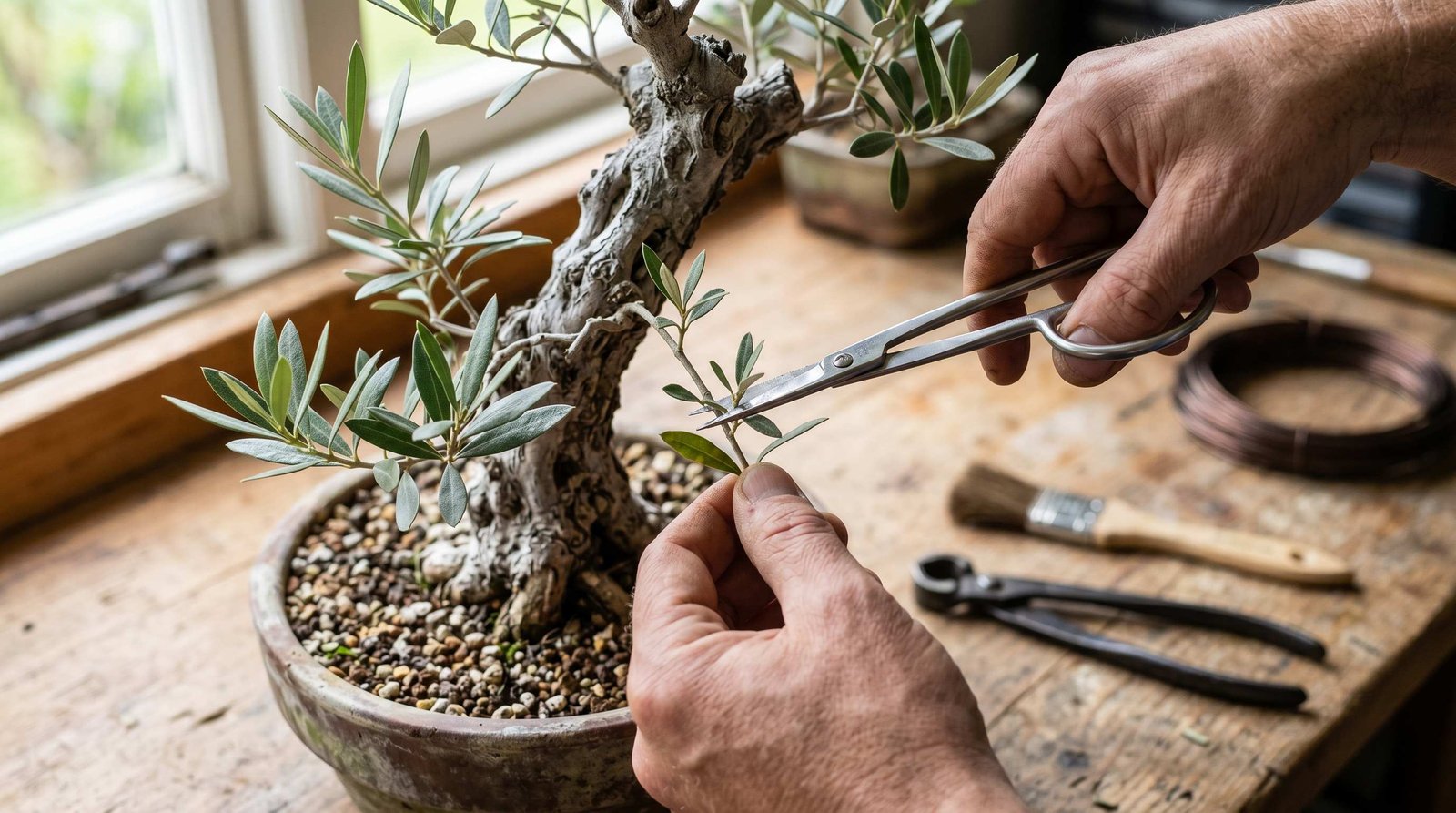
Wire spring through summer when growth is active and bark is flexible, or in autumn once the wood has hardened but before deep dormancy. The bark is thick and somewhat forgiving, but olive wood is also surprisingly springy on younger branches, so check wire weekly during active growth to catch any cutting in before scars form.
Aluminum wire works for most olive bending. Step up to copper for thicker branches or severe bends where you need the holding power. A standard aluminum bonsai wire set in assorted gauges from 1mm to 4mm will cover almost everything you do on a small to medium olive. Good quality bonsai tools for cutting and bending make the work cleaner and easier on the tree.
Here is where olive really earns its reputation. Most species require artificial deadwood techniques, carved jin and shari worked with power tools and lime sulfur, to develop the dramatic aged look. Olives produce that look on their own. Branches die back occasionally as part of the species’s natural growth pattern, and what is left behind, after the bark sloughs off, is bone-white deadwood with realistic weathering that no chisel can quite reproduce.
Jin refers to bare branch tips, the silvery skeletal extensions that look as if lightning stripped them. Shari refers to areas of exposed deadwood on the trunk itself, where bark has receded to reveal the wood underneath. Both develop naturally on olives over years and can be enhanced or shaped lightly with hand tools when the time is right. This natural deadwood production is the defining aesthetic feature of olive bonsai and the main reason collectors prize old field-grown specimens with hollow trunks and twisted shari. You cannot fake the time involved.
Indoor vs. Outdoor: What You Need to Know
The honest answer most beginner guides dodge: olive bonsai is an outdoor tree that can tolerate indoor periods, not an indoor tree that can summer outside. Plan around that and your odds of long-term success go up dramatically.
| Outdoor | Indoor |
|---|---|
| Full sun, 6+ hours daily | Sunny south window or LED grow light, 10-12 hours |
| Natural airflow, temperature swings, humidity | Still air, dry from heating, stable temperatures |
| Real dormancy through cold months | No dormancy trigger, gradual decline likely over years |
| Strong growth, tighter ramification | Leggy growth, larger leaves, slower thickening |
| Pests cycle naturally, predators present | Scale and spider mites can build up unchecked |
Indoor olive growing tends to fail in slow motion. The tree looks fine for six months, then a year, then suddenly the inner branches go bare and the apex starts dying back. By then the damage is years in the making. If you have outdoor space, even a tiny balcony, use it from the last spring frost through the first hard fall frost. Bring the tree in only for genuine winter protection or short-term display.
If indoor is your only option, set up properly. A south-facing window with no obstructions, supplemented by a quality full-spectrum LED grow light running ten to twelve hours, plus a humidity tray and good airflow. Even then, expect slower growth than an outdoor tree. For broader indoor species options that handle inside conditions more gracefully, see our guide to bonsai trees for indoors.
USDA Zone is the simplest filter for the outdoor question. Zone 8 and warmer means year-round outdoor cultivation with minimal protection. Zones 6 and 7 require winter protection but allow full outdoor growing during the rest of the year. Zone 5 and colder generally means outdoor spring through fall and indoor or unheated greenhouse storage through winter.
Winter Care and Cold Hardiness
Olea europaea is hardier than its Mediterranean reputation suggests. Mature trees in the ground tolerate brief drops to about 15-20°F (-9 to -7°C) without serious damage, a range confirmed by Oregon State University’s landscape plant database entry for Olea europaea. In a bonsai pot, with the rootball exposed to cold air on all sides, that hardiness drops by roughly ten degrees. A potted olive will start showing damage when soil temperatures hit the mid-twenties Fahrenheit.
Here is how to think about winter care by zone:
- USDA Zone 9-10: Outdoors year-round. Minimal protection needed, just move the pot off concrete and into a sheltered spot on the rare hard frost night.
- USDA Zone 7-8: Outdoor through most of winter, but move to an unheated greenhouse, cold frame, or attached garage when temperatures drop below 25°F. The goal is to keep the rootball above freezing while still letting the tree experience dormancy.
- USDA Zone 6: Plan on protected storage from late November through early March. An unheated garage or greenhouse that stays above freezing and below 50°F is ideal. Add a once-monthly light watering check.
- USDA Zone 5 and colder: Indoor or heavily insulated storage is mandatory. A cool basement, a converted closet with grow lights, or a heated greenhouse can all work, but plan the setup before you buy the tree.
For a deeper dive into seasonal storage techniques and how different species handle dormancy, our guide on bonsai in winter covers the general approach.
Crucially, olives need real dormancy. Keeping an Olea europaea at room temperature all winter is a slow path to decline. The tree relies on a cool rest period to set buds and reset its metabolism. Aim for winter temperatures in the 35-50°F range during dormancy, with reduced light and minimal watering. A semi-heated garage or unheated greenhouse hits this window well.
Now the species reminder: if your “olive bonsai” is actually a Bucida spinosa, throw all of this out. Bucida is a true tropical, hardy only to about 50°F. Below that and it drops leaves; below 40°F and it suffers permanent damage. Bucida winters indoors, warm and bright, every year north of Zone 10. The species table near the top of this article is the quickest reference, but the practical implication is huge: get the species identification right before planning winter care.
Common Problems and Solutions
| Problem | Cause | Fix |
|---|---|---|
| Leaf drop, sudden | Watering stress (either too much or too little), or sudden environmental change | Check soil moisture immediately. Adjust to consistent moderate watering. Hold off on fertilizer until new growth resumes. |
| Yellowing leaves | Overwatering, poor drainage, or nutrient deficiency (often iron or nitrogen) | Confirm drainage with a finger test. Reduce watering frequency. If drainage is fine, feed with a balanced bonsai fertilizer with micronutrients. |
| Scale or aphid infestation | Soft-bodied insects, often arriving from nearby plants or during indoor periods | Wipe scale off manually with rubbing alcohol on a cotton swab. Treat with horticultural oil or insecticidal soap weekly until resolved. |
| Root rot | Chronic overwatering or compacted soil holding moisture | Unpot, inspect roots, cut out mushy black roots, repot in fresh free-draining mix. Reduce watering. Recovery takes months and may not be guaranteed. |
| Leaf scorch or crisping | Underwatering, salt buildup, or sunburn after sudden move from shade to full sun | Water more consistently. Flush soil with plain water to leach salts. Acclimate gradually when changing light exposure. |
Frequently Asked Questions
Can olive bonsai be kept indoors?
Short term yes, long term not really. Olive bonsai (Olea europaea) strongly prefers outdoor growing from spring through fall, where it gets the direct sun, airflow, and natural temperature variation it evolved for. Indoor growing can work in winter for cold-climate growers, or as a temporary display, but a tree kept indoors year-round will typically decline over one to three years. If indoor is your only option, plan for a south-facing window plus supplemental LED grow lighting ten to twelve hours daily. If you specifically want an indoor bonsai, the Bucida spinosa (sold as dwarf black olive) is a tropical species that does thrive indoors year-round, though it is botanically not a true olive.
How often should I water an olive bonsai?
There is no fixed schedule. Water when the topsoil starts to feel dry to the touch, usually about half an inch down. In hot summer weather a small olive may need water daily or even twice daily. In spring and fall, two to three times per week is common. In winter, once a week or less if the tree is dormant in cool storage. Always water thoroughly until water runs from the drainage holes, then wait until the soil starts drying again before the next watering. Olives tolerate brief dryness much better than chronic sogginess.
Why are my olive bonsai leaves turning yellow?
The most common cause is overwatering combined with poor drainage. Olives root rot quickly in soggy soil, and yellowing leaves are often the first visible sign of stressed roots. Check that your soil drains freely and back off on watering frequency. Other causes include nutrient deficiency, especially iron or nitrogen on older soil, and natural seasonal leaf turnover where some old interior leaves yellow and drop in spring. If only a few interior leaves yellow while the rest of the tree looks healthy, that is usually normal. Widespread yellowing across the canopy is a watering or drainage problem until proven otherwise.
How long does it take to grow an olive bonsai?
A nursery-grown olive can be styled into a presentable bonsai in three to five years. A truly refined olive bonsai with developed ramification, mature deadwood, and characteristic gnarled trunk takes fifteen to thirty years or more. Most of the dramatic old olive bonsai specimens you see at exhibitions started as yamadori (collected from the wild) trees that were already decades old when the bonsai work began. Olive grows slowly in a pot but reliably, and even a young tree improves visibly year over year if cared for well.
Can olive bonsai produce real olives?
Yes, mature olive bonsai can flower and set fruit, producing miniature olives that are real but very small, often pea-sized. To get fruit, the tree needs to be mature (usually at least seven to ten years old), receive abundant sun, and not have its flower buds removed by spring pruning. Some cultivars like ‘Arbequina’ are self-fertile and will fruit on a single tree, while others may need a pollinator nearby. Most bonsai practitioners focus on form over fruit, since the energy required to develop and ripen olives slows other growth, but letting a tree fruit occasionally is a fun perk of the species.
Is the olive bonsai safe for cats and dogs?
Yes, Olea europaea is generally considered non-toxic to cats and dogs, and it does not appear on the ASPCA’s list of plants toxic to pets. The fruit, leaves, and bark are all safe in small amounts, though as with any plant, eating large quantities can cause mild gastrointestinal upset simply from the volume of plant material. Note that Bucida spinosa (the tropical dwarf black olive sometimes sold as olive bonsai) carries small spines on its branches that can cause physical injury, so handle with care around curious pets even though it is not chemically toxic.
What is the best pot for an olive bonsai?
Olives look striking in unglazed pots, especially in earthy tones like reddish-brown, gray, or buff that echo the tree’s silver-gray bark and Mediterranean hillside heritage. Rectangular or oval shapes in a slightly heavier proportion suit the gnarled, masculine character of most olive trunks. Drainage is the only non-negotiable factor: large drainage holes and sufficient depth for the rootball with room to spare. As a rule of thumb, the pot depth should roughly match the trunk’s diameter at the base, and the length should be about two thirds the height of the tree. For a young olive in development, prioritize function over aesthetics with a plain training pot, then upgrade to a display pot once the design matures.
RELATED POSTS
View all

Cherry Blossom Bonsai Care: The Bloom Secret Most Guides Skip
December 22, 2023 | by bonsailessons.com