Cherry Blossom Bonsai Care: The Bloom Secret Most Guides Skip
December 22, 2023 | by bonsailessons.com
Disclosure: This post contains affiliate links. If you purchase through our links, we may earn a small commission at no extra cost to you.
Cherry Blossom Bonsai Care: The Bloom Secret Most Guides Skip
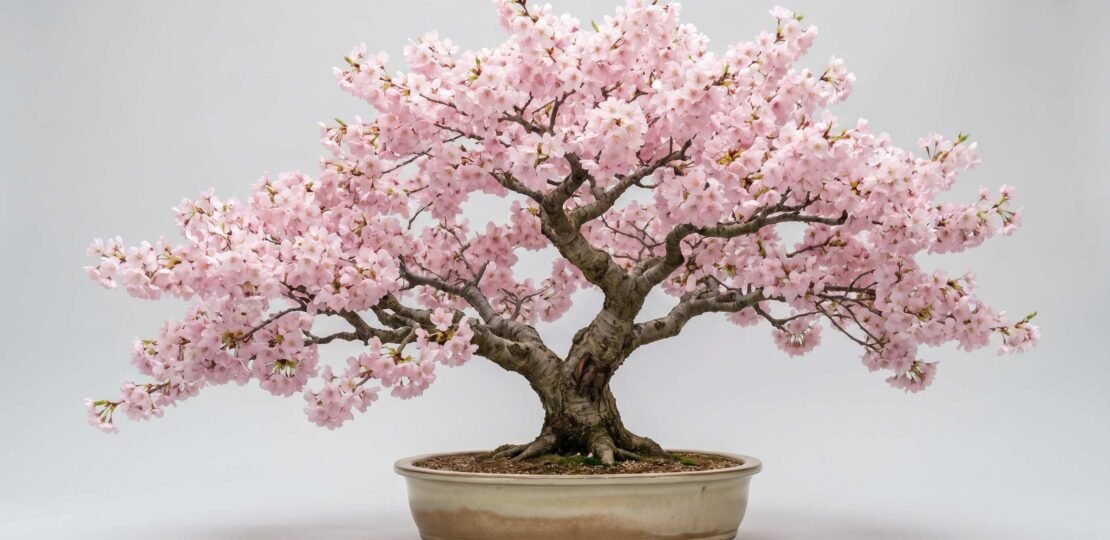
Cherry blossom bonsai need 8 to 12 weeks of winter temperatures between 32 and 45 degrees Fahrenheit to set flower buds. Without this cold dormancy the tree may stay alive but will not bloom. Keep the tree outdoors year-round, water when the soil surface dries, and prune only after flowering finishes in spring.
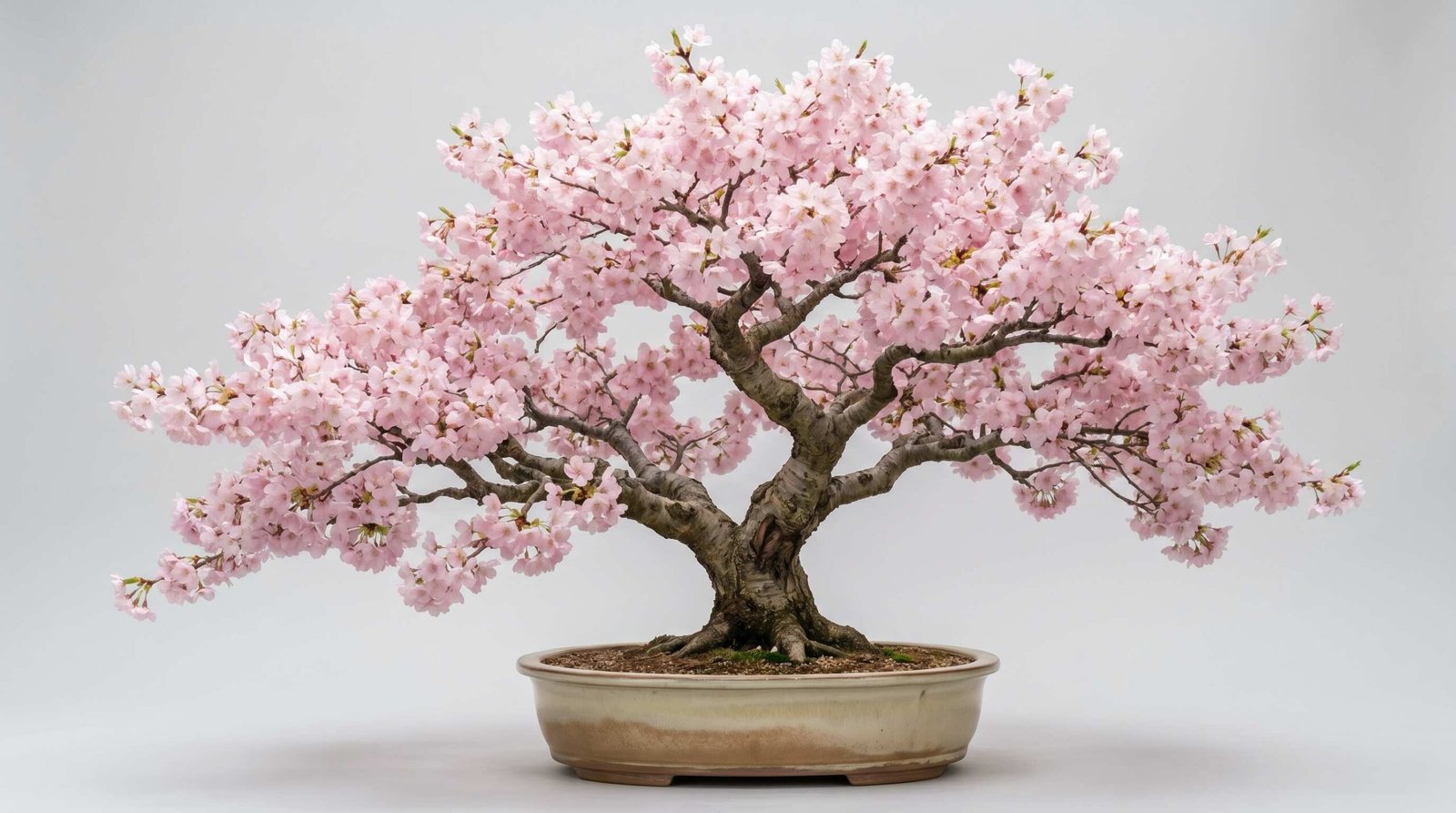
If you bought a cherry blossom bonsai expecting a houseplant covered in pink flowers, you are not alone, and the disappointment that follows is one of the most common stories in this hobby. The tree arrives, looks healthy for a season or two, then stops doing anything interesting. The branches grow, the leaves come and go, and the flowers never appear.
The problem is almost never the gardener. It is the assumption baked into how these trees are sold. A cherry blossom bonsai is not a tropical houseplant. It is a temperate deciduous tree that needs winter to recognize when spring has arrived. This guide walks through exactly what that means in practice, how to identify which Prunus species you actually own, and how to fix a tree that has stopped blooming. If you are brand new to the hobby, our overview of basic bonsai care is a useful companion read.
Cherry Blossom Bonsai Species, Which One Do You Actually Have?
The phrase “cherry blossom bonsai” gets used as a catch-all label for several species in the Prunus genus, and that vagueness causes real care problems. A Prunus mume sold as a “cherry blossom” needs different pruning timing than a Prunus serrulata, and a Prunus subhirtella tolerates cold that a Prunus mume in a small pot can struggle with. Identifying your specific tree matters.
Look at three things: bark color, leaf shape, and bloom timing. Prunus mume blooms on bare wood in January or February. The serrulata and subhirtella cultivars wait until March or April and tend to flower as the leaves emerge. Bark on serrulata shows the horizontal lines called lenticels, while mume develops a darker, gnarled, almost cracked surface as it ages.
| Species | Common Name | Bloom Color | Winter Hardiness | Dormancy Requirement | Difficulty |
|---|---|---|---|---|---|
| Prunus serrulata | Japanese cherry, sakura | Pink and white, double or single | USDA 5 to 8 | 8 to 12 weeks at 32-45 F | Moderate |
| Prunus subhirtella | Higan cherry, winter-flowering cherry | Pale pink, sometimes white | USDA 4 to 8 | 8 to 10 weeks at 32-45 F | Moderate |
| Prunus mume | Japanese flowering apricot, ume | White, pink, or red, fragrant | USDA 6 to 9 | 6 to 10 weeks at 32-45 F | Moderate to advanced |
| Prunus incisa | Fuji cherry | White to pale pink | USDA 5 to 8 | 8 to 10 weeks at 32-45 F | Beginner-friendly |
| Prunus x yedoensis | Yoshino cherry | Pale pink fading to white | USDA 5 to 8 | 10 to 12 weeks at 32-45 F | Moderate |
For a beginner who wants reliable flowering, Prunus incisa is the most forgiving choice. It buds more dependably than the other species and recovers better from pruning mistakes, which is why Bonsai Empire highlights Fuji cherry as easier for first attempts. If you are drawn to the dramatic gnarled trunks you see in photos of old Japanese specimens, you are looking at Prunus mume, and that one rewards patience.
The Dormancy Secret, Why Cherry Blossom Bonsai Won’t Bloom Indoors
Here is the part most articles gloss over. Flower buds on cherry blossom bonsai are not formed in spring. They are formed in late summer of the previous year and then held in a state of physiological suspension through fall. Those buds need a specific environmental cue to open: a sustained period of cold followed by warming day-length and rising temperatures. Skip the cold and the buds either fail to form properly or sit dormant and eventually drop off without opening.
The technical term for this requirement is “chilling hours.” For most cherry blossom bonsai species, the tree needs roughly 500 to 1,200 chilling hours, which translates to about 8 to 12 weeks at temperatures between 32 and 45 degrees Fahrenheit. Below 25 degrees the small root mass in a bonsai pot can freeze and die, so the goal is cold but not deep freeze. Above 50 degrees the chilling clock essentially pauses. Research from university extension services on temperate fruit trees confirms this same chilling-hour pattern across the entire Prunus genus.
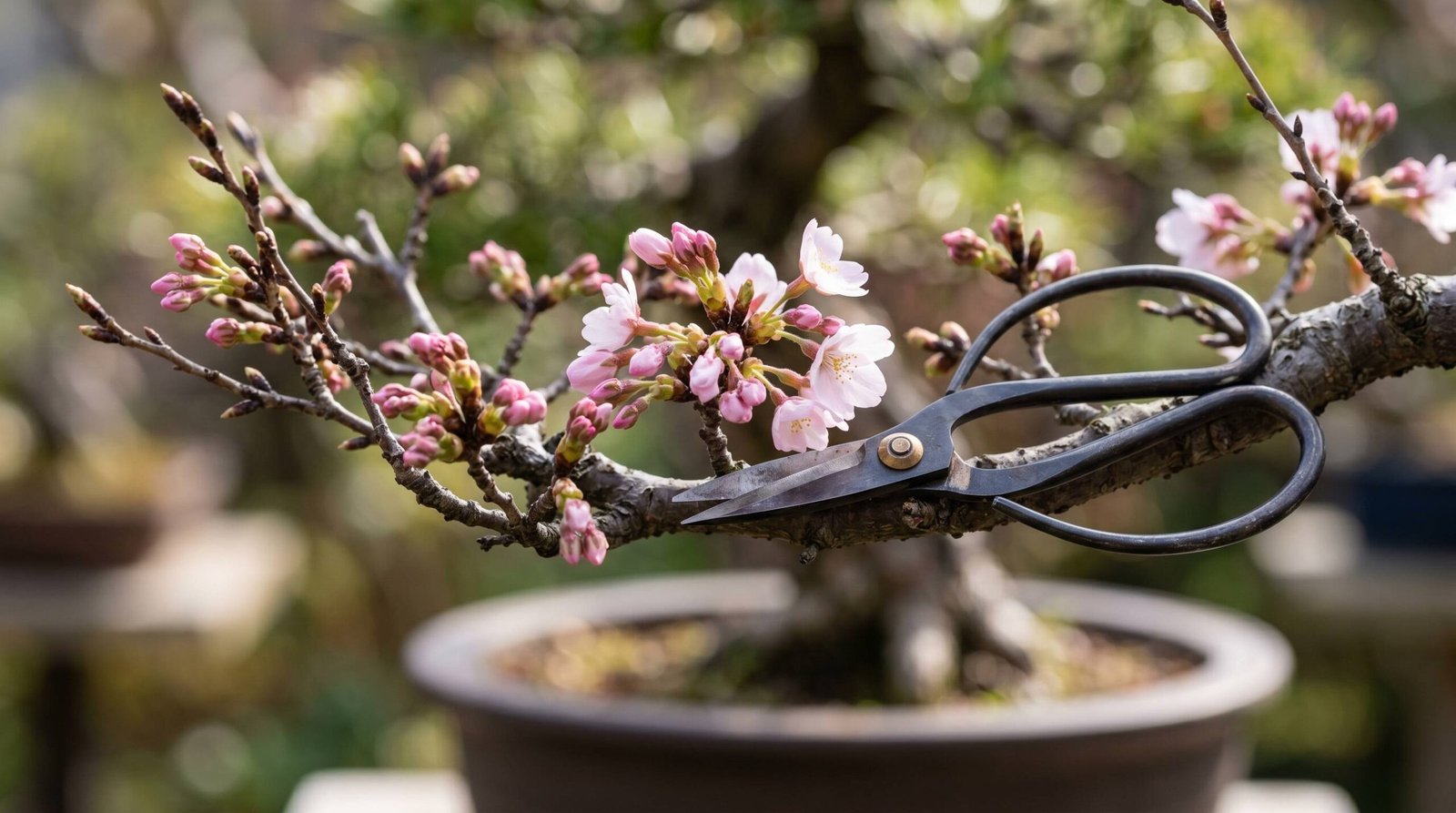
The practical setup looks like this. From late October or early November, move the tree to a cold but sheltered location. Options that work well include an unheated garage, a cold frame, a shaded spot against the north side of a house, or even a hole dug in the ground where you bury the pot up to the rim and mulch over the surface. The tree drops its leaves, the buds harden off, and the cold accumulates. In late February or March, when temperatures start climbing and days grow longer, the chilling requirement is met and flower buds begin to swell.
If you have kept a cherry blossom bonsai indoors year-round for two or three years and it has never bloomed, the tree is not broken. It is starved of seasonal information. Give it a real winter this coming year and you should see buds the following spring.
Cherry Blossom Bonsai Care Calendar
The single most useful mental model for these trees is the four-season cycle. Each season has a job, and the tree relies on you to honor that rhythm.
Spring (March to May). Flower buds swell and open. Water carefully because flowers droop fast if the soil dries out. Hold off on heavy fertilizer until the petals drop. Once flowering ends, begin a balanced feeding schedule and start any structural pruning. This is also the window for repotting if the tree is due. Move the tree to a position with full morning sun and afternoon shade.
Summer (June to August). Growth pushes hard. Water once or twice daily depending on heat and pot size. Provide afternoon shade during heat waves above 90 degrees. Feed with a balanced fertilizer every two weeks. Watch for aphids, scale, and spider mites, which love stressed cherry trees. In late summer the tree begins setting next year’s flower buds, so consistent watering during this window directly affects how many blooms you get in spring.
Fall (September to November). Reduce nitrogen, shift to a fertilizer higher in phosphorus and potassium for one or two feedings, then stop feeding entirely by mid-October. Leaves color and drop. As nighttime temperatures consistently fall below 45 degrees, move the tree to its winter location. Water less often but never let the root ball go bone dry.
Winter (December to February). Dormancy. The tree looks dead. It is not. Check soil moisture every five to seven days and water lightly only when the surface is dry. No fertilizer. No pruning of small branches. Protect from drying wind and from temperatures below 25 degrees. By late February, buds on Prunus mume may already be cracking open.
Watering, Fertilizing, and Soil Requirements
Cherry blossom bonsai have a reputation for being thirsty, and that reputation is earned. The shallow pot dries fast in summer, and a cherry tree that wilts during flowering will drop its blooms within hours. The fix is not to keep the soil constantly wet. The fix is to use a free-draining soil and check the surface twice a day during the growing season.
A standard mix that works well is roughly 70 percent inorganic components like akadama and pumice, and 30 percent organic matter such as composted bark or kanuma. The target pH sits slightly acidic, around 5.5 to 6.5. If your tap water is heavily chlorinated or very hard, let it sit overnight in an open container before using, or collect rainwater when you can. Cherries dislike alkaline water over the long term.
For fertilizer, use a balanced product like 10-10-10 from spring through midsummer, then switch to a low-nitrogen mix with higher phosphorus and potassium from late summer into early fall. The shift signals the tree to set flower buds rather than push leafy growth. Skip fertilizer entirely during winter dormancy and during the actual flowering window, since feeding while flowers are open can shorten bloom time.
Pruning Cherry Blossom Bonsai, When and How
Pruning is where most people accidentally cancel next year’s bloom. The rule is simple even if the timing feels counterintuitive: prune immediately after the flowers fall, and never in late summer or fall. Flower buds for the coming spring form in late summer on the previous season’s wood. Cut that wood off in September and you have just removed every flower you would have seen in April.
Right after flowering, identify branches that have grown out of proportion or that crowd the silhouette. Shorten them, but leave at least two leaf buds on any branch you want to keep. Branches cut too short, with no remaining leaf buds, often die back. Let new shoots run for several weeks before trimming them, which gives the tree energy to recover.
For structural changes and wiring, work in late winter while the tree is still leafless and the branch structure is visible. Young shoots wire easily. Mature cherry wood gets stiff and brittle, so be gentle and avoid sharp bends on older branches. Our full step-by-step guide to pruning bonsai trees covers technique in more depth, and the same principles apply here with the cherry-specific timing layered on top.
Repotting and Pot Selection
Young cherry blossom bonsai need repotting every two years. Mature specimens can stretch to every three or four years. The best window is early spring, just as buds begin to swell but before flowers fully open, or alternatively right after flowering finishes. Avoid repotting during active flowering, since the energy demand on the tree is already high.
When you repot, prune no more than one third of the root mass, focusing on thick downward-growing roots while preserving the fine feeder roots near the surface. Use fresh soil with the mix described above and water thoroughly. Keep the freshly repotted tree out of direct afternoon sun for two to three weeks to reduce stress.
Pot selection matters more than people expect. Cherry blossom bonsai look best in unglazed earthenware or softly glazed ceramic pots in muted colors, which complement rather than compete with the flowers. Mume in particular benefits from a deeper pot than most bonsai species because of its vigorous root system, a point the Bonsai Botanist’s chapter on Prunus mume emphasizes repeatedly. For full technique walkthroughs, see our guide on how to repot a bonsai.
Common Problems and How to Fix Them
No flowers despite a healthy tree. The dormancy was too short or too warm. Provide a longer, colder winter rest next year. Also check whether you are over-fertilizing with high-nitrogen feed, which pushes leaf growth at the expense of flower buds.
Flowers open but drop within a day or two. Usually a moisture or temperature shock. The soil dried out during bloom, or the tree was moved from cold storage into a heated indoor space too abruptly. Transition the tree gradually over three to five days.
Buds form but never open. Possible bud mite damage, frost damage, or insufficient chilling hours. Inspect buds for distortion. If they look normal but never open, the chilling requirement probably was not fully met.
Yellowing leaves in summer. Either overwatering or iron deficiency from alkaline water. Check drainage first. If drainage is fine, try a chelated iron supplement and switch to collected rainwater.
Sticky leaves with curled new growth. Aphids. Spray with a gentle horticultural soap solution in the early morning, repeating every five days for three cycles. Avoid spraying open flowers.
Branches dying back after pruning. Cuts were made too short, leaving no leaf buds. Next time, always leave two to five nodes on retained branches.
Recommended Products
The right tools and supplies make cherry blossom care easier and reduce the small mistakes that cost flowers. These are the categories we suggest having on hand before your first repot or pruning session.
Pre-blended akadama, pumice, and kanuma in the ratio cherry blossom bonsai prefer. Free-draining, slightly acidic, and ready to use without screening.
A deeper unglazed or softly glazed pot in muted earth tones that pairs visually with pink and white blossoms. Look for proper drainage and wire holes.
A balanced spring fertilizer plus a low-nitrogen, higher phosphorus and potassium blend for late summer, the combination that supports next year’s flower buds.
Sharp, narrow-tipped shears that make clean cuts on small Prunus branches without crushing the wood. Clean cuts heal faster and reduce dieback risk.
Frequently Asked Questions
- Why won’t my cherry blossom bonsai bloom?
- The tree did not receive enough cold dormancy. Cherry blossom bonsai need 8 to 12 weeks of temperatures between 32 and 45 degrees Fahrenheit to trigger spring flowering. Move the tree outdoors or to an unheated garage for winter and you should see buds the following spring.
- Can I keep my cherry blossom bonsai indoors?
- Not full-time. These are outdoor temperate trees. You can bring the tree indoors briefly during peak bloom, for about one to two weeks, then return it to its outdoor position immediately. Indoor heating dries the tree out and breaks the seasonal cycle.
- How often should I water during flowering?
- Check soil moisture twice a day. The flowering period is when wilting causes the most damage, since open blooms drop fast under water stress. Water when the top half inch of soil feels dry to the touch.
- When is the best time to repot a cherry blossom bonsai?
- Early spring as buds begin to swell, or right after flowering finishes. Avoid repotting in fall or during active bloom. Repot young trees every two years and mature trees every three to four years.
- What is the difference between a cherry blossom bonsai and a Japanese apricot bonsai?
- Both are sold under the cherry blossom label, but Prunus mume, the Japanese apricot or ume, blooms on bare wood in late winter, often January or February, and produces fragrant flowers. Prunus serrulata, the true Japanese cherry, blooms in March or April as leaves emerge. Mume tolerates harder pruning and needs a deeper pot.
- How long does a cherry blossom bonsai live?
- With consistent care, expect 40 to 80 years from a cherry blossom bonsai. Some Prunus mume specimens in Japanese collections have exceeded 150 years. Lifespan depends on dormancy, watering consistency, and timely repotting.
- Should I prune my cherry blossom bonsai in fall?
- No. Flower buds for next spring form on summer wood, and fall pruning removes those buds. Save structural pruning for late winter while the tree is bare, and do maintenance pruning right after flowers drop in spring.
Cherry blossom bonsai reward patience with one of the most spectacular displays in the entire hobby. The flowers last a week or two at most, which is part of what makes them feel precious. Give the tree real seasons, water it like you mean it, and prune at the right time, and you will earn that springtime bloom every year.
RELATED POSTS
View all

Olive Bonsai Care: The Complete Guide (Watering, Pruning, and Winter Protection)
December 22, 2023 | by bonsailessons.com