

Ficus Bonsai Care: Why It’s Dropping Leaves and How to Save It
May 12, 2026 | by Ian
This post contains affiliate links. We may earn a commission if you purchase through our links, at no extra cost to you.
Ficus Bonsai Care: Why It’s Dropping Leaves and How to Save It
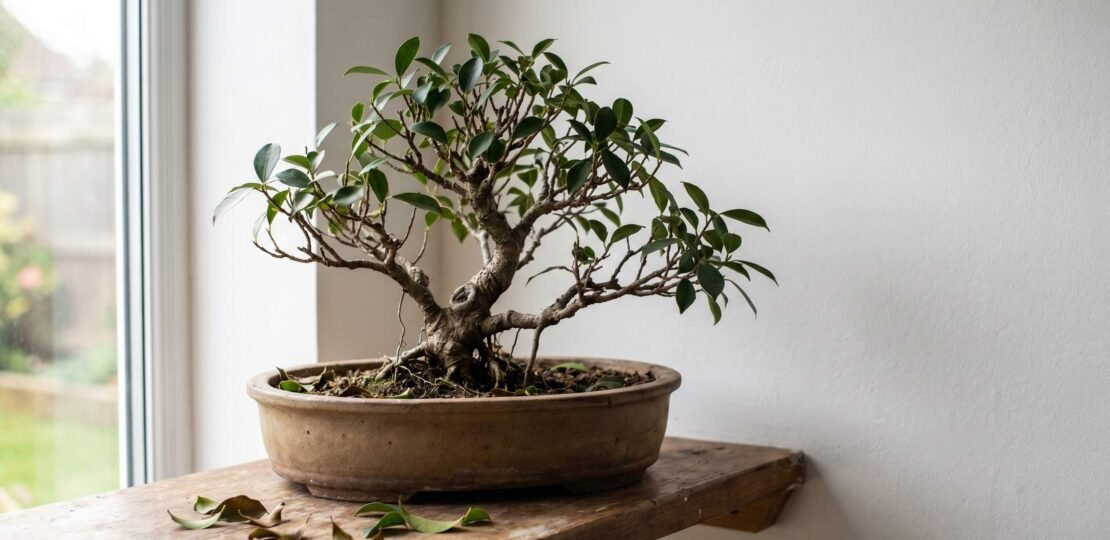
You brought home a beautiful little ficus bonsai. Maybe it came from IKEA, a garden center, or arrived as a gift in a glossy box. Within a week, leaves started yellowing and dropping onto the table. You assumed the tree was dying. It probably isn’t.
Ficus bonsai is the best-selling indoor bonsai species in the world. It is also the species beginners kill most often, not because it is fragile, but because nobody warned them that ficus throw a small tantrum every time their environment changes. The good news: once you understand what is happening, the fix is simple.
Ficus bonsai drop their leaves when moved to a new location, exposed to drafts, or given inconsistent watering. This is a stress response, not death. The tree is almost certainly still alive. Place it in bright indirect light, avoid moving it for 3 to 4 weeks, water only when the top inch of soil is dry, and new leaves will emerge within 4 to 6 weeks.
The 3 Most Common Ficus Bonsai Types You’ll Find in Stores
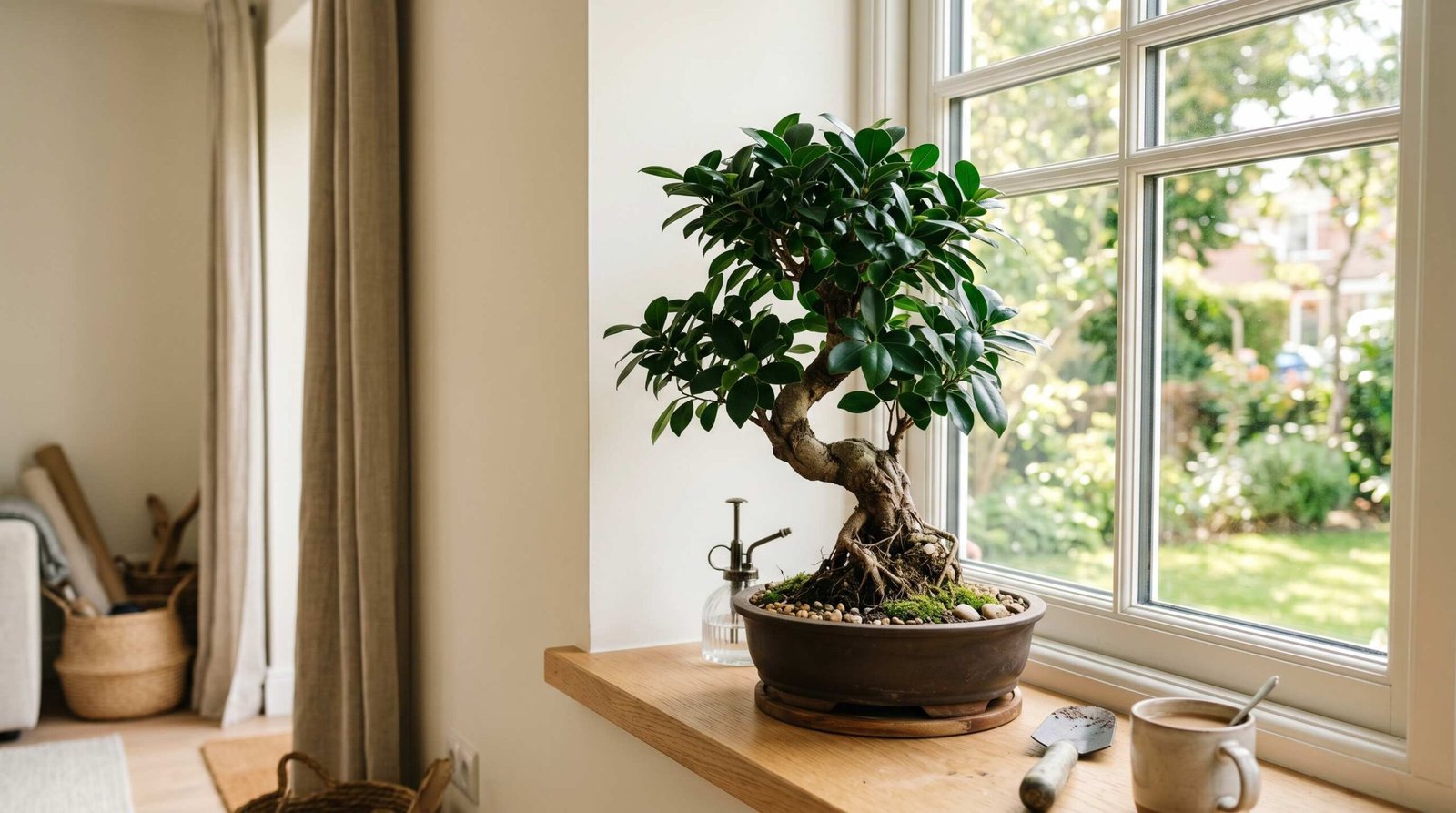
Almost every “ficus bonsai” sold in big-box stores and garden centers is one of three closely related species. Sellers often label them interchangeably, which adds to the confusion. Identifying yours is helpful, but the practical care is nearly identical for all three.
| Common Name | Latin Name | Key Visual Feature | Indoor / Outdoor | Root Style |
|---|---|---|---|---|
| Chinese Banyan | Ficus retusa | Smooth gray bark, small dark oval leaves, often shaped with an S-curve trunk | Indoor (outdoor in summer above 60°F) | Conventional surface roots (nebari) |
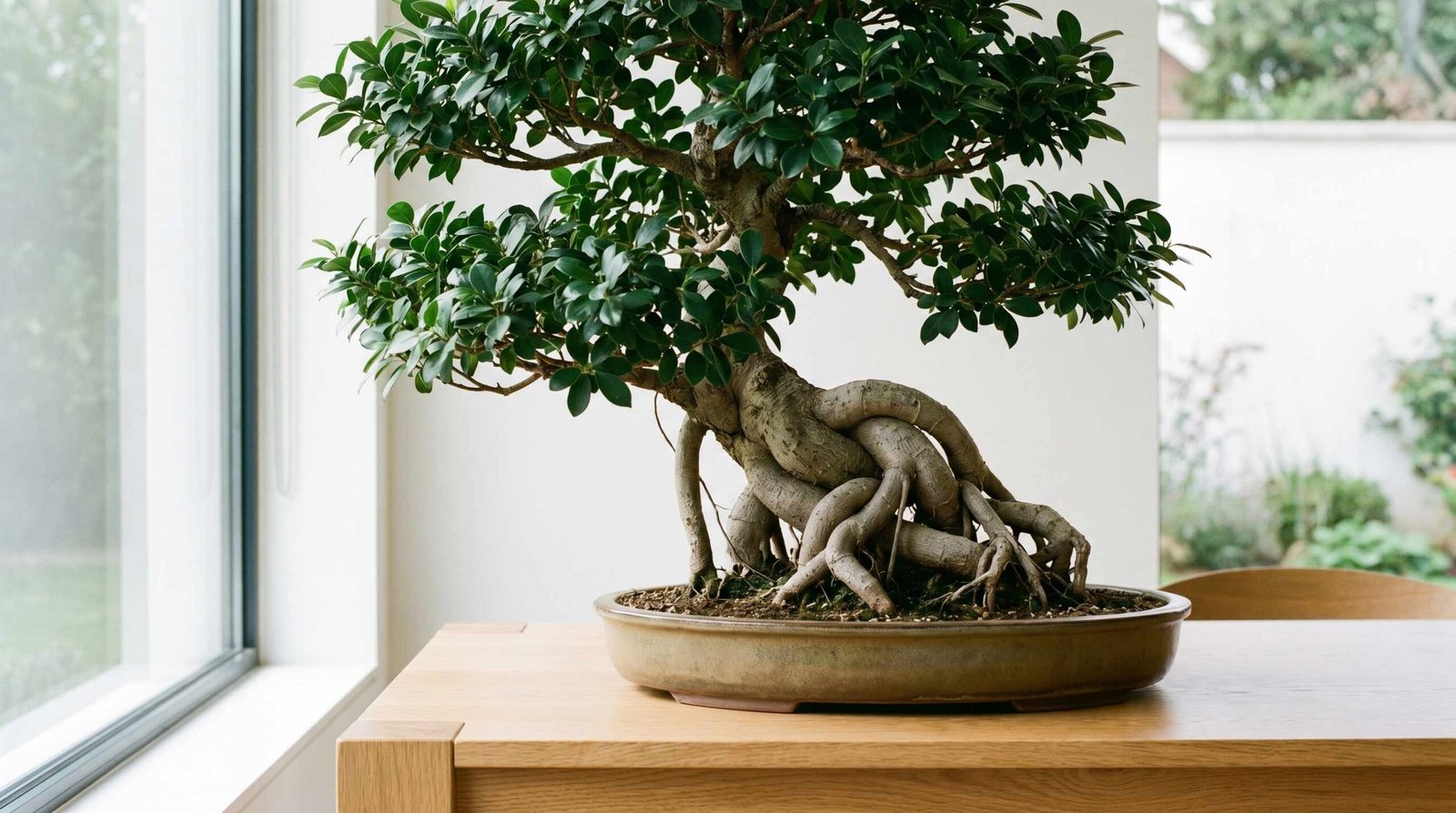
| Ginseng Fig | Ficus microcarpa “Ginseng” | Thick, bulging, pot-bellied roots that look like a ginseng root, usually with grafted small-leaf canopy | Indoor (outdoor in summer above 60°F) | Exposed bulbous storage roots |
| Chinese Banyan (large-leaf form) | Ficus microcarpa | Very similar to F. retusa, often sold under the same label, sometimes with slightly larger leaves | Indoor (outdoor in summer above 60°F) | Conventional roots, can develop aerials |
What this means for care: all three species like the same light, water, temperature, and feeding routine. If you cannot tell which one you have, do not stress. Follow the rest of this guide and your tree will thrive.
Why Your Ficus Is Dropping Leaves (and What to Do)
If your tree is dropping leaves, you are not alone, and you almost certainly have not killed it. Ficus shed leaves as a defensive reaction to change. The trunk and branches are still alive underneath, storing energy and waiting for the environment to settle. Here are the four causes, ranked by how often they trip up new owners.
Cause 1: New Location, New Home
This is the number one reason ficus drop leaves. The tree grew up in a greenhouse with stable light, temperature, and humidity. The moment it lands in your living room, every variable changes at once. The University of Maryland Extension confirms this pattern, noting that ficus are “known for dropping leaves when moved indoors” and recommending the brightest possible spot during the adjustment period. Read their full guidance on humidity requirements for ficus.
Cause 2: Drafts
Cold air rolling off a winter window, a blast from a furnace vent, or the dry breeze from an air conditioner will all trigger leaf drop. Ficus respond poorly to sudden temperature swings of more than about 10°F.
Cause 3: Inconsistent Watering
Letting the soil dry out completely, then drenching it, then forgetting again is the fastest way to stress a ficus. The roots cannot find a rhythm. They give up on the leaves to conserve resources.
Cause 4: Low Humidity
Heated winter air often drops below 30% relative humidity. Ficus tolerate this, but they prefer 50% or higher. Crispy leaf edges combined with leaf drop point to a humidity issue.
The 3-Week Quarantine Rule
This is the single most useful piece of advice for new ficus owners, and almost nobody tells you about it. When your tree arrives, pick the brightest spot in your home that is free of drafts. Place the tree there. Do not move it. Not to show a friend, not to a different windowsill because the light “seemed better,” not into the kitchen for a photo. Leave it alone for at least three weeks, ideally four.
Each move resets the adjustment clock. The tree responds to a stable spot by quietly growing new roots and preparing to push new leaves. Within 4 to 6 weeks of settling in, you should see fresh light-green buds at the branch tips. That is your signal the tree has accepted its new home.
Light Requirements (the Most Important Variable)
If you only get one thing right, get the light right. Ficus are tropical trees that evolved in full equatorial sun. The brighter your spot, the better the tree will grow, the smaller the leaves will stay, and the more it will resist stress.
- Best indoor spot: A south-facing windowsill. East-facing is the next best option. West works too, with a watch for hot afternoon scorch in summer.
- Acceptable: Bright indirect light a few feet from a sunny window.
- Avoid: Dark corners, bookshelves, hallways, or rooms that get less than a few hours of natural light per day. Your ficus will limp along and eventually decline.
- Outdoors in summer: Once nighttime temperatures stay above 60°F (15°C), move the tree outside. Start in dappled shade for a week so the leaves can acclimate to direct sun without scorching, then let it bake in full sun. Summer outside is the single biggest boost you can give a ficus.
- Grow lights: If your home is dim, a basic LED grow light running 12 to 14 hours a day will keep your tree healthy through winter.
Watering Ficus Bonsai
Ignore any label that tells you to water on a fixed schedule like “every day” or “twice a week.” Bonsai watering is done by observation, not by calendar. The rule is simple: water thoroughly when the top inch of soil feels dry to the touch.
Top Watering vs. Bottom Watering
Both methods work. Top watering means pouring water from a fine-rosed can until water runs freely from the drainage holes. Bottom watering means setting the pot in a tray of water for 5 to 10 minutes and letting the soil draw moisture up through the holes. Bottom watering is useful for very hard, dry soil that has started repelling water from the top.
The Chopstick Test
If you cannot judge moisture by feel, push a bamboo skewer or wooden chopstick into the soil halfway down. Pull it out after a minute. If it comes out clean and dry, water. If it comes out dark and damp, wait.
Reading the Symptoms
- Overwatering: yellow leaves that drop while still soft, mushy stems near the soil line, a sour smell from the pot.
- Underwatering: crispy brown leaf edges, soil that has pulled away from the pot walls, sudden mass leaf drop after a dry spell.
For a deeper look at watering principles, see our guide to general bonsai care principles.
Temperature, Humidity, and Placement
Ficus are tropical and have no tolerance for cold. Keep them above 60°F (15°C) year round. The University of Maryland Extension recommends daytime indoor temperatures of 70 to 80°F with nighttime temperatures of 60 to 68°F as ideal for tropical houseplants.
Winter Window Trap
In winter, the air right next to a window pane can be 10 to 15°F colder than the rest of the room. A ficus pressed against cold glass will shiver, drop leaves, and slowly weaken. Either pull the pot a few inches off the glass or insulate with a small foam pad behind the pot.
Humidity
Aim for 50% or higher. Practical options:
- Humidity tray: A shallow tray filled with pebbles and water sits under the pot. The pot rests on the pebbles, not in the water. Evaporation lifts local humidity a little. A humidity tray sized for small bonsai is the easiest setup.
- Misting: A light mist once a day helps in the moment, though the effect is short lived. Avoid soaking the foliage, which can invite fungal issues.
- Humidifier: Best long-term solution. A small room humidifier near the tree will lift ambient humidity dramatically and benefit you as well.
- Grouping plants: Cluster the ficus with two or three other houseplants. The combined transpiration creates a small humid microclimate.
Summer Outdoors
Once overnight lows stay above 60°F, move the tree outside. Fresh air, real sunlight, and natural rain transform a struggling ficus within weeks. Bring it back in before nights dip into the 50s.
Fertilizing
A ficus growing in a tiny pot has very little soil to draw nutrients from. Regular feeding during the growing season is essential.
- Growing season (spring through late summer): Feed every two weeks with a balanced liquid fertilizer (NPK around 10-10-10) diluted to half strength.
- Late summer through autumn: Switch to a fertilizer with lower nitrogen and higher phosphorus and potassium. This encourages denser, harder growth instead of soft leggy shoots.
- Winter: If the tree is actively growing under good light, feed once a month at quarter strength. If it has slowed down, skip fertilizing entirely until spring.
A balanced liquid bonsai fertilizer is the simplest option for beginners. Organic pellet fertilizers also work and release nutrients more gradually.
Repotting Ficus Bonsai
Ficus need fresh soil every 2 to 3 years. Repotting is one of the most common places beginners go wrong, usually by doing it at the wrong time of year.
When to Repot
Late spring only. Wait until you see active new growth and overnight temperatures are reliably warm. Repotting in autumn or winter, when the tree is least equipped to push new roots, is the most common avoidable killer of bonsai. Bonsai Empire’s pruning team emphasises waiting on root work after major styling, see their ficus root pruning guidelines.
Soil Mix
A classic bonsai mix works well:
- 50% akadama (Japanese baked clay that holds moisture and breaks down slowly)
- 25% pumice (for drainage and root aeration)
- 25% lava rock (for structure and slow nutrient release)
If you cannot source these, a pre-blended bonsai soil from a reputable supplier is fine. Avoid generic houseplant potting mix, which holds too much water and suffocates bonsai roots. Pre-mixed akadama-based bonsai soil is the easiest starting point.
Root Pruning
When you slip the tree out of its pot, gently comb out the outer roots and trim back up to one third of the total root mass. Ficus tolerate root pruning better than almost any other bonsai species. Use sharp, clean scissors. Quality bonsai scissors make a clean cut that heals quickly.
For step-by-step photos of the process, see our guide to repotting your bonsai tree.
Pruning and Shaping
Pruning is how a ficus becomes a bonsai instead of an overgrown houseplant. The species responds beautifully to cutting and will back-bud (sprout new shoots) from old wood, which most species cannot do.
- When to prune: Any time during the growing season, spring through summer. Avoid heavy pruning in autumn because new soft growth will not have time to harden off before winter dormancy slows things down.
- Maintenance pruning: When a shoot grows 6 to 8 leaves, pinch or cut it back to 2 leaves. This forces the tree to push new growth lower and inward, building a denser, more compact canopy.
- Structural pruning: Once a year you can remove larger branches to define the tree’s overall shape. Seal large cuts with cut paste to prevent dieback.
- Wiring: Ficus branches wire easily because they stay flexible. Wrap aluminum or copper wire in loose spirals and bend gently. Check weekly. Ficus thicken quickly and wire can bite into the bark within a month or two.
- Latex sap: Every cut on a ficus leaks a milky white sap. This is normal. Wipe it off with a damp cloth.
For more on cutting techniques, see pruning bonsai trees. If you also keep a more cold-hardy species, our juniper bonsai care guide covers an outdoor-only species you can pair with your indoor ficus.
Ficus Aerial Roots (a Feature, Not a Problem)
Sometimes a ficus will sprout thin, hairy roots dangling from a branch or trunk. These are aerial roots, and they are wonderful, not a defect. In nature, ficus species like the banyan grow these aerial roots from high branches all the way to the ground, where they thicken into pillar-like trunks and eventually create a forest from a single tree.
Encouraging Aerial Roots
Aerial roots only form in very high humidity, usually 80% or above. To encourage them, place a clear plastic dome, glass cloche, or aquarium over the tree for several weeks. Mist daily inside the enclosure. Once aerial roots appear, you can guide them down to the soil along the trunk for a banyan-style effect.
Discouraging Them
If you do not want them, simply snip them off at the branch. The tree is unbothered.
Ficus Care Quick Reference Table
| Care Aspect | Requirement | Beginner Mistake |
|---|---|---|
| Light | Brightest spot available; south or east window; full sun outdoors in summer | Placing on a dim shelf or in a corner |
| Water | Water thoroughly when the top inch of soil is dry | Watering on a fixed daily schedule |
| Temperature | 60 to 80°F (15 to 27°C) year round | Leaving near a cold window in winter |
| Humidity | 50% or higher; group plants or use a humidifier | Relying on a single daily misting |
| Fertilizer | Balanced liquid feed every 2 weeks in growing season | Feeding a stressed or newly repotted tree |
| Repotting | Every 2 to 3 years in late spring, prune up to 1/3 of roots | Repotting in autumn or winter |
| Pruning | Cut back to 2 leaves after 6 to 8 leaves grow; spring and summer only | Heavy pruning in autumn |
| Placement | Pick one bright, draft-free spot and leave it there | Moving the tree around the house |
Frequently Asked Questions
Why is my ficus bonsai dropping leaves?
The most common cause is a recent change in environment: a new home, a different spot in the room, a draft from a vent or window, or inconsistent watering. Ficus shed leaves as a stress response, not because they are dying. Choose a bright, draft-free location, leave the tree there for 3 to 4 weeks, and water only when the top inch of soil dries. New leaves usually appear within 4 to 6 weeks.
Can a ficus bonsai live outdoors?
Yes, in summer, once nighttime temperatures stay reliably above 60°F (15°C). Outdoor time with real sunlight is the best thing you can give a ficus. Bring it back indoors before autumn nights drop into the 50s. Ficus cannot survive frost.
How often should I water my ficus bonsai?
There is no fixed schedule. Check the soil daily by touch or with a wooden chopstick pushed into the soil. When the top inch feels dry, water thoroughly until water drains from the bottom of the pot. In a bright warm room this may be every 2 to 3 days. In cooler conditions it could stretch to once a week.
Why are my ficus leaves turning yellow?
Yellowing usually points to one of three things: overwatering (soft yellow leaves with mushy stems), normal leaf turnover (older inner leaves yellow and drop as new ones grow), or nutrient deficiency (overall pale colour during the growing season). Check your watering first, then your feeding routine.
What is the best indoor spot for a ficus bonsai?
A south-facing windowsill is ideal. East-facing is a strong second choice. The tree should sit close enough to the window that direct sun reaches the leaves for at least a few hours a day. Avoid spots near heating vents, air conditioners, or doors that open to cold outside air.
How do I get more leaves on my ficus bonsai?
More light produces more leaves, full stop. Move the tree to the brightest possible spot, or add a grow light running 12 to 14 hours a day. Then prune lightly: cutting back long shoots to 2 leaves triggers back-budding and a denser canopy. Feed regularly through the growing season. Patience matters, healthy ficus push new leaves in flushes every few weeks.
RELATED POSTS
View all

Olive Bonsai Care: The Complete Guide (Watering, Pruning, and Winter Protection)
December 22, 2023 | by bonsailessons.com
Ginseng Ficus Bonsai Care: The Complete Beginner’s Guide (2026)
June 1, 2026 | by Ian