Bougainvillea Bonsai Care: The Complete Guide to Sun, Water, and Year-Round Blooms
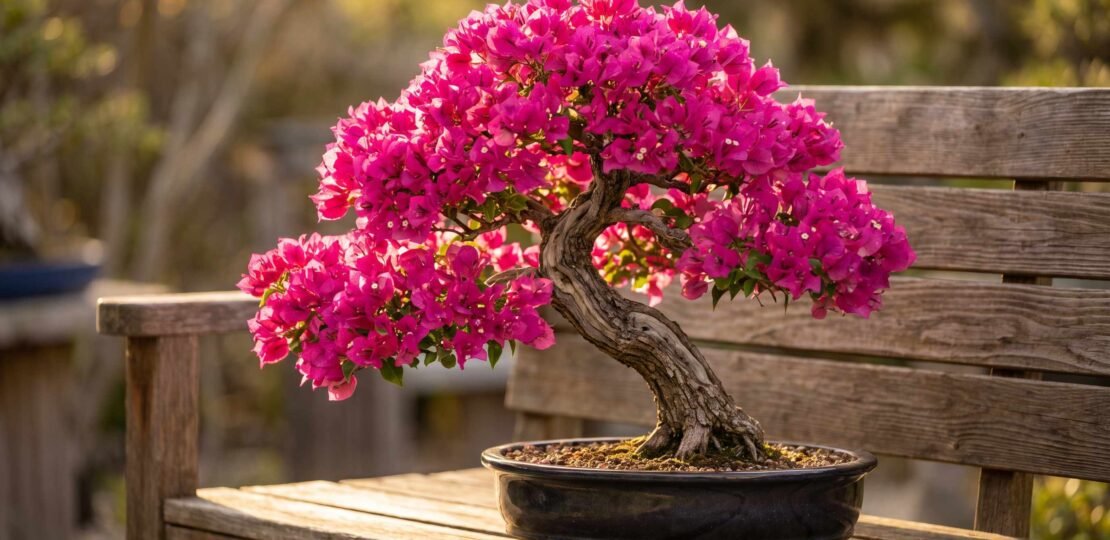
Bougainvillea is the flashiest, most rewarding flowering tree you can grow as a bonsai. With its vivid papery bracts in pink, magenta, orange, or white, a well-grown specimen stops people in their tracks. The catch? Most beginners kill it within the first summer by being too kind with water.
Disclosure: This post contains affiliate links. If you purchase through them, we earn a small commission at no extra cost to you.
Quick Answer: Bougainvillea Bonsai Care at a Glance
Bougainvillea bonsai need 6-8 hours of direct sun daily, watering only when the top inch of soil is bone dry, and temperatures above 45 degrees F (7 degrees C). The key to triggering blooms: allow the soil to dry out more than usual for 7-10 days, then resume normal watering. That controlled drought stress is what tells the tree to flower.
| Care Factor | Requirement | Beginner Mistake |
|---|---|---|
| Light | 6-8 hrs direct sun daily | Too much shade |
| Water | Water when top inch is bone dry | Watering too often |
| Temperature | Above 45 degrees F (7 degrees C) | Leaving outside in frost |
| Fertilizer | Balanced NPK in growing season; switch to high-phosphorus to trigger blooms | High nitrogen = leafy, bloomless tree |
| Soil | Fast-draining, inorganic-heavy mix; pH 6.0-6.5 | Standard potting soil = root rot |
| Pruning | After each bloom flush; leave 2 leaves on new shoots | Pruning during bloom = no flowers |
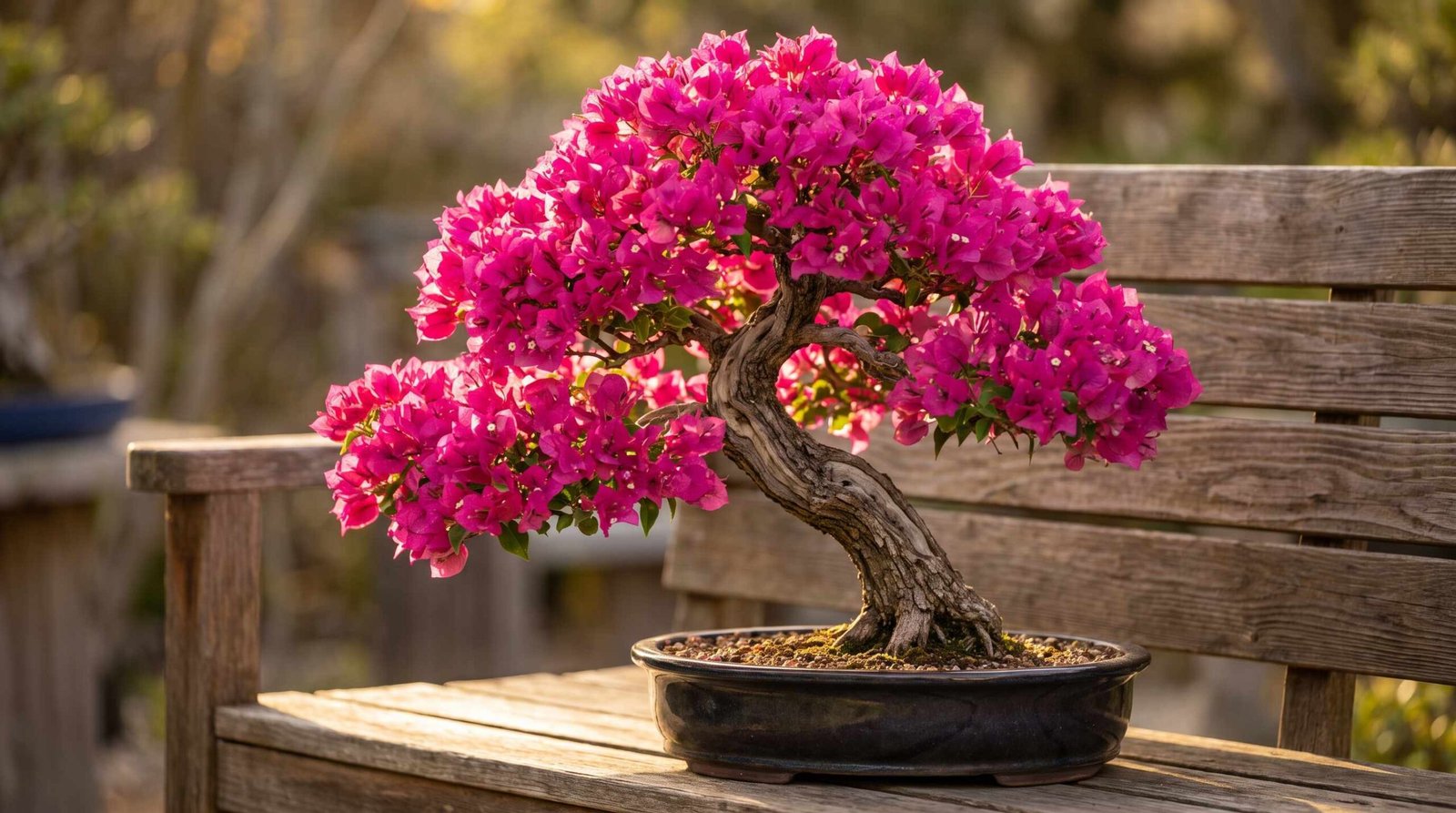
Why Bougainvillea Makes Such a Good Bonsai
Bougainvillea hails from the coastal forests of South America, particularly Brazil, and was named after the French naval explorer Louis-Antoine de Bougainville, who first documented it during his 1767 voyage. It’s a plant with a long history of dramatic garden use, and everything that makes it a knockout hedge or garden climber translates beautifully into miniature form.
The appeal for bonsai is threefold. First, bougainvillea grows fast. A specimen you buy as raw material this spring can become a recognizable bonsai in a single season. Second, it tolerates hard pruning better than almost any other flowering species you can put in a shallow pot. Cut it back aggressively and it responds with a burst of new shoots. Third, mature trunks develop wonderfully gnarled, textured bark, and the branching structure ramifies into fine, delicate networks with regular work.
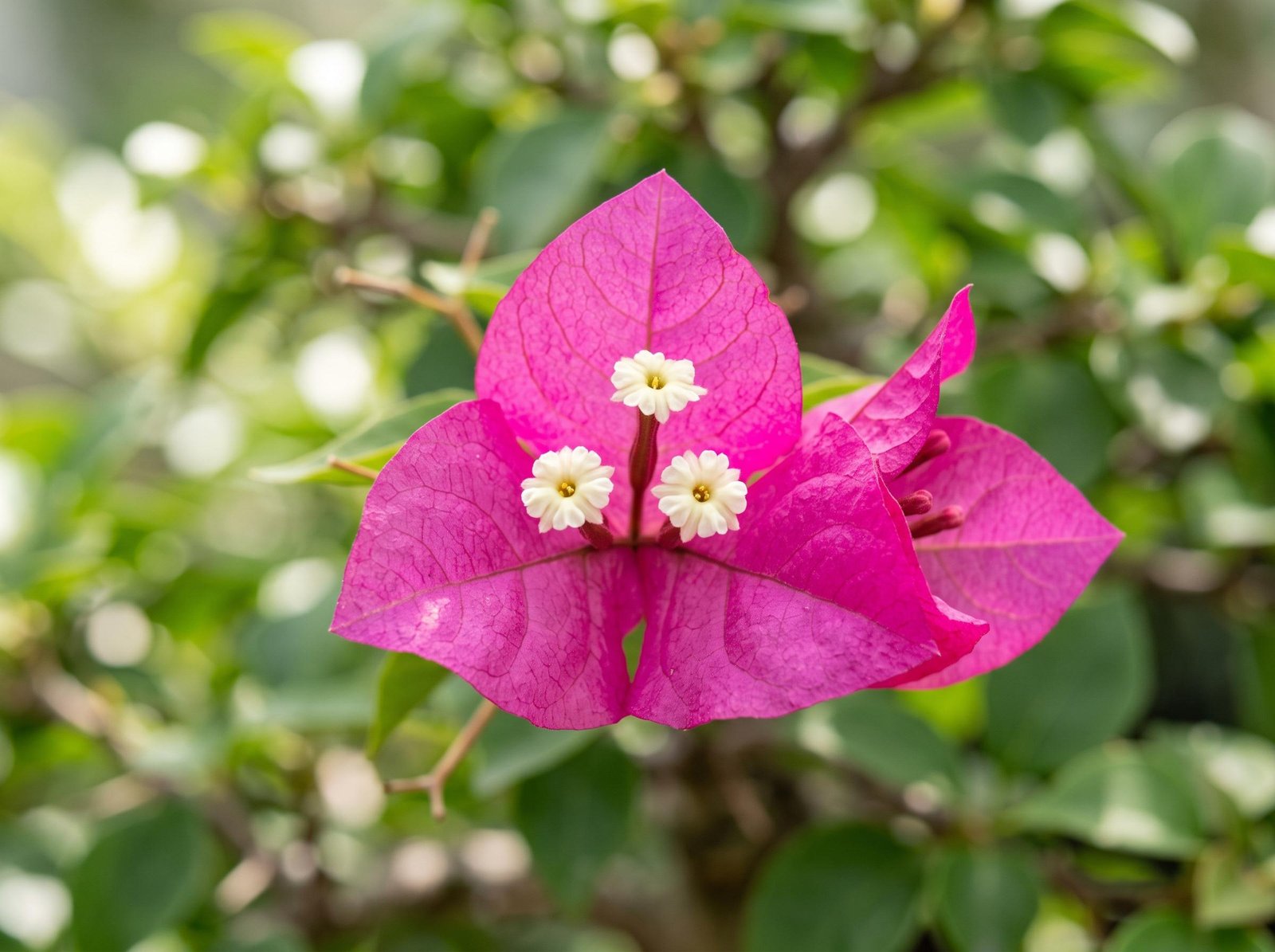
Now, one common misconception. Those brilliantly colored “flowers” aren’t flowers at all. They’re bracts, which are essentially modified leaves. The true flowers are tiny, white, and tubular, sitting in clusters of three inside each set of bracts. The color you see comes from betalain pigments (not chlorophyll), which is why bougainvillea can produce such saturated, unusual color combinations that would be nearly impossible in a chlorophyll-based system.
You’ll find bougainvillea in a dizzying range of bract colors: magenta, hot pink, deep purple, coral orange, fire-engine red, snowy white, pale yellow, and even bicolor forms where two hues appear on the same plant. This variety is part of what makes it so collectible, and it also means you can style multiple specimens without any of them looking alike.
As a design subject, bougainvillea suits most classical bonsai styles. Informal upright, slanting, semi-cascade, cascade, and literati are all natural fits. The vigorous growth also means you can develop a tree faster than with slower species like pine or juniper. The one honest challenge worth flagging: bougainvillea is a subtropical to tropical plant, and it cannot tolerate frost. If you live somewhere with real winters, you’ll be moving your tree indoors every year.
Light Requirements
Full sun is non-negotiable. We mean this literally. Bougainvillea needs six to eight hours of direct, unobstructed sunlight every single day during the growing season. Anything less and you’ll get a tree that grows leaves but produces very few bracts, if any at all.
From late spring through early autumn (basically after the last frost until the first frost of fall), your tree should live outdoors. A south-facing patio, a west-facing balcony, or an open garden position all work well. If your growing space has partial afternoon shade, that’s acceptable in extremely hot climates, but never place a bougainvillea in dappled or full shade for more than a day or two. Shade is the single most common reason beginners report a “healthy” tree that refuses to flower.
When winter forces you indoors, the challenge becomes replicating that sun intensity. Indoor windows, even bright south-facing ones, deliver far less light than the outdoor sun. This is where bonsai grow lights become essential rather than optional. A full-spectrum LED grow light positioned six to twelve inches above the canopy, running for 10 to 12 hours a day, will keep your tree healthy through the dormant months and can even coax a modest winter bloom flush from certain cultivars.
The UC Integrated Pest Management program reinforces this point clearly: bougainvillea “do not tolerate freezing temperatures and must be moved inside where frost occurs.” Their guide is one of the most reliable references for climate-appropriate care, and it’s worth bookmarking.
Watering Bougainvillea Bonsai (The Counterintuitive Bloom Trigger)
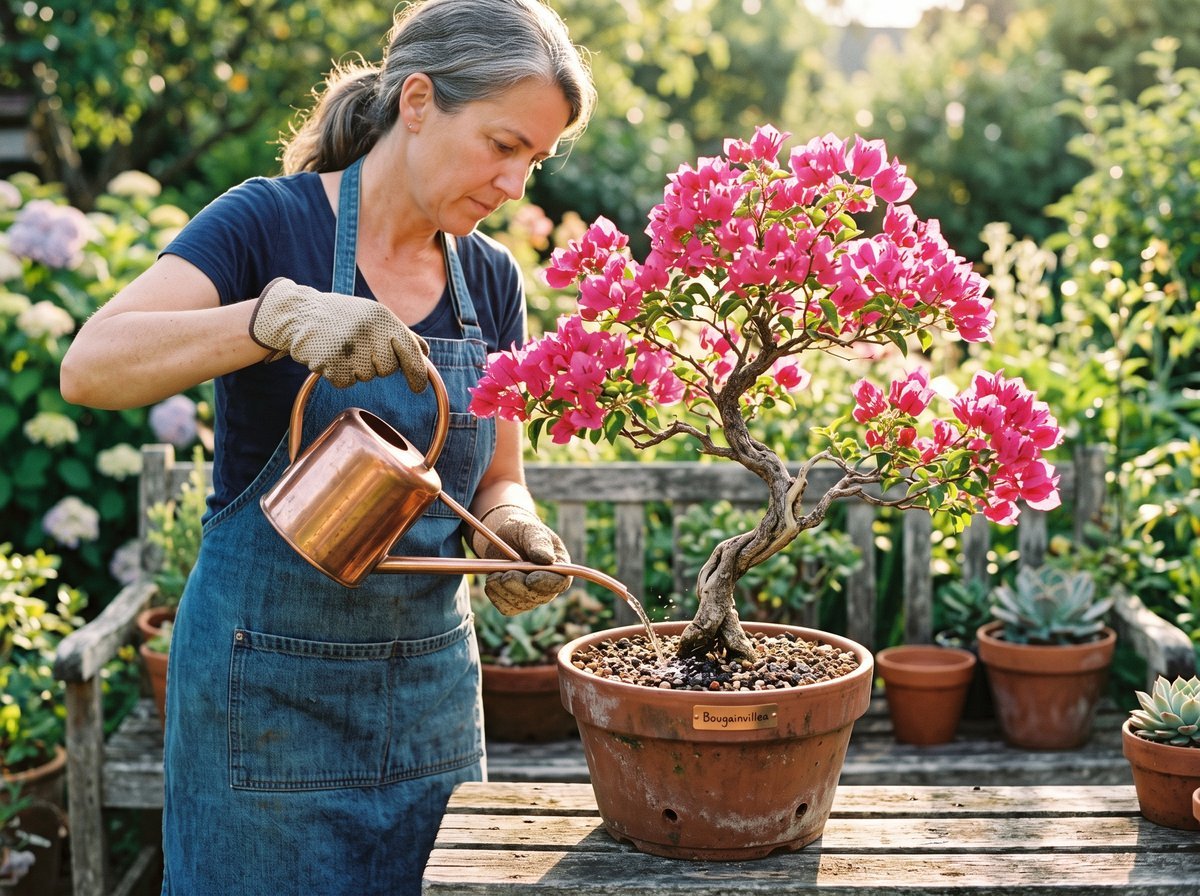
Here’s where most beginners go wrong. They water their bougainvillea like they would a fern or a ficus, and they wonder why the tree produces a lush green canopy but zero bracts. The truth is uncomfortable: bougainvillea flowers in response to stress. Baby it, and it refuses to bloom.
Water thoroughly, but only when the top inch of soil is bone dry. Push your finger down into the soil. If you feel any moisture, wait. If the surface is dusty and the pot feels light when lifted, it’s time to water. Beginners have a hard time accepting how dry the soil should be allowed to get, but this is the single most important habit to develop.
Overwatering leads to three cascading problems: root rot from suffocated roots, uncontrolled leafy growth from the constant moisture, and zero flowers because the tree has no stress signal telling it to reproduce. If your tree looks lush and green but bloomless, water is almost certainly the culprit.
Now the interesting part. There’s a deliberate technique called the drought-stress bloom protocol. In late spring, once the tree is settled outdoors and pushing new growth, deliberately withhold water for seven to ten days beyond your normal schedule. Watch closely. When you see the very first signs of leaf droop or dulling, but before any leaves actually drop, resume your normal watering. That short, controlled dry spell is what tells the tree to shift energy from vegetative growth into flower production.
The science backs this up. In published HortScience research, controlled water deficit has been shown to significantly increase bract production in bougainvillea compared to well-watered controls. The mechanism appears to be linked to hormonal shifts under drought stress that favor floral induction.
A critical warning: do not let the tree fully wilt to the point of leaf drop. That’s tree damage, not stress signaling. You’re aiming for the edge, not the collapse. If you’re new to this, err on the side of watering slightly sooner than the protocol suggests. You can push harder in subsequent seasons as you learn your specific tree’s tolerance.
Once summer active growth kicks in, plan to water every one to three days depending on heat and sun exposure. In an intense heatwave, a small bonsai pot in full sun may need daily watering. In cooler summer weather, every two or three days is plenty. Always check the soil first.
Winter watering is a different animal entirely. When the tree is indoors and semi-dormant, water sparingly, perhaps every 10 to 14 days. The soil should be nearly dry between waterings. Overwatering in winter is a common way to kill an otherwise healthy tree.
A note on technique: water slowly and thoroughly, until you see water draining from the pot’s holes. Then wait a minute and water again. This two-pass method ensures the entire root mass gets rehydrated rather than just the top layer. For a full breakdown of good proper bonsai watering habits, we’ve covered the fundamentals separately.
Temperature, Placement, and Overwintering
Bougainvillea’s frost intolerance is the biggest logistical challenge for growers outside USDA zones 9b to 11. If temperatures dip below 45 degrees F (7 degrees C), it’s time to move the tree indoors. Waiting for the first frost is too late. Even a light freeze can kill a bougainvillea outright, and cold damage below 40 degrees F can defoliate a tree that survives.
Here’s a step-by-step winter care plan:
- Bring indoors before first frost. Watch the ten-day forecast in autumn and pull the tree inside when nights start dropping below 45 degrees F.
- Target indoor temps of 50 to 59 degrees F (10 to 15 degrees C). A cool but frost-free garage, sunroom, or unheated spare room works well. Warmer temperatures are fine but harder to combine with reduced watering.
- Maximize light exposure. Place the tree in your brightest window, ideally south-facing. If natural light is limited, add a grow light on a timer for 10 to 12 hours daily.
- Cut back watering significantly. The soil should be almost dry between waterings, typically every 10 to 14 days.
- Expect some leaf drop. This is normal. Bougainvillea may shed 20 to 50 percent of its leaves during winter, and it will bounce back in spring.
- Reintroduce outdoor life gradually. Once the last frost date has passed, move the tree outdoors in stages over 1 to 2 weeks. Start in shade, then partial sun, then full sun. Sudden exposure can scorch leaves.
Growers in USDA zones 9b through 11 have it easier. Bougainvillea can overwinter outdoors in these climates with minimal protection. A sheltered position against a warm wall, plus occasional frost cloth on cold nights, is usually enough. In truly tropical zones (10b and above), the tree flowers year-round with no dormancy period at all.
Soil Mix for Bougainvillea Bonsai
Fast drainage is essential. Standard potting soil is basically a death sentence for bougainvillea bonsai because it holds too much moisture and suffocates the roots. This is one of the top three reasons trees die in their first year.
We suggest a mix that leans heavily inorganic. Our preferred blend for established trees is 60 percent inorganic components (pumice, perlite, or akadama, in whatever combination is affordable in your area) with 40 percent organic (fine-grained pine bark or well-decomposed compost). This gives you excellent drainage, good air pockets around the roots, and enough organic matter to hold nutrients between fertilizer applications.
For beginners who don’t want to source multiple ingredients, a simpler 50/50 mix of coarse perlite and quality pre-mixed bonsai soil works well. It’s not optimal, but it’s dramatically better than potting soil, and it will keep your tree healthy while you learn.
Target a soil pH of 6.0 to 6.5. Slightly acidic. Most bagged bonsai soils fall in this range naturally. If you’re using very hard tap water (common in areas with limestone bedrock), you may find your soil pH creeping upward over time. Calcareous water can also cause chlorosis (yellowing between leaf veins). We suggest collecting rainwater when possible, or using filtered water if your tap water is very alkaline.
For a deeper look at composition, drainage layers, and cultivar-specific recommendations, our full bonsai soil mix guide covers everything in one place.
Repotting frequency is every two to three years for most bougainvillea. Younger trees developing structure may benefit from annual repotting; mature specimens with well-established root systems can stretch to four years between repots. We’ll cover the repotting process in more detail below.
Fertilizing for Growth and Flowers
Feeding a bougainvillea correctly is where growers separate themselves from casual hobbyists. Fertilizer isn’t just food; it’s a signal. What you feed the tree tells it what to do next.
During the main growing season (spring through late summer), use a balanced fertilizer such as a 10-10-10 or 6-6-6 formula every two weeks. Balanced feeding supports steady growth, healthy roots, and a strong overall structure.
To trigger and maximize flowering, switch to a higher-phosphorus formula (a “bloom booster” style like 10-30-10) for four to six weeks in mid to late summer, timed roughly a month before you want to see peak bract production. Phosphorus is the nutrient most directly associated with flower and fruit production. It signals the plant to redirect energy from leafy growth toward reproduction.
Avoid high-nitrogen fertilizers at all costs. Nitrogen produces the lush, dark green leafy growth that gardeners love in a hedge, but in a bonsai bougainvillea it means big leaves, long internodes, and no flowers. If your tree is getting bushy and green with no bracts, and you’re using a high-nitrogen fertilizer, that’s almost certainly the problem.
In late autumn and winter, when the tree is slowing down, stop feeding entirely or reduce to once per month at half strength. Feeding a dormant or semi-dormant tree just adds nutrients that will accumulate in the soil and can cause fertilizer burn.
For specific product picks, application methods (liquid versus solid), and how to adjust for different growth stages, see our full fertilizing schedule breakdown.
Pruning Your Bougainvillea Bonsai
Timing is everything with bougainvillea pruning. This is the single most important thing to understand: bougainvillea blooms on new wood. Every time you prune, you’re removing potential flowering shoots. Do it at the wrong moment, and you delete your entire bloom cycle.
The rule is simple. Prune after each bloom flush, not during. Once the bracts on a branch have faded and dropped, trim that shoot back, leaving two leaves on each new segment. This forces the tree to push new shoots from those leaf axils, and those new shoots will be the ones that carry the next flush of bracts. It’s a virtuous cycle: prune, regrow, bloom, prune again.
Do not pinch or trim during active flowering. Let each flush complete on its own. Interrupting a flush mid-cycle simply removes the show you’ve been waiting for and doesn’t gain you any structural benefit.
Structural pruning (major reshaping of the canopy or removal of significant branches) is best done in autumn or winter when the tree is quieter. This is when to remove crossing branches, dead wood, and branches that don’t serve the design. Bougainvillea has a remarkable ability to bud from old wood after hard pruning, so don’t be afraid of cutting back severely in winter if the tree needs a reset. We’ve seen trees cut back to bare trunks push new shoots within four to six weeks of spring warmth.
Wiring is possible but limited. Young, green, still-flexible shoots can be wired without much trouble. Older, woody branches are stiff and prone to cracking, so bend them carefully or not at all. Another consideration: bougainvillea has thorns. Sharp, curved, sometimes hidden thorns. Wear thick gloves when wiring or pruning, and take your time. Rushing invites both scratches and broken branches.
For general technique that carries across most species, our bonsai pruning technique guide walks through cut placement, tool selection, and healing best practices.
Repotting
Repot every two to three years, in early spring, just as buds begin to swell but before major new growth kicks in. This timing lets the tree recover using its natural growth energy.
Bougainvillea roots are more sensitive than many bonsai species. Treat them with respect. Never let the rootball dry out during the repotting process. Have your fresh soil, tools, and new pot ready before you tip the tree out.
When you’re working the root mass, remove no more than one-third of the total roots at a time. This is a stricter rule than for many species. Bougainvillea can sulk for a full season if you’re too aggressive. Comb out the outer roots gently, prune the longest and thickest, and preserve the fine feeder roots wherever possible.
Use the fast-draining bonsai soil mix we described earlier. Position the tree, work fresh soil into the root mass with a chopstick, and water thoroughly to settle everything.
Post-repot care matters. Place the tree in a shaded, sheltered spot for two to three weeks so it can recover without heat stress. Water lightly, keeping the soil just moist rather than saturated. Skip fertilizer entirely for six to eight weeks, because feeding freshly cut roots can burn them. Once you see new leaf growth pushing consistently, you can move back to normal placement and start fertilizing again.
For a species-agnostic walkthrough of technique, tools, and aftercare, our step-by-step repotting guide covers the process in full.
Pests and Diseases
Bougainvillea is relatively pest-resistant compared to many bonsai species, but a few pests do show up regularly. Here’s what to watch for and how to handle each.
Mealybugs. White, cottony clusters at leaf joints and along stems. They suck sap and secrete honeydew, which attracts sooty mold. Treat by dabbing each cluster with a cotton swab dipped in diluted (70 percent) isopropyl alcohol, then follow up with a neem oil spray every 7 to 10 days for three cycles.
Aphids. Small, soft-bodied insects, usually green or black, clustered on new shoot tips. They multiply rapidly. Blast them off with a strong water spray, then treat with insecticidal soap if the population is stubborn. Ladybugs are natural predators if you can encourage them into the garden.
Spider mites. Tiny red or brown mites on the undersides of leaves. Look for fine stippling on the leaf surface and, in severe cases, delicate webbing. Spider mites thrive in hot, dry conditions, so temporarily raising humidity around the tree helps. For severe infestations, use a horticultural miticide following label directions.
Root rot. Not technically a pest, but by far the most common serious problem. Symptoms include yellowing leaves, wilting despite moist soil, and a mushy, dark stem base with a foul smell from the pot. Prevention through proper watering is your best defense. If you catch it early, an emergency repot into completely fresh, dry soil, with rot-affected roots trimmed away, can save the tree.
Leafcutter bees. These solitary bees cut neat, circular notches out of bougainvillea leaves to use in nest construction. It looks alarming but is essentially harmless to the tree’s overall health. Leafcutter bees are important pollinators, so we suggest tolerating them rather than treating.
For comprehensive pest identification and control strategies, the University of California’s bougainvillea guide is the most thorough public resource we’ve found.
Bougainvillea Varieties and Bract Colors
Not every bougainvillea is created equal for bonsai work. Some cultivars are far better suited to shallow pot cultivation than others.
Bougainvillea glabra. The most commonly used species for bonsai. It has smaller leaves, vigorous but manageable growth, and excellent branch structure that ramifies well. Bract colors range from lavender and pink to pure white. If you’re just starting, a B. glabra cultivar is the safest bet.
Bougainvillea spectabilis. Larger leaves, more aggressive growth, and often larger overall stature. Beautiful bract colors including hot pink, red, and rich purple. Better suited to larger bonsai (over 12 inches tall) where the leaf size looks proportionate.
Some cultivar picks worth seeking out:
- San Diego Red: Deep, vivid red bracts. A classic bonsai choice.
- Barbara Karst: Bright magenta, extremely floriferous, tolerates hard pruning beautifully.
- Helen Johnson: A true dwarf variety with soft pink bracts. Small leaves and compact growth make it ideal for smaller bonsai.
- Temple Fire: Compact, crimson-red bracts, well-suited to shohin (very small) bonsai.
- Miss Alice: Pure white bracts, compact growth. A striking contrast to the more common pinks and reds.
When shopping, look specifically for dwarf or semi-dwarf cultivars. They have naturally smaller leaves and shorter internodal spacing (the gaps between leaf nodes), which makes them look more proportional in a bonsai pot. A full-size cultivar can still be trained, but the leaves will always look slightly oversized on a small tree.
Buying Your First Bougainvillea Bonsai
Sourcing your first tree matters more than most beginners realize. A good starting specimen makes learning easier; a bad one makes even correct care look like failure.
The best purchase experiences we’ve had come from local bonsai nurseries, where you can inspect the tree in person, ask questions, and often get species-specific care advice thrown in. Garden centers are a decent second option during warm-weather months, especially for basic B. glabra starter material. Online specialty retailers can be excellent for pre-styled or unusual cultivars, and reputable sellers ship trees with careful packaging and root protection.
What to look for in a healthy tree:
- Firm, flexible stems with no brittle or mushy sections.
- Plentiful fine roots visible around the edges of the pot (a sign of vigor).
- Bright green, unblemished leaves with no yellowing, spotting, or curling.
- Visible signs of recent growth: fresh shoots, new leaf buds, or the pale green tips of active shoots.
Red flags to avoid:
- Any sign of mealybug or aphid infestation (inspect leaf undersides and joints closely).
- Roots that are circling tightly around the inside of the pot (a sign the tree is severely rootbound).
- Soft, dark, or discolored spots at the base of the trunk (early root rot).
- A pot that feels waterlogged even when soil surface is dry.
Pot selection is worth considering separately. Bougainvillea does best in a shallow, well-draining bonsai pot with generous drainage holes. Unglazed terracotta is a good choice for beginners because it allows some air circulation through the pot walls and helps regulate soil moisture. Glazed ceramic pots are perfectly fine for aesthetics; just be extra vigilant about drainage.
For starting size, four- to six-inch pre-bonsai material gives you the most creative flexibility. You can shape the trunk, develop the branching from scratch, and see dramatic changes within a season or two. Pre-styled trees (already shaped and potted) are easier for beginners because the design work is done, and you can focus on care technique.
Common Beginner Mistakes
Almost every problem you’ll encounter with a bougainvillea bonsai traces back to one of these habits. Reviewing them regularly is worth the effort.
- Watering too often. The number one killer. If in doubt, wait a day.
- Placing indoors year-round. The tree survives, but it won’t flower. It needs outdoor sun during the growing season.
- Pruning during flowering. Removes the very buds you’ve been waiting for.
- Using standard potting mix. Nearly guarantees root rot within a season.
- Leaving outdoors through frost. Fatal below roughly 30 degrees F, and damaging well before that.
- Over-fertilizing with nitrogen. Big green leaves, zero flowers. A frustrating outcome.
- Repotting too aggressively. Bougainvillea roots resent disturbance. Take one-third at a time, no more.
Frequently Asked Questions
Why isn’t my bougainvillea bonsai blooming?
The three most common causes are insufficient sunlight (less than six hours of direct sun daily), too much water, and excess nitrogen fertilizer. Bougainvillea flowers as a response to controlled stress, especially drought stress. If your tree is getting lush green leaves but no bracts, cut back the water for 7 to 10 days, move it into full sun, and switch to a high-phosphorus fertilizer. The UC Master Gardener Program has a helpful diagnostic breakdown of non-blooming causes if you want to dig deeper.
Can bougainvillea bonsai grow indoors year-round?
Not really, if you want flowers. Bougainvillea needs six to eight hours of direct sun to bloom, and most indoor windows just don’t provide that intensity. You can keep the tree alive indoors with a strong grow light setup, but for a healthy tree that actually flowers, it needs to spend the warm months outside in full sun. Move it indoors only during frost season.
How often should I water my bougainvillea bonsai?
Only when the top inch of soil is completely dry. In summer that might be every 1 to 3 days depending on heat and sun exposure. In winter, when the tree is resting indoors, watering every 10 to 14 days is usually plenty. Always check the soil with your finger before reaching for the watering can. Bougainvillea prefers to be too dry rather than too wet.
What is the best soil mix for bougainvillea bonsai?
A fast-draining, inorganic-heavy mix. We suggest 60 percent inorganic components (pumice, perlite, or akadama) blended with 40 percent organic (fine pine bark or decomposed compost). For beginners, a 50/50 mix of perlite and quality bonsai soil works well. Target a pH of 6.0 to 6.5 and avoid standard potting soil at all costs.
How do I get more bracts (flowers) on my bougainvillea?
Four levers: full sun (six to eight hours minimum), controlled drought stress (dry the soil out for 7 to 10 days longer than usual in late spring), high-phosphorus fertilizer during pre-bloom weeks, and correct pruning timing. Prune only after each flush of bracts, never during. Combine all four and you will see dramatic increases in bloom count.
Is bougainvillea bonsai a good choice for beginners?
It’s a fantastic choice for a beginner who lives in a sunny climate and is willing to accept that the tree needs to move indoors during winter. Bougainvillea is forgiving of hard pruning, grows quickly, and shows dramatic results within a season or two. The main learning curve is resisting the urge to overwater. If you can master that, you have a spectacular flowering bonsai on your hands.